How to Improve Duct Efficiency and Cut Energy Waste
August 21, 2026
A Furnace Replacement Savings Example That Adds Up
August 23, 2026
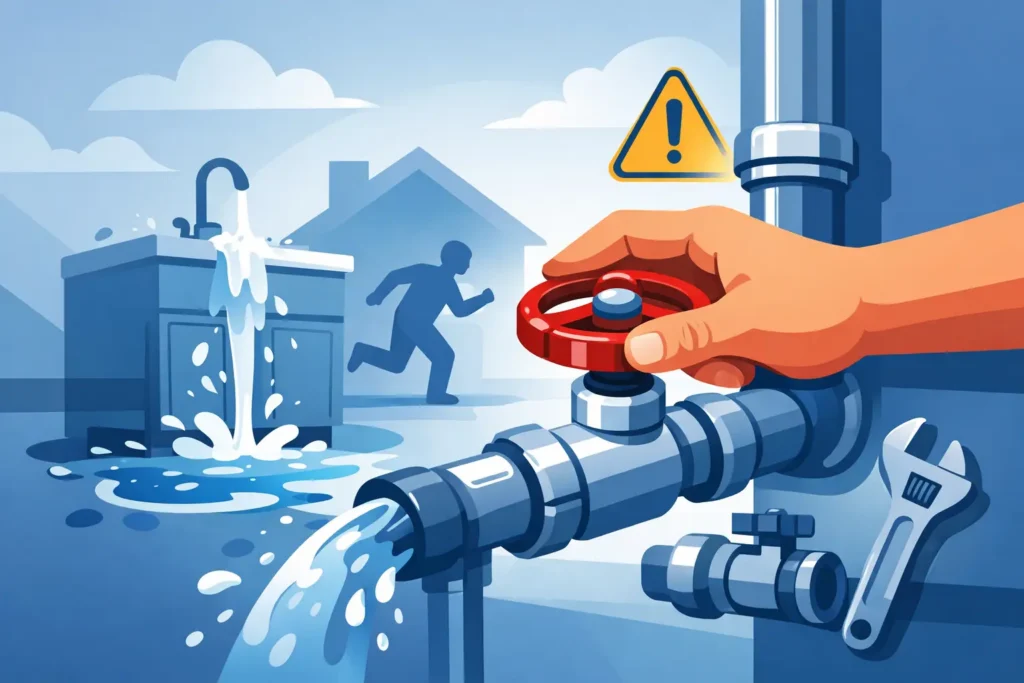
A burst supply line under a sink can release more water in a few minutes than most people expect. Knowing how to shut off water before an emergency happens can limit floor damage, protect belongings, and give you time to make safe decisions instead of searching for a valve under pressure.
The right shutoff point depends on where the leak is coming from. If the problem is isolated to one fixture or appliance, use its local valve whenever possible. If water is coming from an unknown source, flowing through a wall or ceiling, or cannot be stopped at the fixture, turn off the main water supply to the building.
How to Shut Off Water at the Source
Start by identifying the source of the water. A dripping faucet, leaking toilet connection, failed washing machine hose, or water heater leak may each have a nearby shutoff valve. Turning off a local valve keeps water available to the rest of the home or business while stopping the immediate problem.
Most local shutoff valves are small, oval-handled or lever-style valves located on the water line that feeds the fixture. For an oval handle, turn it clockwise until it stops. For a lever handle, rotate it one quarter turn so the handle sits across the pipe rather than in line with it. Do not force a valve that is heavily corroded or stuck. A broken valve can make the situation worse.
After closing the valve, open the fixture’s faucet or run the connected appliance briefly if it is safe to do so. This releases pressure and confirms whether the water flow has stopped. Keep towels, a bucket, or a shallow pan under the area to catch remaining water in the line.
Under sinks and behind toilets
Sink shutoff valves are usually inside the cabinet below the basin. You may see one valve for cold water and one for hot water. If a faucet or supply line is leaking, close both if you are unsure which side is involved.
Toilet shutoff valves are typically on the wall or floor behind the toilet, connected to the flexible supply line that fills the tank. Turn the valve clockwise, then flush once to empty as much water from the tank as possible. If water is overflowing from the bowl, do not keep flushing. Close the valve and remove the tank lid only if you can safely lift the float or close the flapper to stop the refill cycle.
Washing machines, dishwashers, and refrigerators
Washing machine valves are commonly behind the machine, often with separate hot and cold handles. If a hose has ruptured, turn off both valves immediately. Pulling a heavy appliance away from the wall can be risky when water is present, so do not force it or step into standing water near an outlet.
Dishwasher and refrigerator supply valves may be under the kitchen sink, behind the appliance, or in a nearby cabinet. If you cannot quickly find the local valve, use the main shutoff rather than letting the leak continue while you search.
Where to Find the Main Water Shutoff Valve
The main water shutoff controls water entering the entire property. In many Northern Virginia homes, it is located where the water line enters the building, often in a basement, utility room, garage, crawlspace access area, or mechanical closet. It may also be near a water heater, but do not assume the water heater valve is the home’s main shutoff.
Look for a larger pipe with a valve close to the foundation wall or near the water meter. Older properties may have a round gate-style valve that turns clockwise. Newer installations often use a ball valve with a lever handle. A lever aligned with the pipe generally means open; a lever crossing the pipe generally means closed.
Commercial properties can have multiple shutoffs, including valves for separate suites, restrooms, kitchens, sprinkler systems, or equipment areas. Property managers should make sure staff know which valve serves domestic water and which valves should not be touched without authorization. Shutting off the wrong system can create a larger operational or safety issue.
There may also be a valve at the water meter. This valve may belong to the utility provider, and access can be restricted or require a special tool. Use the interior main shutoff when available. If the only accessible valve is at the meter and water is causing active damage, contact the water utility or an appropriate emergency service resource for direction.
What to Do After You Turn the Water Off
Stopping the flow is the first priority, but the next few minutes matter. Move rugs, boxes, electronics, and other valuables away from the affected area if you can do so without slipping or entering a hazardous space. Use towels or a wet vacuum only when the area is safe and there is no risk from electrical equipment.
Take clear photos of the leak, damaged materials, and the valve position. Documentation can be useful for property records and insurance discussions. If water has reached a ceiling, wall, flooring system, or enclosed cabinet, do not assume the surface is dry just because the visible puddle is gone. Moisture trapped in building materials can lead to swelling, staining, and mold growth.
Keep the shutoff valve closed until the source of the leak has been identified and corrected. Turning water back on too soon can restart the leak and cause additional damage. When it is time to restore water, open the valve slowly and watch the repair area closely for drips, spraying, or changes in water pressure.
Shutting Off Water to a Water Heater
A water heater has its own cold-water supply valve, usually located on the pipe above the unit. If the tank, a connection, or the surrounding area is leaking, closing this valve can stop additional water from entering the heater. Turn the valve clockwise or move the lever perpendicular to the pipe, depending on the valve type.
A water heater leak deserves prompt attention, especially when water is pooling beneath the tank, coming from a pressure relief valve, or appearing around corroded connections. A small amount of condensation can occur in certain conditions, but steady moisture or active dripping should not be ignored.
Use extra caution around any water heater. Do not touch wet electrical components or operate switches while standing in water. If you smell gas, hear hissing, or suspect a gas-related issue, leave the area and follow your gas utility’s emergency instructions. Shutting off the water supply does not address a gas hazard.
AAA HVAC provides water heater repair and replacement support for homeowners who need help identifying a leak or deciding whether a repair is practical. In many cases, the age of the unit, the source of the leak, and the condition of the tank determine whether repair or replacement makes better financial sense.
Prepare Before a Leak Happens
The best time to locate shutoff valves is when nothing is leaking. Walk through the property and identify the main water shutoff, the valves under sinks, toilet valves, appliance connections, and the water heater supply valve. Make sure responsible household members, maintenance staff, or on-site managers know where they are.
Test accessible valves gently once or twice a year, especially older round-handled valves that may seize with age. Never force them. Keep the area around the main valve clear, and label it if its location is not obvious. For a commercial property, add the valve location and basic shutoff instructions to emergency documentation.
A valve is only useful if you can reach it quickly. A few minutes of preparation now can make a major difference when water is moving across a floor later.