How to Size Commercial HVAC Systems Correctly
October 18, 2026
Furnace Repair: When to Call a Professional
October 22, 2026
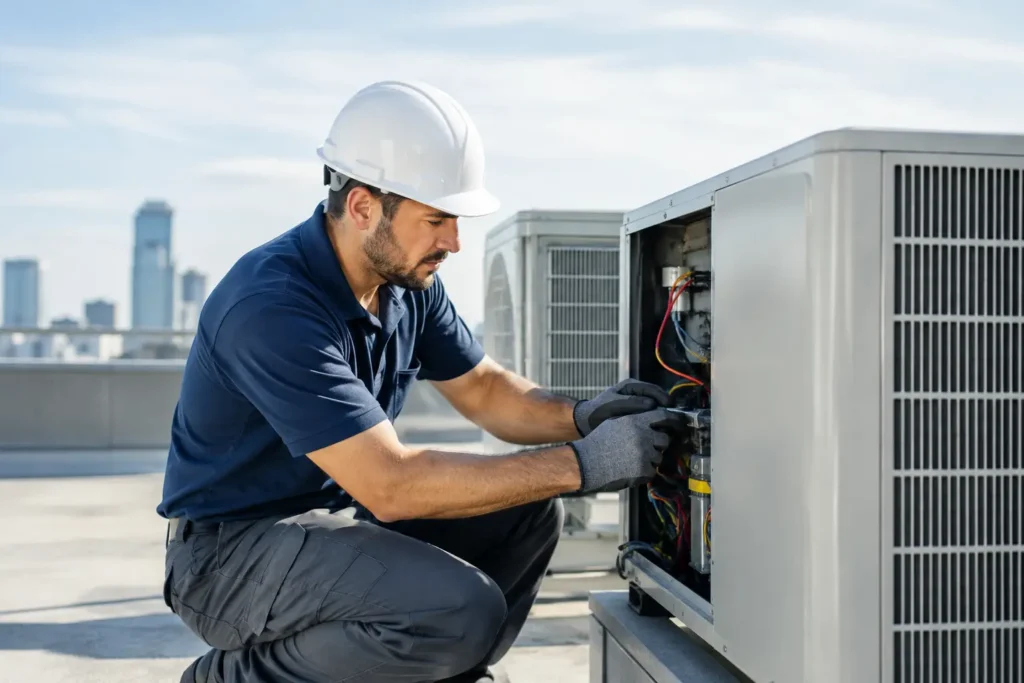
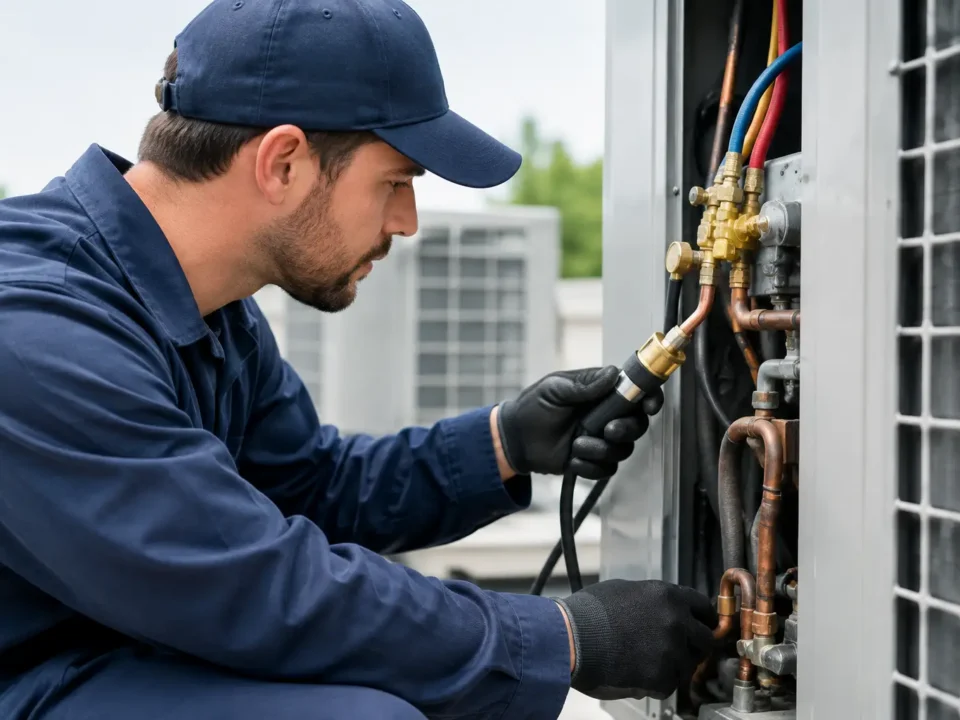
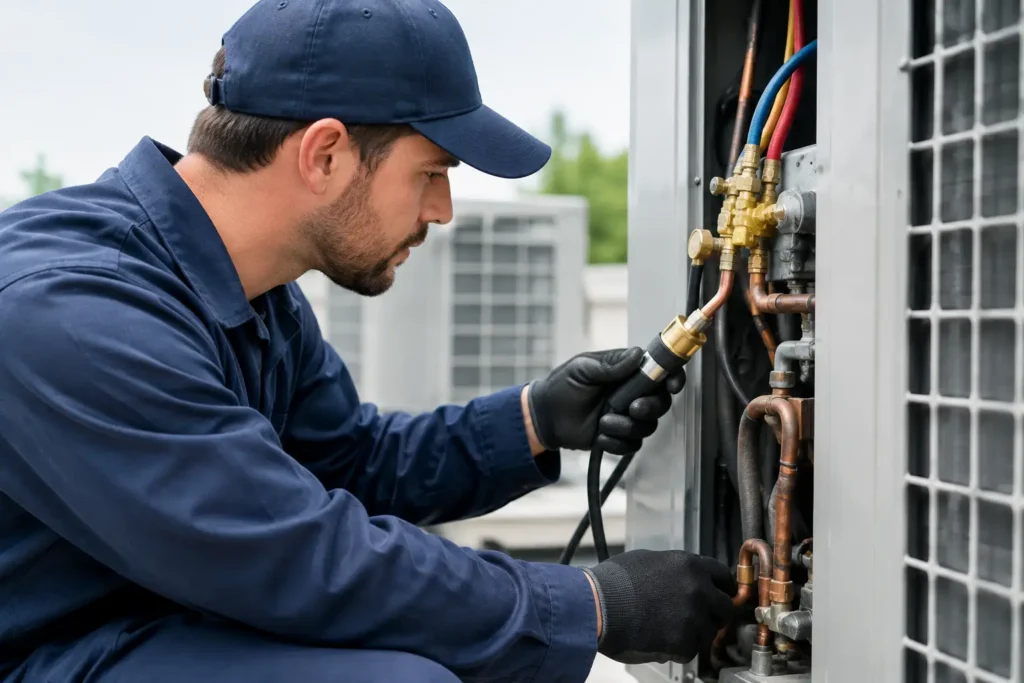
A rooftop unit failing at 2 p.m. on a humid summer weekday is not just an HVAC problem. It can mean uncomfortable employees, unhappy tenants, interrupted customer traffic, damaged inventory, and an urgent call to explain what happened. Commercial HVAC downtime puts pressure on everyone responsible for the building, which is why the best response begins well before equipment stops running.
For property managers and business owners, the goal is not necessarily to avoid every repair. Mechanical systems have wear parts, and unexpected failures can happen. The goal is to spot problems early, reduce the duration of an outage, and have a clear plan when conditions demand fast action.
What Commercial HVAC Downtime Really Costs
The repair invoice is usually the most visible cost, but it is rarely the only one. A restaurant can lose guests when dining areas become hot or cold. An office can lose productivity when employees cannot work comfortably. In retail, heat and humidity may affect both shoppers and sensitive merchandise. Medical, technology, and other specialized facilities may have tighter temperature requirements that turn a comfort issue into an operational risk.
There is also a tenant-relations cost. When building occupants report the same hot or cold areas repeatedly, they want a response they can see. Delayed decisions can make a manageable repair feel like a larger failure of property management.
That is why a low-cost approach is not always the least expensive approach. Postponing maintenance or using a temporary fix may seem reasonable when budgets are tight. Sometimes it is the right short-term decision. But if the same unit needs repeated emergency visits, causes regular complaints, or is approaching the end of its service life, planned repair or replacement can protect the operating budget better than another reactive call.
Common Causes of Commercial HVAC Downtime
Commercial systems typically give warning signs before a full shutdown. The challenge is that those signs can be easy to overlook in a busy building. Rising utility costs, uneven temperatures, frequent thermostat adjustments, unusual noise, water around equipment, and units that run constantly all deserve attention.
Dirty filters are a simple example. Restricted airflow forces equipment to work harder, can contribute to coil problems, and may shorten component life. A filter issue is not always the sole cause of a failure, but it can place unnecessary strain on a system that is already aging.
Electrical components, capacitors, contactors, belts, motors, condensate drains, refrigerant-related issues, and failed controls are other common sources of outages. In older equipment, multiple parts may be nearing the end of their expected life at once. Replacing only the part that failed may restore service today, but a qualified technician can help determine whether other near-term repairs should factor into the decision.
Weather matters in Northern Virginia, too. Extended heat waves push cooling equipment for long periods, while cold snaps expose weaknesses in heating systems. Equipment that seemed acceptable during mild weather may struggle when demand is highest. That is precisely when service availability and replacement lead times can become more challenging.
Preventing Commercial HVAC Downtime Starts With a Schedule
Preventive maintenance is the most practical way to reduce surprise failures. It is not a promise that equipment will never break. It is a disciplined process for finding worn components, airflow restrictions, drainage problems, control issues, and declining performance before they cause a shutdown.
For many commercial properties, scheduling service before cooling season and before heating season is a sensible starting point. The right frequency depends on the equipment type, operating hours, building use, and environment. A small office with standard weekday hours does not face the same demands as a restaurant, daycare, server room, or multi-tenant property with equipment operating for long stretches.
During a professional maintenance visit, the focus should be on more than a quick visual check. Technicians should assess system operation, inspect key components, identify safety or reliability concerns, and document recommendations in clear terms. That record gives facility decision-makers a better basis for budgeting and helps prevent important details from being lost when staff or vendors change.
Building teams also play an important role between service visits. Keep access to mechanical equipment clear, replace filters on schedule, and report changes in performance early. If occupants consistently complain about one area, do not assume it is simply a thermostat preference. It could point to airflow, zoning, control, insulation, or equipment-capacity concerns that need evaluation.
Track the Patterns, Not Just the Emergency
A single repair does not always indicate that a system needs replacement. However, recurring service calls tell a story. Keep a simple record of the unit involved, the issue, repair cost, downtime, and any impact on occupants or operations.
This information helps answer the questions that matter: Is the equipment becoming unreliable? Are repairs increasing? Is the unit efficient enough for its current load? Will a planned replacement be less disruptive than waiting for a peak-season failure?
Age matters, but condition matters more. A well-maintained older system may continue serving a building reliably, while a newer unit with installation, drainage, airflow, or control problems may need attention sooner. A professional assessment should consider the full picture rather than relying on age alone.
Build a Response Plan Before the System Fails
When a unit goes down, the first few hours matter. A clear response plan reduces confusion and helps staff communicate calmly with tenants, employees, and customers. Your plan does not need to be complicated, but it should identify who can authorize repairs, who contacts the HVAC provider, and how occupants receive updates.
For properties with sensitive spaces, identify temporary measures in advance. This may include relocating staff, limiting use of affected rooms, adjusting business hours, or using approved temporary cooling or heating equipment where appropriate. Temporary equipment can help, but it is not a substitute for correcting the underlying issue, and it must be used safely without overloading the building’s electrical capacity.
A useful commercial HVAC response plan should cover at least these four points:
- Current equipment information, including unit locations, model numbers, and previous repair history.
- Authorized contacts who can approve diagnostics, repairs, or after-hours work without delay.
- Occupant communication procedures for tenant spaces, customers, and employees.
- Escalation criteria for when a recurring repair should trigger a replacement evaluation.
Store this information where the right people can access it after hours. A maintenance binder locked in an office is less useful when an emergency occurs on a weekend.
When Repair Is the Right Call and When It Is Not
Repair is often the sensible choice when the issue is isolated, the equipment is otherwise dependable, and the repair meaningfully restores performance. Fast, qualified repair can protect comfort and prevent a small issue from becoming a larger interruption.
Replacement deserves consideration when failures are frequent, repair costs are mounting, parts are difficult to obtain, or the system no longer meets the building’s needs. An older unit that cannot maintain comfort during normal peak conditions may create more business risk than its repair estimate suggests.
The best decision is not always the cheapest immediate option. A planned equipment project can be scheduled around tenants, business operations, and weather conditions. An emergency replacement may leave fewer choices and create more disruption. Ask for an honest assessment that explains the repair option, the likely reliability outlook, and the trade-offs of replacement.
Fast Service Matters, but Diagnosis Matters Too
During an outage, speed is essential. So is accurate diagnosis. Replacing parts without understanding the underlying cause can lead to repeat calls and repeated downtime. The right service team should communicate what failed, why it may have failed, what is needed to restore operation, and whether there are related concerns to plan for.
AAA HVAC provides commercial heating and cooling support with trained technicians and responsive service for Northern Virginia businesses and properties. When time is critical, having a trusted provider that already understands your building, equipment history, and priorities can shorten the path from problem to solution.
Do not wait for the first extreme-weather day to find out how prepared your property is. Review your maintenance schedule, confirm emergency contacts, and address the small performance concerns your occupants have already noticed. Those practical steps can keep a manageable HVAC issue from becoming a costly interruption.