Best Thermostat Settings for Summer Comfort
July 22, 2026
How to Extend Furnace Lifespan in Northern Virginia
July 24, 2026
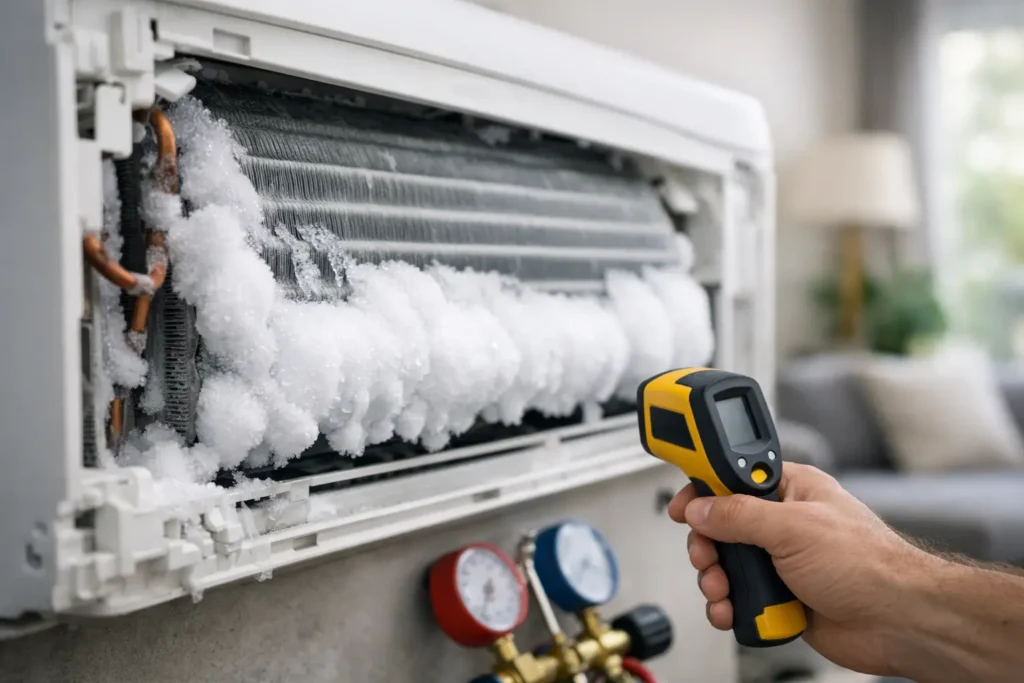
A frozen air conditioner can turn a hot Northern Virginia afternoon into a frustrating problem fast. If you are asking, why is my AC freezing, the short answer is that your system is getting too cold because heat is not moving through it correctly. Ice may appear on the refrigerant line, indoor coil, or outdoor unit – and continuing to run the cooling cycle can turn a manageable repair into a larger one.
The safest first move is to turn your thermostat from Cool to Off. Leave the system off long enough for the ice to melt completely, which can take several hours. If your thermostat has a fan setting, you can set the fan to On to help circulate warm air across the coil, provided air is moving normally from your vents. Place towels around the indoor unit if water may drip as the ice melts, and do not chip at the ice with a sharp object.
Why Is My AC Freezing Up?
Your air conditioner does not make cold air by creating cold. It removes heat from indoor air as that air passes across the evaporator coil. When the coil does not receive enough warm airflow, or when refrigerant pressure is too low, its surface temperature can fall below freezing. Moisture in the air then freezes on the coil, building layer by layer.
Once ice starts forming, airflow drops further. That creates a cycle: less airflow leads to more ice, and more ice restricts airflow even more. The result may be weak cooling, higher energy bills, water around the indoor unit, or a system that stops cooling altogether.
A dirty air filter or blocked airflow
A clogged filter is one of the most common reasons an AC freezes. A filter filled with dust, pet hair, or construction debris limits the warm household air reaching the evaporator coil. Closed supply vents, blocked return grilles, crushed ductwork, and dirty coils can create the same problem.
Check your filter first. If it looks gray, matted, or visibly dirty, replace it with the correct size and type for your system. Then make sure supply registers and return grilles are open and clear of furniture, rugs, boxes, and drapes. Closing vents in unused rooms may seem like a way to save energy, but it can reduce system airflow enough to create comfort and equipment problems.
A clean filter is a good first step, not a guarantee. If the AC freezes again after the coil has fully thawed and the filter has been changed, the problem likely needs professional diagnosis.
Low refrigerant from a leak
Refrigerant is the fluid that carries heat out of your home. When the refrigerant charge is low, pressure in the evaporator coil drops and the coil can become cold enough to freeze. Low refrigerant is not a normal maintenance issue. Your AC does not simply use it up over time.
If refrigerant is low, there is usually a leak that needs to be found and repaired. Adding refrigerant without addressing the leak may restore cooling briefly, but it does not solve the underlying problem. A qualified technician should test the system, identify the cause, make the appropriate repair, and charge the system to manufacturer specifications.
Signs that may point to a refrigerant issue include ice on the larger insulated refrigerant line, hissing sounds near the equipment, warm air from vents, or cooling that gets worse over time. These symptoms can overlap with airflow problems, which is why accurate testing matters.
A dirty evaporator coil
Even with a clean filter, the indoor evaporator coil can collect dirt over the years. Dust and residue create an insulating layer that keeps the coil from absorbing heat efficiently. Air may still come through the vents, but the heat transfer is reduced, and freezing can follow.
The evaporator coil is typically located inside or near the indoor air handler or furnace cabinet. It is not a part most homeowners should attempt to clean without proper access and equipment. Coil fins bend easily, drain components can be damaged, and cleaning chemicals must be used correctly. Professional maintenance can clean the coil safely while also checking the drain, blower, electrical connections, and refrigerant performance.
Blower motor, fan, or duct problems
Your indoor blower is responsible for moving air across the evaporator coil. If the blower motor is weak, the wheel is dirty, the capacitor is failing, or the fan speed is incorrectly set, airflow may not be sufficient. A damaged or disconnected duct can also reduce the air returning to the system.
You may notice some rooms are barely receiving air, unusual humming or rattling from the indoor unit, or a sudden change in how strongly the vents blow. These issues require service because the cause may be electrical, mechanical, or hidden inside the duct system.
Thermostat settings and outdoor conditions
A thermostat set extremely low during mild weather can contribute to freezing, especially if the system runs for long periods overnight. Most homes are comfortable with a setting around 72 to 78 degrees, depending on humidity, insulation, and personal preference. Setting the thermostat lower does not cool the house faster. It only tells the system to run longer.
Running central air when outdoor temperatures are unusually cool can also cause issues for some systems. This is more common during spring and fall or in commercial spaces where cooling may be needed outside normal summer conditions. Systems used for low-ambient cooling may need specialized controls to operate safely.
What to Do When Your AC Is Frozen
Do not restart cooling immediately after you see ice. Let the system thaw fully first. Restarting it while the coil is still frozen can strain the compressor and lead to water overflow once the ice begins melting.
After shutting off cooling, replace a dirty filter if needed and check that all vents and returns are open. Look for obvious airflow restrictions, but do not remove electrical panels or try to handle refrigerant components. Once the ice has melted, you can restart the system and monitor it closely.
If it begins cooling normally and does not freeze again, the issue may have been a severely restricted filter or blocked airflow. If ice returns, airflow remains weak, the unit blows warm air, or you see water leaking near the indoor equipment, schedule a repair appointment. For businesses, prompt service is especially important because repeated freeze-ups can disrupt occupant comfort, equipment rooms, and day-to-day operations.
When to Call an HVAC Technician
Call for professional service if the AC repeatedly freezes, if you suspect a refrigerant leak, or if the problem returns after changing the filter and allowing the unit to thaw. You should also call if the breaker trips, the blower does not run, you hear unusual noises, or water is collecting around the air handler.
A proper diagnostic visit should go beyond removing the ice. The technician should evaluate airflow, inspect the coil and condensate system, test blower performance, check electrical components, and measure refrigerant operation. That approach identifies why the unit froze in the first place and helps prevent the same issue from returning during the next heat wave.
AAA HVAC provides responsive AC repair and maintenance for homeowners, property managers, and commercial customers throughout Northern Virginia. A NATE-certified technician can determine whether the issue is a simple airflow correction or a repair that needs immediate attention.
A frozen AC is your system asking for help, not a problem to ignore until temperatures rise again. Turn off cooling, let the equipment thaw, correct any obvious airflow restriction, and get qualified service if the ice returns. Acting early protects your comfort, your equipment, and your budget.