Best AC Units for Allergies: What to Choose
September 13, 2026
How to Reduce AC Humidity for Better Home Comfort
September 15, 2026
A water heater rarely fails on a convenient day. The warning may start with a lukewarm shower, a rusty stain near the tank, or a utility bill that suddenly climbs. For Northern Virginia homeowners and property managers, acting on those early signs can prevent a cold-water emergency, water damage, and an unplanned replacement decision.
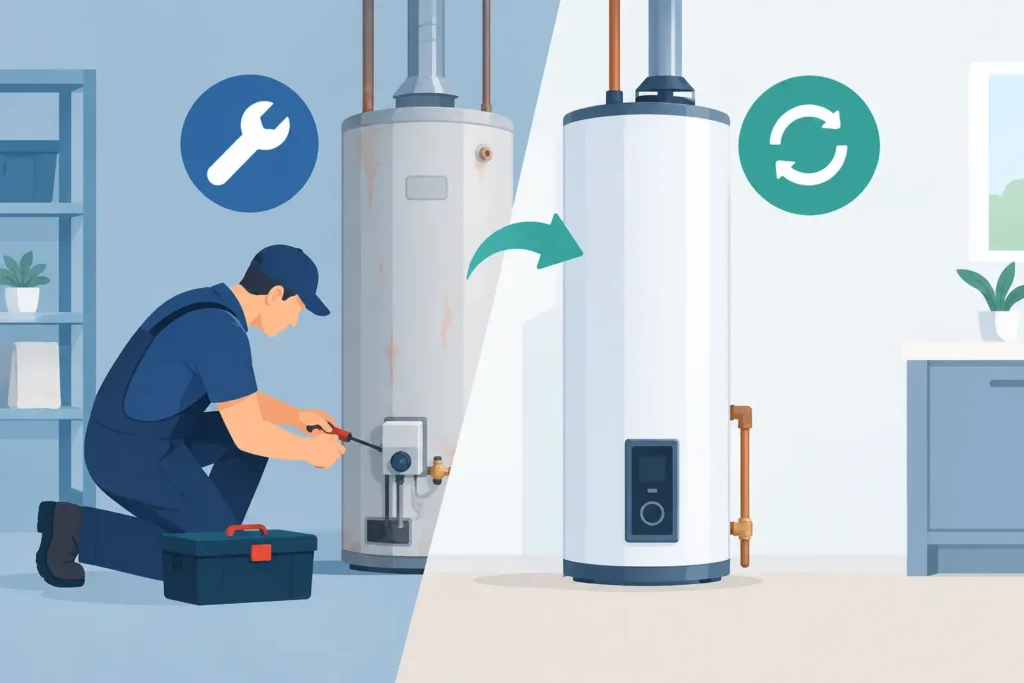
The right next step depends on the unit’s age, the type of problem, and how reliably it is meeting your household or building’s demand. Some issues are repairable. Others are a clear signal that replacement will cost less and create fewer headaches over the next few years.
When Water Heaters Need a Repair
Not every water heater problem means the tank has reached the end of its service life. A newer unit with one isolated issue can often be repaired quickly and put back into dependable operation.
If your hot water is not getting hot enough, the cause may be a failed heating element in an electric model, an ignition or burner issue in a gas model, or a thermostat setting that needs attention. These are common service issues, and repair may be the sensible option when the tank itself is sound.
Noises deserve attention, too. Popping, rumbling, or banging can occur when sediment collects at the bottom of a tank. As the burner or heating element works, water pushes through that buildup and creates noise. Sediment also makes the system work harder, which can raise operating costs and shorten its useful life. A professional evaluation can determine whether maintenance or a repair can restore performance.
A small leak near a fitting, valve, or connection may be repairable. Water around the base of the tank is more concerning. Once the tank itself has corroded and begun leaking, it cannot be reliably repaired. Waiting can turn a replacement project into a water-damage emergency.
Signs It Is Time to Replace Your Water Heater
Traditional tank water heaters commonly last around 8 to 12 years, although water quality, maintenance history, usage, and installation conditions all affect lifespan. Check the serial number on the manufacturer label if you are unsure of your unit’s age. If the tank is approaching or past that range, a significant repair deserves a closer cost comparison.
Replacement is often the better choice when you notice recurring repairs, rusty or discolored hot water, a leaking tank, or steadily declining capacity. If a household that once had enough hot water now runs out halfway through the morning routine, the system may be losing efficiency or no longer sized for the demand.
For commercial properties, the decision is also about uptime. A failing water heater can disrupt restrooms, employee facilities, tenant spaces, or customer operations. Replacing an aging unit before it fails can be easier to schedule, less disruptive, and more predictable for the budget.
Do not choose based on age alone. A six-year-old system with a failed component may be worth repairing. A 12-year-old unit with corrosion, poor efficiency, and a major repair need may be better replaced. A qualified technician can explain the condition of the system and provide a clear recommendation rather than pushing a one-size-fits-all answer.
Choosing Between Tank and Tankless Water Heaters
The best water heater is the one that matches your actual hot-water use, available fuel source, installation space, and budget. Bigger is not always better, and the lowest initial cost is not always the lowest cost over time.
Conventional tank water heaters
A tank water heater stores a set volume of heated water, usually 40 to 75 gallons in many homes. It is familiar, generally less expensive to install, and a practical choice when replacing a similar existing unit. The trade-off is standby heat loss: the system uses energy to keep stored water ready even when no one is using it.
Proper sizing matters. A family with back-to-back showers, laundry, and dishwasher use may need more capacity than a smaller household with staggered use. For commercial applications, the demand pattern matters even more. A property with sharp morning or evening demand may require a different capacity than one with steady, lower use throughout the day.
Tankless water heaters
Tankless water heaters heat water as it flows through the unit instead of storing it in a large tank. They can provide a long supply of hot water when properly sized and may reduce energy use because they are not continuously heating stored water.
However, tankless systems cost more upfront and must be matched carefully to the number of fixtures that may run at once. Cold incoming water during a Northern Virginia winter can also affect how much hot water a tankless unit can deliver at a given flow rate. Installation may require venting, gas-line, electrical, or location changes depending on the property and the model. Tankless is an excellent option for some homes and buildings, but it is not automatically the right option for every replacement.
Fuel Type and Efficiency Matter
Gas and electric water heaters each have advantages. Gas units can recover hot water quickly and may be a strong fit where natural gas is already available. Electric models can be simpler in certain installations and may have a lower upfront equipment cost. The better choice depends on utility costs, existing equipment, building requirements, and the level of hot-water demand.
Efficiency ratings should be part of the conversation, but they should not be the only factor. A high-efficiency system that is too small will still leave people waiting for hot water. A properly sized unit with a realistic operating cost can be a better long-term value than an oversized or poorly matched option.
Ask for a recommendation based on your home or facility, not just a model number. The useful questions are straightforward: How many people or occupants use hot water? Are showers, laundry, or appliances often used at the same time? Has demand changed since the current unit was installed? Is the goal lower monthly energy use, more hot water, or both?
Protecting Your New System
Water heater maintenance is not complicated in concept, but it should be handled carefully. Regular service can identify corrosion, test safety components, inspect connections, and address sediment before it becomes a bigger performance problem. The frequency depends on the unit type, water conditions, and manufacturer guidance.
Keep the area around the unit accessible and free of stored items. If you see moisture, corrosion, unusual noise, inconsistent temperatures, or a sudden reduction in hot water, schedule service before the issue worsens. Do not ignore a relief valve that is discharging water or a gas water heater with unusual odors or performance changes. Those conditions require prompt professional attention.
For property managers, preventive water heater service is especially valuable when units are located in occupied spaces or areas where a leak could affect tenants and operations. Planning service or replacement on your schedule gives you more control than waiting for a failure.
Get a Clear Answer Before a Small Problem Grows
When hot water becomes unreliable, you need more than a quick guess. You need a technician who can assess the equipment, explain the repair and replacement options, and help you make a practical decision for the property. AAA HVAC provides water heater repair and replacement support with the responsive service homeowners and commercial customers expect.
A water heater should quietly do its job in the background. If yours is making noise, leaking, running out of hot water, or nearing the end of its expected life, scheduling an evaluation now can help protect comfort, property, and your budget.