Furnace Blower Problems and What Causes Them
September 12, 2026
Water Heaters: Repair or Replace Your System
September 14, 2026
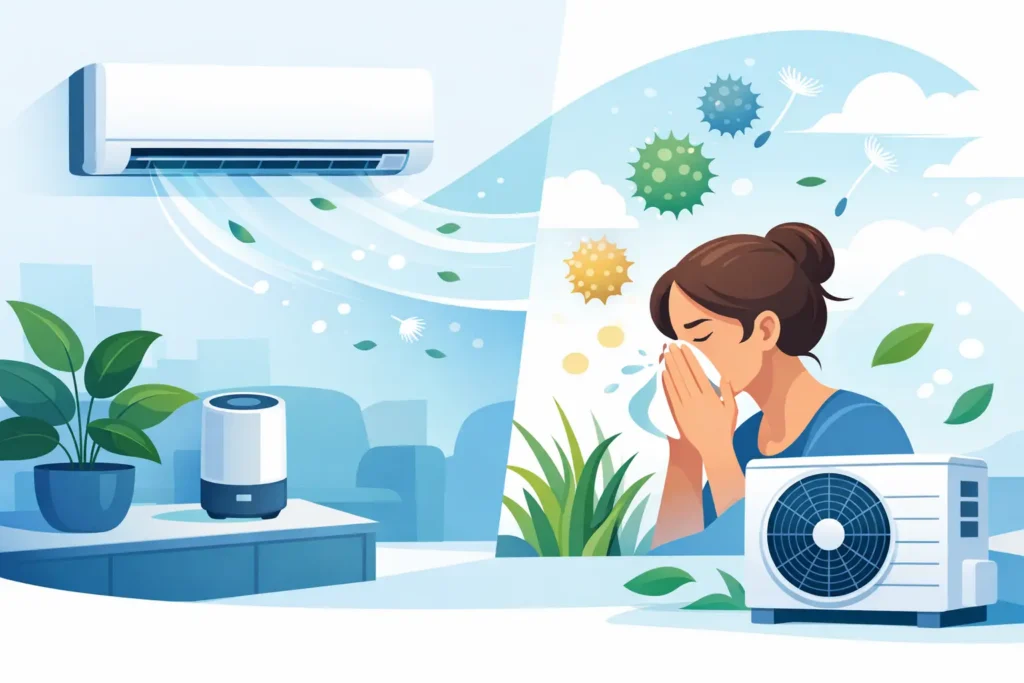
If searches for “best AC units allergies” brought you here, the answer is not simply the air conditioner with the highest price tag or the coldest setting. For allergy sufferers, cooling equipment needs to do two jobs well: keep the home comfortable and help create conditions that limit airborne irritants. That means paying close attention to filtration, humidity control, airflow, and proper installation.
A well-chosen system can make a noticeable difference during Northern Virginia’s humid cooling season, when pollen, mold spores, dust, and outdoor pollution can find their way indoors. It cannot cure allergies or replace medical care, but the right AC setup can reduce the conditions that make symptoms harder to manage.
What Makes an AC Unit Better for Allergies?
Air conditioners do not all clean air in the same way. Standard cooling equipment primarily removes heat and some moisture. Its effect on allergens depends on the filter it can support, how consistently it circulates air, and whether it controls indoor humidity without creating comfort problems.
The best AC units for allergies are usually systems designed to work with higher-quality filtration and steady, controlled airflow. A system that short-cycles, has weak airflow, or cannot maintain indoor humidity may leave a home feeling cool while doing little to improve air quality.
For most homes, the strongest option is a properly sized central air conditioner or heat pump paired with a compatible air handler and filtration strategy. A ductless mini-split can also be an excellent choice in a room addition, converted garage, or home without central equipment, especially when it includes washable multi-stage filters. The right fit depends on the home, the allergy triggers involved, and the condition of the existing HVAC system.
Filtration Matters More Than Marketing Claims
Look beyond labels such as “allergy friendly” or “air purifying.” Ask what type of filter the system can safely use. Filter performance is commonly measured by MERV rating. A higher rating captures smaller particles, but it can also restrict airflow if the equipment was not designed for it.
For many residential systems, a MERV 11 to MERV 13 filter provides a practical balance between particle capture and airflow. These filters can help catch pollen, pet dander, mold spores, and fine dust. However, a MERV 13 filter is not automatically the right choice for every unit. Installing an overly restrictive filter can strain the blower, reduce cooling performance, and contribute to costly repairs.
This is where professional guidance matters. A qualified HVAC technician can confirm what filter rating your system can handle and identify whether an upgraded media cabinet or other equipment adjustment is needed. The goal is cleaner air without sacrificing the reliability of the system.
Humidity Control Is a Major Part of Allergy Comfort
Humidity is often the missing piece in allergy conversations. When indoor humidity stays too high, mold and dust mites are more likely to thrive. When it is too low, dry nasal passages and irritated throats can make allergy symptoms feel worse.
Most homes are most comfortable when relative humidity remains roughly between 30% and 50%. During a humid Virginia summer, an air conditioner should remove enough moisture to keep the space from feeling clammy. Oversized AC equipment can work against that goal. It may cool the home too quickly, shut off before removing enough moisture, and cycle on again soon after.
Variable-speed systems are especially useful here. Instead of operating at full output every time they start, they can run longer at lower capacity when conditions allow. That longer, gentler cycle can improve moisture removal and maintain more consistent temperatures. The trade-off is a higher upfront investment, but homeowners who prioritize comfort, quieter operation, and humidity control often find it worthwhile.
Central Air, Heat Pumps, and Mini-Splits Compared
There is no single winner for every home. The best option depends on whether you are replacing an aging system, cooling one problem area, or planning an upgrade for long-term comfort.
Central Air Conditioners
A central AC system is often the most practical allergy-conscious choice for homes that already have compatible heating and cooling equipment. It can support whole-home filtration and provide even cooling when it is correctly sized and maintained. Pairing it with a variable-speed air handler can improve airflow consistency and humidity removal.
The limitation is that the benefits depend heavily on installation quality. Incorrect sizing, poor refrigerant charge, or inadequate return airflow can reduce comfort and undermine the features you paid for. Equipment selection should be based on a load calculation, not just the size of the old unit.
Heat Pumps
Modern heat pumps provide cooling in summer and heating in winter, making them a strong replacement option for many Northern Virginia homeowners. From an allergy perspective, their advantages are similar to central AC: they can work with effective filtration, manage humidity, and maintain steady airflow.
A variable-speed heat pump may offer particularly stable indoor comfort throughout the year. While the initial cost can be higher than a basic air conditioner, efficiency incentives and year-round use can make the investment attractive. Your home’s electrical capacity, insulation, and existing heating arrangement should be part of the decision.
Ductless Mini-Splits
Ductless mini-splits are useful when a room has persistent comfort issues or when adding central equipment is impractical. Each indoor unit has its own filter and provides targeted temperature control. This can be helpful for a bedroom where an allergy sufferer spends significant time.
Still, mini-splits are not a complete whole-home air-quality solution by themselves. Their built-in filters require regular cleaning, and one wall-mounted unit cannot manage air conditions throughout a large home. They work best as a focused solution or as part of a broader comfort plan.
Features Worth Asking About Before You Buy
When comparing AC systems, focus on features that make a measurable difference rather than extras that sound impressive. Variable-speed compressors and blowers support longer run times, quieter operation, and more consistent humidity control. Compatible high-efficiency filtration helps capture common airborne particles without putting excessive strain on the system.
A properly designed thermostat can also help. Smart thermostats offer scheduling and remote control, but their real value is maintaining stable settings instead of frequent, dramatic temperature changes. Constantly setting the thermostat much lower will not cool the home faster, and it may encourage unnecessary cycling or make the indoor air feel uncomfortably dry.
Some homeowners also consider ultraviolet lights or electronic air-cleaning accessories. These products can have a place in certain situations, but they should not be the first priority. Start with correct system sizing, reliable moisture control, and filtration the equipment can handle. Those fundamentals typically have the largest impact.
Installation and Maintenance Protect Air Quality
Even the best equipment cannot perform as intended when installation or maintenance is overlooked. A new system should be sized for the home’s actual cooling load, not selected by square footage alone. Window exposure, insulation, occupancy, ceiling height, and the home’s layout all affect the calculation.
After installation, stay consistent with filter changes. A filter that is clogged with dust and pollen can reduce airflow, raise operating costs, and leave rooms less comfortable. The right replacement schedule depends on the filter type, pets, household activity, and allergy sensitivity, but many homes benefit from checking filters monthly during heavy cooling use.
Seasonal AC maintenance is equally valuable. A technician can inspect electrical components, verify refrigerant performance, clean critical equipment parts, and identify problems before they become a no-cooling emergency. For allergy-prone households, dependable performance is not just about avoiding a hot house. It is about keeping temperature and humidity stable when outdoor allergens are at their worst.
When It Is Time to Replace an Older AC Unit
Consider an evaluation if your current system runs constantly, leaves the home humid, has uneven temperatures, needs frequent repairs, or cannot accommodate the level of filtration your household needs. Older equipment may still cool, but that does not mean it is managing comfort efficiently.
AAA HVAC can help homeowners and property managers evaluate replacement options based on system condition, comfort concerns, and budget. NATE-certified technicians can explain the practical trade-offs clearly, so you are not left guessing which features matter for your home.
The right air conditioner will not eliminate every trigger, but it can give your household a cooler, drier, more comfortable place to recover after a high-pollen day. Start with the basics: proper sizing, compatible filtration, controlled humidity, and maintenance you can count on.