Why NATE Certified HVAC Technicians Matter
June 24, 2026
How to Troubleshoot Uneven Cooling
June 26, 2026
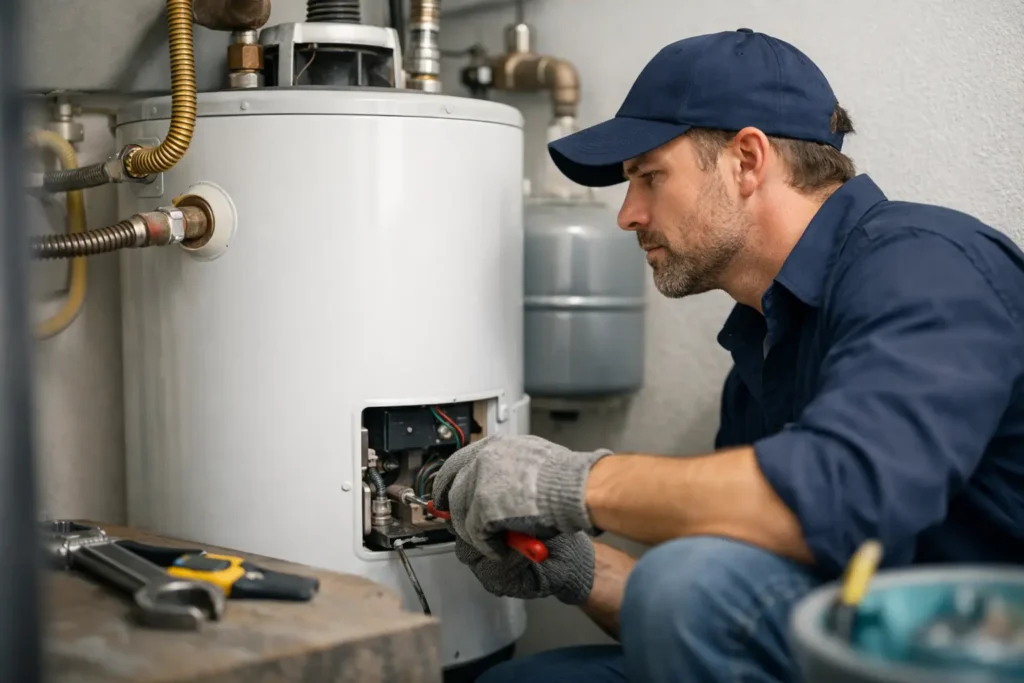
A cold shower usually settles the question fast – if your hot water is gone, you need answers now. A reliable water heater repair service can restore hot water, prevent water damage, and help you avoid turning a small issue into a full system failure.
For homeowners and property managers, water heater problems rarely show up at a convenient time. You may notice lukewarm water during morning showers, strange noises from the tank, rusty water at the tap, or a leak forming around the base of the unit. In commercial settings, the stakes are even higher. Hot water downtime can disrupt tenants, employees, customers, and daily operations.
What a water heater problem is really telling you
Most water heaters do not fail without warning. They usually start with smaller symptoms that point to wear, sediment buildup, a failing heating element, a bad thermostat, or pressure issues inside the tank. The challenge is that different problems can look similar from the outside.
If your water goes cold too quickly, the issue might be as simple as one failed electric element or a thermostat that is not reading properly. If you hear popping or rumbling, that often points to hardened sediment at the bottom of the tank. If the unit is leaking, the source matters. A loose valve connection is very different from a cracked tank.
That is why a proper diagnosis matters. Replacing the wrong part wastes time and money, and delaying a real problem can make the repair more expensive.
Signs you need water heater repair service
Some symptoms are easy to ignore for a while, but they should not be. Intermittent hot water is one of the most common. Many people wait because the system still works sometimes. In practice, that often means a component is beginning to fail and will likely stop working completely soon.
Discolored water is another warning sign. If hot water comes out rusty but cold water looks clear, the water heater may be corroding internally or the anode rod may be spent. That does not always mean replacement is required right away, but it does mean the unit needs attention.
A spike in energy bills can also point to trouble. As sediment builds up or parts wear down, the heater works harder to deliver the same result. You end up paying more for less performance.
Then there are the signs that should move to the front of the line: active leaking, the smell of gas near a gas unit, unusual banging sounds, or no hot water at all. Those are not wait-and-see issues.
Common causes behind water heater repairs
Water heaters are simple compared to some home systems, but they still have several parts that can fail. In tank-style systems, heating elements, gas control valves, thermocouples, thermostats, pressure relief valves, drain valves, and anode rods all affect performance. With tankless systems, ignition components, scale buildup, flow sensors, and venting issues often come into play.
Northern Virginia properties also deal with water quality factors that can shorten equipment life. Hard water contributes to mineral buildup, and that buildup can reduce efficiency, strain components, and shorten the time between repairs.
Age matters too. A newer unit with one bad part is often worth repairing. An older unit with corrosion, repeated issues, and declining efficiency may be approaching the point where replacement makes more financial sense.
Repair or replace? It depends on the whole picture
This is the question most customers ask first, and the honest answer is that it depends. A good technician should look at the age of the unit, the condition of the tank, the cost of the repair, and how often the system has needed service.
If the problem is isolated and the tank itself is still in good shape, repair is usually the practical choice. Replacing a thermostat, heating element, or valve is far different from dealing with a leaking tank shell. Once the tank body is compromised, repair is typically not the right long-term answer.
Usage also matters. A family that runs out of hot water daily may not just need a repair. They may need a different size unit or a better-fit system. A commercial property with high demand may need a solution built around reliability and recovery speed, not just the least expensive short-term fix.
The right recommendation should protect your budget today without setting you up for another service call next month.
Why fast service matters more than most people think
When a water heater fails, the inconvenience is obvious. What gets missed is the risk around the failure. Even a small leak can damage flooring, drywall, baseboards, or nearby storage. If the unit is in a utility closet or finished area, that damage can spread quickly.
There is also the safety side. Gas water heaters involve fuel lines, combustion, and venting. Electric models combine water and high voltage. Pressure-related issues inside any water heater deserve professional handling. This is not a system where guesswork is a good plan.
That is one reason many customers look for same-day help when hot water stops or a unit starts leaking. A prompt diagnosis can often keep the problem contained and get the system back online before the situation gets more expensive.
What to expect from a professional water heater repair service
A professional service visit should start with a clear inspection, not a rushed guess. The technician should confirm the type of system, review the symptoms, test key components, and identify whether the issue is mechanical, electrical, gas-related, or caused by sediment and wear.
From there, you should get a straightforward explanation of what failed, what it will take to fix it, and whether the repair is a sound investment. That clarity matters. Customers do not need pressure. They need honest information, realistic options, and work performed safely.
For property managers and commercial clients, communication is especially important. You need to know how long the outage may last, whether temporary workarounds are possible, and how to reduce disruption for occupants or operations.
A dependable company should also stand behind the repair. Credentials, experience, and guaranteed workmanship are not small details. They are part of what protects you when a home-comfort system fails unexpectedly.
How to reduce future water heater repairs
No water heater lasts forever, but maintenance can stretch its service life and improve reliability. Flushing sediment from the tank, checking the anode rod, testing safety components, and inspecting for early corrosion can catch problems before they turn into emergency calls.
Tankless units need maintenance too, especially where scale buildup is common. Without routine service, efficiency drops and component wear increases.
If your water heater is older, annual inspection becomes even more valuable. It gives you a chance to plan instead of react. That matters whether you are managing a household schedule or trying to avoid downtime in a commercial property.
For customers in Reston and across Northern Virginia, working with a company that handles plumbing, HVAC, and related home-service systems can also simplify the process. If the issue affects more than one part of the property, coordinated service saves time.
When it is time to make the call
If your water heater is leaking, producing rusty water, making loud noises, cycling unpredictably, or failing to deliver enough hot water, waiting usually does not improve the outcome. The sooner the problem is diagnosed, the more likely you are to have a repair option instead of a larger replacement or cleanup bill.
AAA HVAC serves customers who need prompt, dependable help when comfort systems stop working the way they should. That same standard matters with hot water. You want a technician who shows up ready to diagnose the issue, explain the options clearly, and do the work right.
Hot water is one of those things you do not think much about until it is gone. When that happens, the best next step is simple: treat the warning signs early, get a professional diagnosis, and protect your home or building before a manageable repair turns into a bigger problem.