How to Pick the Best HVAC Maintenance Plan
June 23, 2026
Water Heater Repair Service: When to Call
June 25, 2026

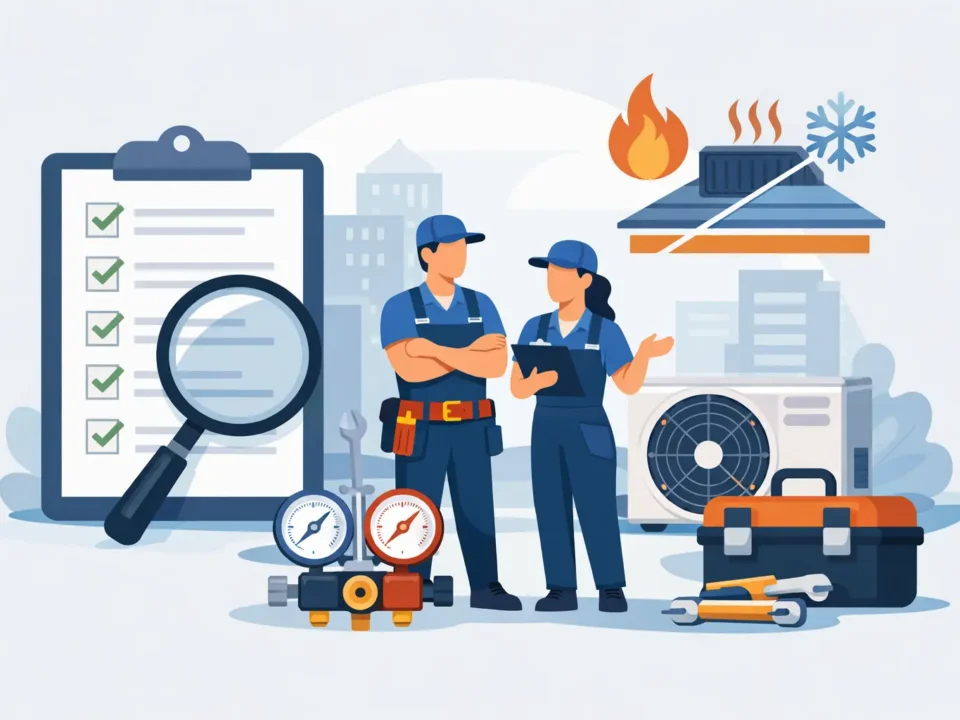
When your air conditioner quits during a Northern Virginia heat wave or your furnace stops on a freezing night, you are not looking for guesses. You want a technician who can diagnose the problem correctly, explain the fix clearly, and get your system back to work without wasting time. That is why NATE certified HVAC technicians matter.
For homeowners, property managers, and business owners, HVAC service often comes down to trust. Most people do not see what is happening inside a heat pump, furnace, rooftop unit, or air handler. You are relying on the person in front of you to know the equipment, spot the real issue, and recommend the right repair or replacement. Certification does not guarantee perfection, but it does give you a stronger reason to trust the work being done.
What NATE certified HVAC technicians means
NATE stands for North American Technician Excellence. It is a widely recognized certification for HVAC professionals. Technicians earn it by passing exams that test real working knowledge in installation, service, and specialty areas.
That matters because HVAC systems are not simple. Even a basic comfort complaint can involve airflow, refrigerant charge, electrical controls, thermostat communication, duct performance, and equipment sizing. A technician may also need to work across gas heating, electric cooling, indoor air quality components, and newer high-efficiency systems with more advanced controls.
When a technician is NATE certified, it shows they have proven their knowledge against an industry standard. It is not just a company claim or a marketing phrase. It is a credential that signals technical competence in the field.
Why NATE certified HVAC technicians matter to customers
The biggest benefit is accuracy. A qualified technician is more likely to identify the root cause of a problem instead of treating the symptom. If your AC keeps tripping a breaker, for example, the fix may not be as simple as replacing one part. It could involve electrical load issues, a failing motor, a weak capacitor, or a compressor problem. Misdiagnosis costs money and wastes time.
Certification also supports consistency. That is important when you are making a high-stakes decision like repairing an aging furnace, replacing a commercial split system, or maintaining several units across a property. You want service that follows established practices, not trial and error.
There is also a safety factor. HVAC work can involve electricity, gas connections, combustion systems, refrigerants, and ventilation. A technician who is properly trained and tested is better prepared to work safely and spot conditions that could become hazardous.
For commercial clients, the value is often tied to uptime. A business cannot afford long comfort disruptions, equipment damage, or repeated callbacks. A more capable technician can help reduce downtime and support better long-term equipment performance.
What certification does and does not tell you
NATE certification is a strong signal, but it is not the only one that matters.
A certified technician may still need time to inspect your system before giving a firm answer. That is normal. Good service is careful service. If someone gives you an instant diagnosis without testing, certification on paper will not help much.
On the other hand, a technician without NATE certification is not automatically unqualified. Some experienced professionals have deep practical knowledge built over many years. Still, when you are choosing between providers, certification gives you an added layer of confidence, especially if you are not in a position to judge technical skill yourself.
The best approach is to look at the full picture: certification, company reputation, guarantees, responsiveness, and how clearly the technician communicates with you on site.
How NATE certified HVAC technicians help during repairs
Repairs are where technical skill becomes very visible.
A weak technician may replace parts until the issue goes away. A strong technician works through diagnosis in a more disciplined way. They check operating conditions, verify system performance, and make sure one failure is not being caused by another. That can mean the difference between one correct repair and several expensive visits.
This is especially important with intermittent problems. Maybe the system only freezes up in the afternoon. Maybe the furnace short cycles only when outdoor temperatures drop sharply. Maybe a packaged rooftop unit keeps losing capacity but never fully shuts down. These are the kinds of problems that require methodical testing, not guesswork.
For customers, that usually leads to fewer surprises. You are more likely to get a clear explanation of what failed, why it failed, and whether the repair makes sense compared with replacement.
Why certification matters during installation
Many comfort problems are created on day one.
An HVAC system can be a respected brand with high efficiency ratings and still perform poorly if it is installed incorrectly. Improper airflow, wrong refrigerant charge, poor duct transitions, incorrect controls setup, and sizing mistakes can all reduce comfort and equipment life.
NATE certified HVAC technicians are trained around the principles that affect real system performance. That does not mean every installation will be identical, because every building is different. A single-family home in Reston has different needs than a medical office, retail space, or multi-tenant commercial property. But certification supports the kind of technical discipline that helps systems start off right.
That matters over the life of the equipment. A good installation can improve efficiency, reduce breakdowns, and help rooms heat and cool more evenly. A rushed or careless installation often creates years of frustration that no thermostat upgrade can fix.
NATE certified HVAC technicians and preventive maintenance
Maintenance is not just a box to check. Done well, it is where small issues get caught before they become expensive repairs.
Certified technicians can bring more value to maintenance visits because they are not only cleaning components or changing filters. They are also evaluating performance. They know what normal looks like and what trends suggest wear, airflow problems, control issues, or declining efficiency.
For homeowners, that can help avoid sudden seasonal failures. For property managers and commercial clients, it can support budgeting and reduce unexpected disruptions. There is a big difference between being told a blower motor is showing signs of failure during scheduled maintenance and finding out after a no-cooling call on a busy day.
Questions worth asking before you schedule service
If certification matters to you, ask directly whether the company sends NATE certified HVAC technicians for the type of service you need. You can also ask whether the technician handles both diagnostics and repairs, how the company approaches replacements versus repairs, and whether the work is backed by a service guarantee.
These questions are practical, not confrontational. A reliable company should be comfortable answering them. In fact, strong providers want customers to ask, because clear expectations lead to better service decisions.
If you are comparing bids for a replacement project, do not focus only on equipment brand and price. Ask who is installing the system, how the system will be matched to the building, and what steps are taken to verify performance after installation. The quality of the technician matters as much as the name on the unit.
What this means in a fast-service market
In urgent situations, people often book the first available appointment. That is understandable. Comfort problems rarely happen on a convenient schedule.
But speed and qualifications should work together. Same-day availability is valuable only if the technician arriving at your home or business can do more than offer a temporary patch. That is one reason companies like AAA HVAC emphasize certified technicians alongside responsiveness and guaranteed work. Customers do not just want a fast truck in the driveway. They want confidence that the issue will be handled correctly.
In a market where many service claims sound similar, certification helps separate proven technical ability from general promises. It is one of the clearest ways to reduce uncertainty before work begins.
Choosing HVAC service is really a decision about risk. The wrong diagnosis, the wrong installation, or the wrong maintenance approach can cost far more than the first invoice. NATE certification is not the only sign of quality, but it is one of the most useful ones. When comfort, safety, and system reliability are on the line, that extra level of proven expertise is worth paying attention to.