Electrical Issues Affecting HVAC Performance
July 20, 2026
Best Thermostat Settings for Summer Comfort
July 22, 2026
A Northern Virginia heat wave can turn a small A/C problem into an urgent comfort issue fast. Knowing the air conditioner repair warning signs to watch for gives you a chance to schedule service before your home, office, tenants, or customers are left with no cooling at all.
Some issues are minor when caught early, such as a clogged drain line or worn capacitor. Others can point to electrical trouble, refrigerant concerns, or a failing compressor. The right response depends on the symptom, the age of the equipment, and whether your system is still cooling safely and consistently.
10 Air Conditioner Repair Warning Signs to Know
1. Warm air is coming from the vents
If the thermostat is set to cool but the supply vents are blowing warm or room-temperature air, something is wrong. A dirty air filter, incorrect thermostat setting, tripped breaker, low refrigerant, or compressor problem can all affect cooling.
Start by confirming the thermostat is set to Cool and the fan is set to Auto. Check the filter if it is accessible and replace it if it is visibly dirty. If the unit still cannot produce cool air, avoid repeatedly turning it on and off. That can put additional strain on components that are already struggling.
2. Cooling is weak or uneven from room to room
An A/C system does not need to fail completely to need attention. Maybe the upstairs is hot while the main floor stays comfortable, or one office suite never cools properly. Weak or uneven cooling can result from airflow restrictions, duct leaks, dirty coils, failing blower components, or an improperly sized system.
In a two-story home, temperature differences can sometimes be reduced by thermostat adjustments, ceiling fans, and closed blinds. But a dramatic change from last season or a single area with little airflow deserves a professional inspection. For commercial spaces, uneven temperatures can also affect employee comfort, customer experience, and equipment performance.
3. Your energy bills rise without a clear reason
A higher summer electric bill is expected when temperatures climb. A sudden or continuing increase without a major change in usage is different. It may mean the A/C is running longer to deliver the same amount of cooling.
Dirty coils, duct leakage, refrigerant loss, aging motors, and thermostat problems can all reduce efficiency. Maintenance may correct some causes. If the system is older and needs frequent repairs, a technician can help you compare the likely repair cost against the value of replacement rather than making a rushed decision during an outage.
4. The system runs constantly or short cycles
An air conditioner should cycle on, cool the space, and shut off for a period before starting again. If it runs nearly nonstop, it may be unable to keep up because of restricted airflow, low refrigerant, poor insulation, or an equipment issue.
Short cycling is the opposite pattern: the system turns on and off every few minutes. This can be caused by a dirty filter, frozen evaporator coil, oversized equipment, electrical issue, or thermostat malfunction. Both patterns waste energy and increase wear on the system, so they are worth addressing before a part fails.
5. You hear new or unusual noises
Most systems make a steady airflow sound and a brief click as they start or stop. Loud buzzing, grinding, banging, screeching, rattling, or repeated clicking is not normal.
The sound can offer a clue, but it does not provide a reliable diagnosis on its own. Rattling may be as simple as a loose panel, while grinding can indicate a motor or bearing problem. Turn the system off and arrange service promptly if you hear metal-on-metal sounds, persistent buzzing, or loud banging. Continuing to operate the unit can turn a manageable repair into a more expensive one.
6. Water is leaking near the indoor unit
Your air conditioner removes humidity as it cools, so it is normal for condensation to drain away through a dedicated line. Water pooling around the indoor air handler, furnace, or utility area is not normal.
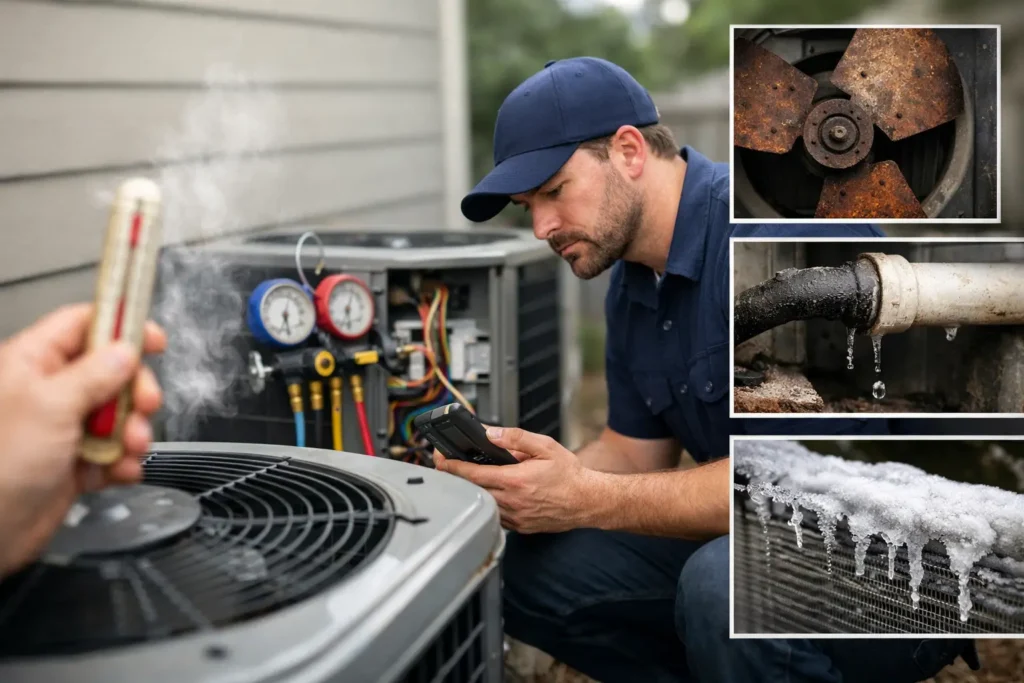
A blocked condensate drain is a common cause, particularly during humid weather. It can lead to water damage, mold concerns, and system shutdowns if the safety switch activates. Water may also come from a frozen coil melting after the system turns off. Because several issues can look similar, have a technician identify the source instead of assuming it is only a drain problem.
7. Ice forms on refrigerant lines or the indoor coil
Frost or ice on the copper refrigerant line, outdoor unit, or indoor coil is a clear warning sign. Low airflow from a dirty filter or blower issue can cause the coil to freeze. Refrigerant problems can also contribute.
Do not chip ice away or keep forcing the system to run. Turn cooling off, leave the fan setting on if appropriate for your system, and contact a qualified technician. The ice must melt before a full diagnosis can be made, and operating a frozen system can damage the compressor.
8. You notice musty, burning, or chemical odors
A musty smell when the A/C starts may point to moisture buildup, a dirty coil, or microbial growth within the system or ductwork. A burning smell can indicate an overheating electrical component or motor. A sharp chemical odor may be related to wiring, insulation, or another component that needs immediate attention.
If you smell burning, see smoke, or notice a breaker repeatedly tripping, shut the system down and call for service. Do not reset the breaker over and over. Electrical problems require prompt, qualified evaluation.
9. Humidity stays high indoors
Air conditioning should do more than lower the temperature. It should remove enough moisture to make the space feel comfortable. If rooms feel sticky despite the thermostat reading a normal temperature, the system may be oversized, improperly cycling, low on refrigerant, or dealing with drainage or airflow trouble.
High indoor humidity can make a 74-degree home feel much warmer. It can also contribute to condensation, odors, and moisture concerns. In Northern Virginia’s humid summers, this symptom should not be ignored just because the A/C is technically still running.
10. The system needs repairs more often
One repair does not automatically mean it is time to replace an air conditioner. Parts wear out, and a well-timed repair can extend useful system life. The decision changes when service calls become frequent, repair costs keep growing, and the unit no longer provides dependable cooling.
Age matters, too. Many central A/C systems operate for roughly 10 to 15 years, though maintenance history, usage, installation quality, and equipment type all affect lifespan. A repair may still be the practical choice for a newer system. For an older unit with a major compressor, coil, or refrigerant-related issue, it is reasonable to ask for clear repair and replacement options.
When an A/C Problem Needs Immediate Service
Some air conditioner repair warning signs can wait for a regular appointment if the home remains safe and reasonably comfortable. Others call for same-day or emergency attention, especially in homes with young children, older adults, pets, or people with health conditions.
Call for prompt service when you have:
- No cooling during high outdoor temperatures
- A burning odor, smoke, sparks, or a repeatedly tripped breaker
- Significant water leakage near electrical equipment or finished areas
- Loud mechanical noises, frozen equipment, or a system that will not shut off
- A commercial cooling issue that threatens tenant comfort, business operations, or temperature-sensitive equipment
Before help arrives, set the thermostat to Off if there is an electrical smell, active leak, or severe noise. Keep the area around indoor and outdoor equipment clear, and avoid opening sealed panels or attempting refrigerant repairs yourself. Refrigerant work and electrical diagnostics require proper tools, training, and safety procedures.
Prevent Repairs With Timely Maintenance
Not every breakdown can be prevented, but many warning signs begin as small maintenance issues. Replace filters on the schedule recommended for your home or building, keep debris away from the outdoor unit, and make sure supply and return vents are not blocked by furniture or storage.
Professional seasonal maintenance adds another layer of protection. A technician can inspect electrical connections, test system performance, clean components as needed, confirm safe drainage, and identify worn parts before they create a no-cooling call. For property managers and commercial decision-makers, planned maintenance also helps reduce disruptions during the busiest cooling months.
If your A/C is sending a warning sign, acting early usually gives you more choices and more control over the repair. AAA HVAC provides dependable service from NATE-certified technicians for homeowners and businesses throughout Reston and Northern Virginia. A timely visit can protect your comfort now and help prevent a much harder day when the heat is at its peak.