How to Troubleshoot Uneven Cooling
June 26, 2026
Commercial Rooftop Unit Repair Guide
June 28, 2026
If your air conditioner quits during a Northern Virginia heat wave or your furnace struggles on the coldest night of the year, the question tends to come fast: how often should HVAC be serviced? For most homes and many light commercial properties, the right baseline is twice a year – once before cooling season and once before heating season. That schedule catches small problems early, helps systems run more efficiently, and lowers the odds of an inconvenient breakdown.
That said, twice a year is a starting point, not a universal rule. A newer system in a smaller home may stay in great shape with routine seasonal maintenance and regular filter changes. An older unit, a heavily used heat pump, or a commercial system with longer run times may need more attention. The best service schedule depends on how hard the equipment works, its age, the indoor environment, and how much downtime you can afford.
How often should HVAC be serviced for most properties?
For most single-family homes, professional HVAC service twice a year is the standard recommendation. One visit should happen in the spring before heavy air conditioning use. The second should happen in the fall before the heating season begins. This timing matters because technicians can inspect wear, test safety controls, clean key components, and address efficiency issues before your system is under peak demand.
If your property uses a heat pump, twice-yearly service becomes even more important. Unlike a traditional furnace and AC pairing where each system works seasonally, a heat pump often handles both heating and cooling. That means more annual runtime and more wear on moving parts and electrical components.
For commercial spaces, service needs are often more aggressive. Offices, retail spaces, and mixed-use buildings may have longer operating hours, more occupants, and tighter comfort demands. In those cases, quarterly inspections can be a smart move, especially if comfort complaints, rising utility costs, or uptime concerns are already showing up.
Why seasonal HVAC service matters
HVAC systems rarely fail without warning. More often, performance slips first. Airflow weakens, energy bills rise, humidity becomes harder to control, or the equipment starts making new sounds. Seasonal service helps catch these signs while repairs are still smaller and more affordable.
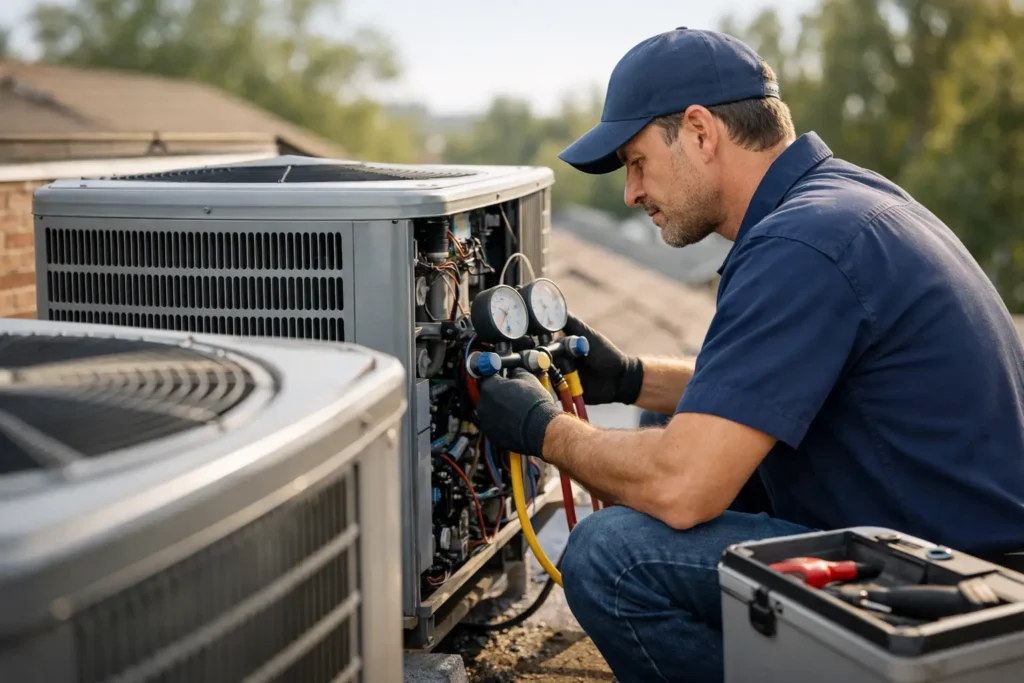
A spring tune-up typically focuses on the cooling side of the system. That can include checking refrigerant levels, inspecting electrical connections, cleaning the condenser coil, testing the capacitor, evaluating airflow, and making sure the thermostat is communicating correctly. If any of those pieces are off, your AC may still run, but not as efficiently or as reliably as it should.
A fall visit shifts attention to heating performance and safety. For gas furnaces, that means inspecting the heat exchanger, burner assembly, ignition system, gas pressure, venting, and carbon monoxide risks. For heat pumps, it means checking reversing operation, defrost controls, and overall system balance. The goal is not just comfort. It is safe operation when temperatures drop.
When twice a year may not be enough
Some systems need more than the standard schedule. If your HVAC equipment is more than 10 years old, more frequent service can help extend its useful life and reduce the chance of surprise repairs. Older systems naturally develop more wear, and small issues can escalate faster.
Indoor conditions also matter. Homes with pets often collect more hair and dander in filters and coils. Occupants with allergies or asthma may benefit from closer attention to filtration and airflow. Renovation dust, nearby construction, or high pollen seasons can also load the system faster than expected.
Usage patterns are another factor. If your thermostat stays low all summer and high all winter, the system runs harder. If parts of your building have comfort issues that lead to constant adjustments, short cycling, or uneven temperatures, that extra strain can justify additional inspections.
Commercial properties usually face a different risk calculation. A homeowner may tolerate a few uncomfortable hours while waiting for a repair. A business with server rooms, customer-facing spaces, or tenant obligations may not. In those cases, more frequent preventive maintenance is often less expensive than dealing with downtime.
Signs your HVAC should be serviced sooner
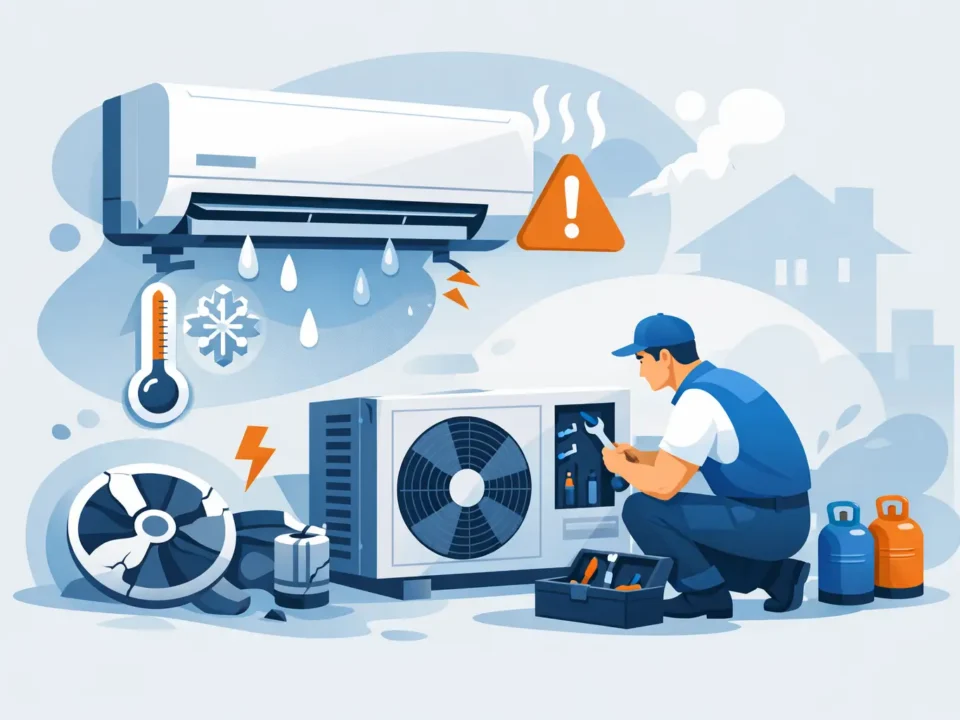
Even if you are on a routine maintenance schedule, some signs should not wait for the next visit. If the system is blowing warm air during cooling season or cool air during heating season, something is off. Unusual noises like buzzing, rattling, grinding, or banging also deserve prompt attention.
Short cycling is another red flag. When the system starts and stops too often, it can point to airflow restrictions, thermostat issues, electrical problems, or improper sizing. Weak airflow, rising humidity, hot and cold spots, and sudden spikes in utility bills can all signal that the equipment is working harder than it should.
For gas heating systems, any burning smell that lingers, pilot or ignition issues, or concerns about indoor air safety should be treated seriously. Preventive maintenance is valuable, but once symptoms appear, diagnostics and repair may be the better next step.
What HVAC service should include
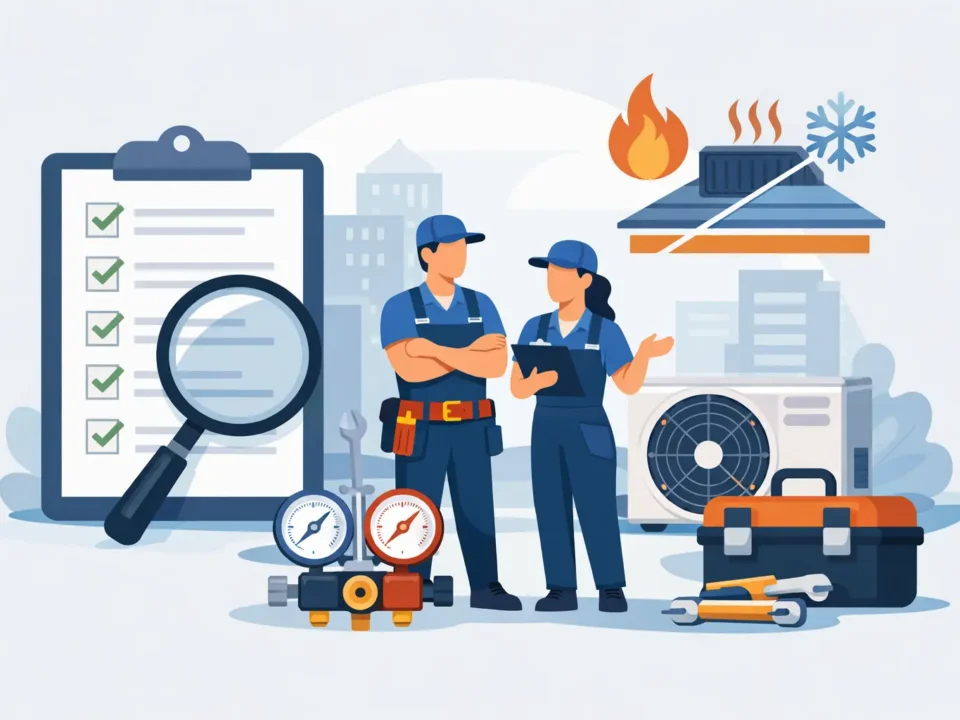
A real maintenance visit is more than a quick visual check. The point is to inspect, clean, test, and adjust the system so it runs safely and efficiently. The exact checklist varies by equipment type, but quality service should cover the components that affect performance most.
That usually includes checking the thermostat, measuring system operation, inspecting electrical connections, cleaning coils when needed, evaluating drain lines, testing capacitors and motors, checking refrigerant performance, inspecting filters, and confirming airflow. On heating equipment, combustion and safety checks are especially important.
For property managers and business owners, documentation matters too. A service record helps track recurring issues, budget for repairs, and support replacement decisions when the economics start shifting. A dependable technician should be able to explain what was found, what can wait, and what should be addressed now.
Homeowners vs. commercial properties
The question of how often should HVAC be serviced has a slightly different answer depending on who is asking. Homeowners are usually balancing comfort, efficiency, and repair avoidance. In that case, spring and fall maintenance is the right foundation, with additional visits only when usage, age, or indoor conditions justify it.
Commercial clients often need a more structured plan. Longer runtimes, multiple zones, rooftop units, occupancy demands, and lease obligations all increase the cost of failure. A quarterly schedule often makes sense because it supports uptime and catches performance drift before it affects staff, tenants, or customers.
There is also a practical difference in response priorities. In a home, one system issue is stressful. In a business or multi-unit property, one issue can create several calls at once. That is why preventive maintenance is not just about efficiency. It is also about reducing interruptions.
What you can do between service visits
Professional maintenance is essential, but a few simple habits help between appointments. Change filters on schedule. Many homes need a fresh filter every one to three months, though the exact timing depends on filter type, pets, occupancy, and system use. A clogged filter reduces airflow and makes every part of the system work harder.
Keep supply and return vents open and clear. Make sure outdoor units have breathing room and are not crowded by leaves, grass, or debris. Pay attention to changes in noise, airflow, or thermostat performance. The earlier a problem is noticed, the easier it is usually to address.
It also helps to avoid skipping maintenance just because the equipment seems fine. HVAC systems often lose efficiency gradually. By the time comfort noticeably changes, you may already be paying more to operate the system than necessary.
The cost of waiting too long
Delaying service does not guarantee a breakdown, but it increases the chance that a minor issue turns into a larger one. A dirty coil can lead to poor cooling and higher energy use. A failing capacitor can leave the unit unable to start on a very hot day. A neglected furnace can create safety concerns that go beyond comfort.
There is also the long-term cost. Systems that run dirty, strained, or out of adjustment tend to wear out faster. That can move up a replacement timeline by years, which is rarely a welcome surprise. For many property owners, consistent maintenance is less about perfection and more about protecting the larger investment.
For homeowners and businesses in Northern Virginia, where weather swings can be sharp and seasonal demand hits hard, staying ahead of service usually pays off. A dependable provider such as AAA HVAC can help match the maintenance schedule to the system you actually have, not just a generic rule of thumb.
The most useful answer is simple: service your HVAC before peak heating and cooling seasons, and increase that schedule when age, heavy use, or property demands call for it. If your system has been quiet, efficient, and easy to forget, that is usually a sign maintenance is doing exactly what it should.