Choosing a Commercial HVAC Repair Company
June 14, 2026
When Should I Replace My Air Conditioner?
June 16, 2026

A system rarely quits at a convenient time. It usually happens on the hottest afternoon in July or the first freezing night of the season, when your home or building needs heating or cooling the most. That is exactly why an HVAC preventive maintenance checklist matters – it helps catch small issues before they turn into no-cool calls, poor airflow, high utility bills, or equipment failure.
Preventive maintenance is not just about keeping equipment clean. It is about protecting comfort, controlling operating costs, and extending the life of your system. For homeowners in Northern Virginia, that can mean fewer surprise repairs and steadier indoor temperatures. For property managers and commercial facilities, it often means less downtime, fewer tenant complaints, and better budget control.
What an HVAC preventive maintenance checklist should cover
A good checklist looks at the full system, not just one component. Heating and cooling equipment works as a connected set of parts, so when one area slips, the rest of the system usually feels it. Dirty coils can reduce efficiency. Loose electrical connections can create safety concerns. Low refrigerant can strain the compressor and shorten system life.
That is why maintenance should include inspection, cleaning, testing, and adjustment. The exact details depend on whether you have a furnace, heat pump, central air conditioner, rooftop unit, or split commercial system. A newer unit may need less corrective work than an aging one, but both still benefit from regular service.
HVAC preventive maintenance checklist for homeowners
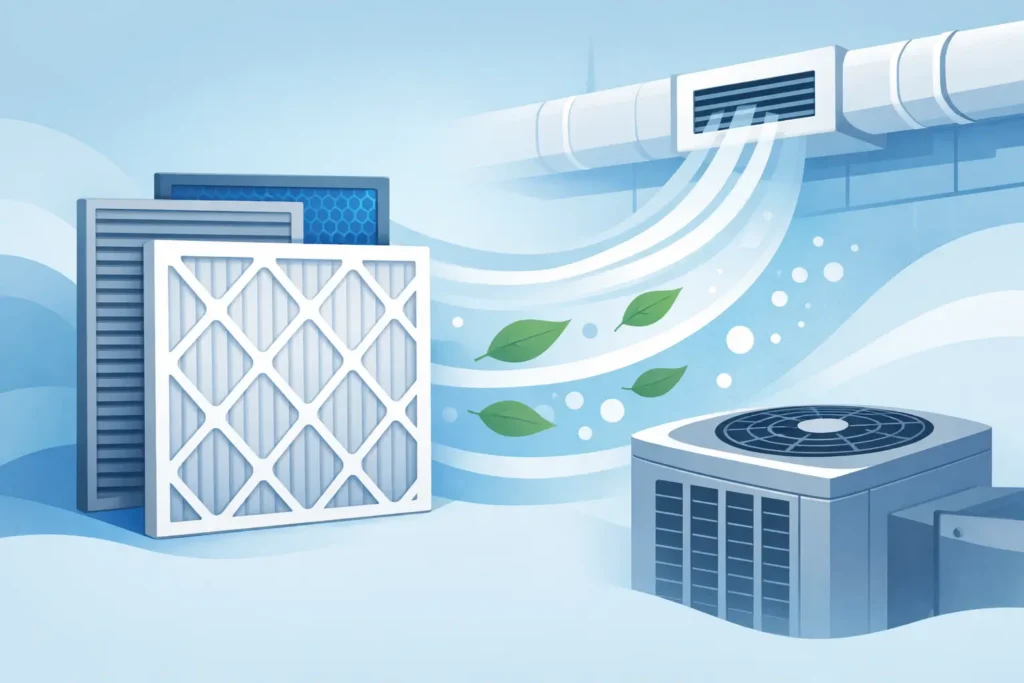
For residential systems, the checklist starts with the basics that affect daily performance. Air filters should be checked regularly and replaced when dirty. A clogged filter restricts airflow, makes the system work harder, and can cause uneven temperatures throughout the house. In some homes, filters last a few months. In homes with pets, renovation dust, or heavy system use, they may need attention sooner.
The thermostat should also be tested for accuracy and proper operation. If the system is running too long, short cycling, or failing to hold the set temperature, the problem may be with the thermostat, the equipment, or both. Catching that early helps avoid extra wear.
A technician should inspect and clean the indoor evaporator coil and outdoor condenser coil as needed. Dirt buildup on either coil can reduce heat transfer and push energy costs up. The condensate drain line and drain pan should be checked too. If that line clogs, water can back up and lead to moisture damage or system shutdown.
Electrical components deserve close attention. Capacitors, contactors, relays, wiring, and terminals should be inspected for wear, corrosion, or loose connections. These are common failure points in air conditioning systems. Many breakdowns that seem sudden were building for weeks through heat stress or electrical deterioration.
Blower components should be inspected and cleaned, and the blower motor should be checked for performance. Poor blower operation often shows up as weak airflow, noisy starts, or rooms that never seem comfortable. Ductwork should also be reviewed for obvious leaks, disconnected sections, or airflow problems, especially if some parts of the home are consistently warmer or cooler than others.
For gas furnaces, maintenance should include burner inspection, flame sensor cleaning, heat exchanger review, safety control testing, and venting inspection. Those steps are not optional. They affect both system reliability and household safety. A furnace that starts and heats does not always mean it is operating correctly.
What commercial HVAC maintenance usually adds
Commercial systems need a similar approach, but the stakes are often higher. One failing unit can affect employees, customers, tenants, inventory, or sensitive equipment. That is why a commercial HVAC preventive maintenance checklist usually goes beyond a quick seasonal tune-up.
On commercial properties, technicians often inspect rooftop units, economizers, belts, pulleys, compressors, amperage draw, control boards, and building automation connections. Drainage, airflow balance, and zone performance matter more in larger buildings where one comfort issue can affect several spaces at once.
Filter changes may also happen more often because of longer run times and higher occupancy. Belts need to be checked for wear and proper tension. Motors and bearings may need lubrication depending on system design. Outdoor units should be inspected for coil debris, hail damage, corrosion, and cabinet wear.
It also helps to keep written maintenance records. For property managers and facility teams, service history can reveal patterns, such as repeated refrigerant loss, recurring electrical failures, or units that are becoming more expensive to keep alive. At a certain point, repair frequency becomes a decision-making tool.
Seasonal timing matters more than most people think
Maintenance works best when it happens before peak demand. Cooling systems should be serviced before summer, and heating systems should be checked before winter. Waiting until the first hot week or cold snap means you are competing with everyone else who just discovered a problem.
Spring service usually focuses on refrigerant levels, coil condition, condenser performance, drain lines, and cooling controls. Fall service usually centers on furnace burners, ignition, heat exchangers, safeties, airflow, and venting. Heat pumps need both heating and cooling checks because they work year-round.
That said, timing is not always perfect. If your system missed seasonal maintenance, it is still worth scheduling service now. A late inspection is better than no inspection, especially if you have noticed weak airflow, rising energy bills, odd noises, or inconsistent temperatures.
What you can check yourself and what should be left to a pro
There are a few maintenance tasks homeowners and on-site staff can handle safely. Changing filters, clearing leaves and debris around outdoor units, making sure supply and return vents are not blocked, and watching for visible water leaks are all worthwhile. These small steps support system performance and help spot issues early.
But many checklist items should be left to a qualified technician. Refrigerant testing, electrical diagnostics, combustion checks, capacitor readings, amp draws, and internal component inspection require training and the right tools. The risk is not just doing the task wrong. It is missing an early warning sign that an experienced technician would catch.
That is especially true for older systems. A ten- or fifteen-year-old unit may still be running, but it can hide efficiency loss, stressed parts, and safety issues that are not obvious from the thermostat alone. Professional maintenance helps you understand whether the system is still a good candidate for repair or whether replacement should at least be part of the conversation.
Signs your system needs maintenance sooner
A checklist is useful on a schedule, but it is just as important when the system starts acting differently. If your AC runs constantly but the house still feels warm, if your furnace cycles on and off too quickly, or if one area of the building never seems comfortable, maintenance should move up the priority list.
Other warning signs include unusual smells, rattling or buzzing sounds, ice on the refrigerant line, water around the indoor unit, higher utility bills without a clear reason, or repeated thermostat adjustments with little effect. These symptoms do not always mean a major repair is coming, but they do mean the system needs attention.
For commercial accounts, watch for rising service calls from occupants, hot and cold complaint zones, short cycling during business hours, or units struggling during weather swings. Comfort problems are often operational problems first.
Why a checklist saves money over time
Some customers hesitate on maintenance because the system seems to be working fine. That is understandable. The trade-off is that deferred maintenance often shifts costs from planned service to emergency repair.
A clean, properly adjusted system generally runs more efficiently and experiences less strain. That can lower utility usage and reduce wear on key parts. It does not guarantee you will never face a breakdown, because age and operating conditions still matter, but it usually improves your odds and helps avoid preventable failures.
It also supports better repair decisions. When a technician knows the condition of the system over time, it becomes easier to tell whether a part replacement makes sense or whether the unit is nearing the end of its useful life. That kind of clarity matters when comfort, budget, and timing are all on the line.
For homeowners and businesses that want dependable service, working from a real maintenance checklist is far better than waiting for the first day your system cannot keep up. If you want fewer surprises, more efficient operation, and a better chance of catching trouble early, scheduled maintenance is one of the smartest calls you can make. AAA HVAC helps customers across Northern Virginia stay ahead of breakdowns with professional service built around reliability, speed, and long-term comfort.
The best time to service your system is before you need it to prove itself.