24 Hour Furnace Repair When Heat Can’t Wait
June 13, 2026
HVAC Preventive Maintenance Checklist
June 15, 2026

A failed rooftop unit at 9 a.m. can turn into tenant complaints, uncomfortable staff, and lost business before lunch. That is why choosing the right commercial HVAC repair company is not a small vendor decision. It is an operations decision that affects uptime, budget control, and how quickly your building gets back to normal.
For property managers, facility teams, and business owners in Northern Virginia, the stakes are practical. You need a company that answers the phone, shows up when promised, diagnoses the problem correctly, and stands behind the repair. Fancy marketing does not cool an office or keep a restaurant dining room comfortable. Reliable service does.
What a commercial HVAC repair company should actually deliver
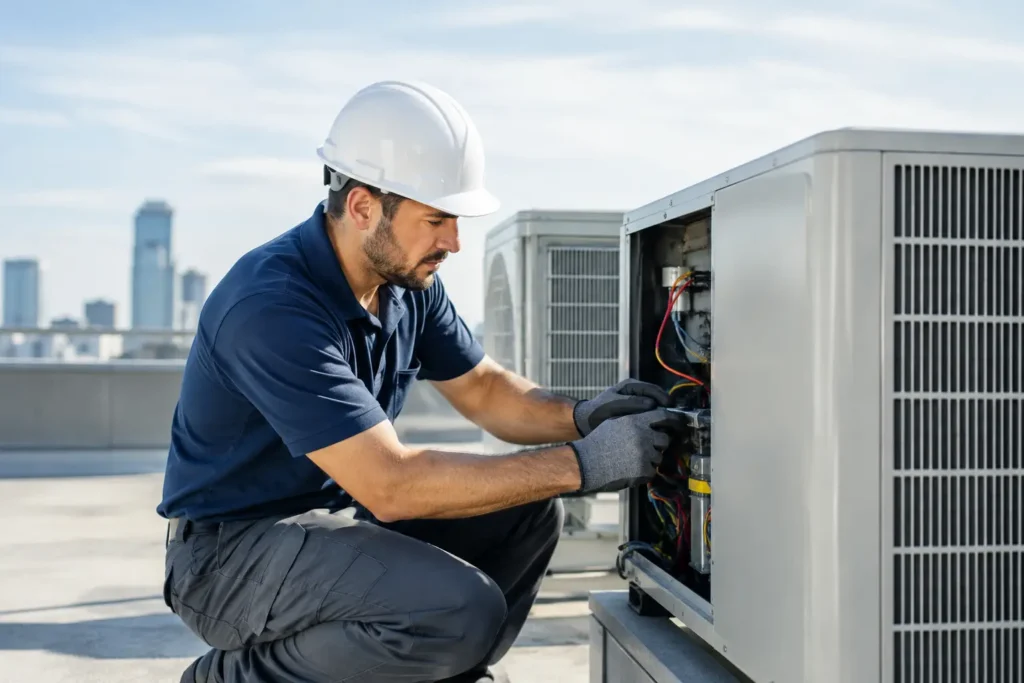
Commercial service is different from residential work in ways that matter. Larger equipment, longer duct runs, controls, zoning, ventilation requirements, and occupancy demands all make diagnosis and repair more complicated. A commercial HVAC repair company should be prepared for that complexity, not learning on your job.
That starts with technical capability, but it should not stop there. You also want consistent communication, clear estimates, and realistic timelines. In a commercial setting, the repair itself is only part of the job. Coordinating access, minimizing disruption, and helping you understand whether a fix is temporary or long-term matter just as much.
A dependable provider should also think beyond the immediate breakdown. If a blower motor fails because the system has been overheating for months, replacing the motor without addressing airflow or electrical issues may only buy you a little time. Good service protects your building from repeat calls and surprise costs.
How to evaluate a commercial HVAC repair company
Speed matters, but speed alone is not enough. A fast arrival does not help much if the diagnosis is incomplete or the repair fails a week later. The better question is whether the company can respond quickly and repair with confidence.
Response time and emergency availability
Commercial HVAC problems do not wait for standard business hours. If your cooling fails during a heat wave or your heating goes down overnight, you need to know whether the company offers true emergency support. Ask how after-hours calls are handled, what areas they cover, and whether same-day service is realistic for your location.
This is especially important for buildings with sensitive tenants, retail traffic, server rooms, or time-dependent operations. Some businesses can tolerate a short outage. Others cannot. The right service partner will be honest about response windows instead of overpromising.
Commercial experience, not just general HVAC experience
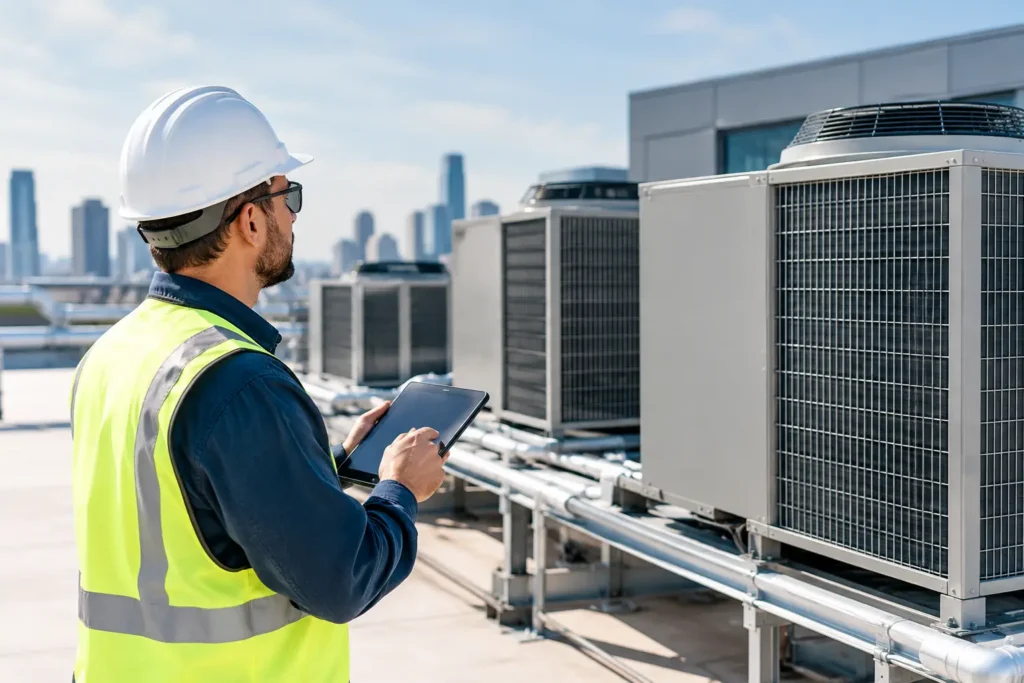
A company may be excellent with home systems and still not be the best fit for a multi-tenant office, warehouse, church, medical office, or retail site. Commercial systems often involve rooftop units, larger split systems, make-up air, thermostatic controls, and heavier usage patterns. Ask what kind of commercial properties they service most often.
It also helps to ask whether their technicians are trained to work across mechanical, electrical, and airflow issues. Many commercial failures are not simple part swaps. They involve a chain of causes that has to be traced correctly the first time.
Certifications and accountability
Credentials are not just for marketing. They tell you whether a company invests in training and whether technicians are held to a standard. NATE-certified technicians, for example, signal a stronger technical baseline. Licensing, insurance, and warranty-backed repairs matter too.
Accountability is just as important as certification. If a repair does not hold, what happens next? Will the company return promptly? Is there a repair guarantee? Those details become very important when your building occupants are waiting for answers.
Pricing matters, but so does repair judgment
Every commercial client wants competitive pricing. That makes sense. But the lowest quote is not always the lowest total cost.
A cheap repair can become expensive when it fails early, causes downtime, or delays a needed replacement decision. On the other hand, not every aging system needs to be replaced immediately. A trustworthy commercial HVAC repair company will explain the condition of the equipment in plain language and help you weigh the options.
Sometimes a repair is the right call because the system has years of life left and the issue is isolated. Sometimes the repair only makes sense as a short-term measure while you plan a replacement. The difference comes down to honest diagnosis and clear communication.
If estimates feel vague, ask for more detail. You should understand what failed, what is being replaced, whether any underlying issues were found, and how long the repair is expected to last. That kind of transparency protects your budget and helps you make informed decisions.
Why maintenance support should be part of the conversation
Many commercial HVAC emergencies are not truly sudden. They build slowly through clogged coils, failing capacitors, dirty filters, worn belts, refrigerant issues, neglected drains, or controls that drift out of calibration. The breakdown feels sudden because the warning signs were easy to miss.
That is why it helps to work with a commercial HVAC repair company that also offers preventive maintenance. Repair and maintenance should not be treated as separate worlds. A company that understands your equipment history can often spot patterns earlier, recommend service at the right time, and help you avoid repeat disruptions.
For property managers, this also creates a cleaner record for budgeting and tenant communication. Instead of reacting to one emergency after another, you can plan around seasonal inspections, documented recommendations, and equipment condition reports. That does not eliminate every emergency, but it usually reduces the number of expensive surprises.
Signs you may need a new service partner
If you are already working with an HVAC vendor, the issue may not be whether you need service. It may be whether you need better service. Repeated callbacks, missed appointments, vague invoicing, and poor communication are all warning signs.
Another common issue is a company that only treats the symptom. If the same unit keeps failing and no one can explain why, that is a problem. Commercial repairs should come with a reasoned diagnosis, not just another invoice.
You may also need a stronger partner if your current provider struggles with documentation or coordination. In commercial settings, those details matter. Building access, tenant notifications, service histories, and replacement planning all depend on clear communication.
What commercial clients in Northern Virginia should prioritize
In Reston and across Northern Virginia, building demands can shift quickly with weather, occupancy, and seasonal strain. A mild issue in spring can become a serious outage by mid-summer or during a cold snap. That makes local responsiveness especially valuable.
You want a company that knows the area, understands the pace of commercial service calls, and can support both urgent repairs and ongoing maintenance. For many clients, that also means looking for broad service capability. If one trusted company can support heating, cooling, and related building systems with dependable scheduling and emergency access, operations become simpler.
That is one reason businesses work with providers like AAA HVAC. The value is not just in fixing a failed system. It is in knowing you have access to certified technicians, prompt scheduling, and repair support built around uptime and accountability.
The best choice is not always the biggest name
A larger company may have broader coverage and stronger dispatch capacity. A smaller one may offer more personal attention. Neither is automatically better. What matters is whether the company is organized, technically capable, and willing to take responsibility for the result.
Ask practical questions. How quickly can they get someone on site? What types of commercial systems do they repair most often? Do they offer guaranteed repairs? Can they support ongoing maintenance after the emergency is over? Those answers will tell you more than a polished sales pitch.
Commercial HVAC service works best when there is trust on both sides. You need confidence that the repair company is protecting your building, your tenants, and your time. They need enough access and communication from you to diagnose the problem properly and complete the work without delays.
The right partner helps you move from reactive decisions to informed ones. When your system is down, that means a fast, qualified repair. When your system is still running, it means honest guidance on what needs attention next. That is the kind of service that keeps buildings comfortable and businesses moving.