Smart Thermostat Review Guide for Northern Virginia
July 26, 2026
How to Improve Indoor Airflow in Your Home
July 28, 2026
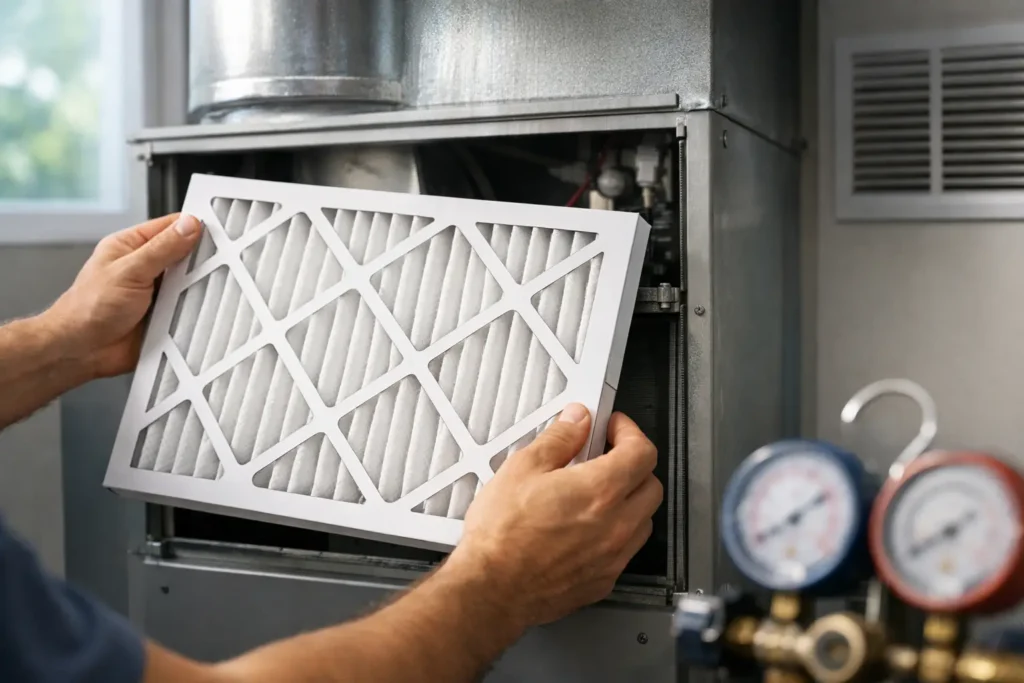
A filter that looks only slightly dusty can still restrict the air your heating and cooling system needs to move. That is why air filter replacement benefits go beyond cleaner indoor air. For homes, offices, rental properties, and retail spaces across Northern Virginia, changing the filter on schedule is one of the simplest ways to protect comfort, control operating costs, and reduce avoidable HVAC strain.
Your system is designed to circulate a specific amount of air. When a clogged filter gets in the way, the blower has to work harder to pull air through it. You may notice uneven temperatures, longer heating or cooling cycles, more dust on surfaces, or rooms that never seem to reach the thermostat setting. A fresh, correctly selected filter helps restore normal airflow before a small maintenance task turns into a service call.
Air Filter Replacement Benefits That Protect Your System
The most immediate benefit is better airflow. Furnaces, heat pumps, and air conditioners depend on steady airflow to heat and cool effectively. A dirty filter can force the equipment to run longer, which adds wear to components such as the blower motor and can raise monthly utility use.
In cooling season, restricted airflow may contribute to an evaporator coil becoming excessively cold or even freezing. In heating season, it can cause higher operating temperatures and unnecessary stress on a furnace. A filter change will not solve every HVAC problem, but it eliminates a common cause of poor performance and gives a technician a clearer starting point if service is needed.
Replacing the filter regularly can also help extend equipment life. HVAC systems still need professional maintenance, but clean airflow reduces the strain that builds up when the system has to compensate for a blocked return path. For property managers and business owners, that routine task can support more predictable operation across multiple units and reduce disruption during busy seasons.
More consistent comfort from room to room
When air cannot move freely through the system, comfort often becomes uneven. The thermostat may be satisfied while a bedroom, conference room, or back office remains too warm or too cold. A clean filter cannot correct undersized ductwork, poor insulation, or a failing blower, but it prevents a blocked filter from making those problems worse.
This matters especially during Northern Virginia’s humid summers and cold winter stretches, when HVAC equipment may run for long periods. Better airflow helps the system distribute conditioned air more evenly and respond more reliably to changing outdoor conditions.
Cleaner indoor air, within realistic limits
Filters capture airborne particles before they circulate through your HVAC equipment and living or work areas. Depending on the filter rating, that can include dust, pollen, lint, pet dander, and other common debris. Replacing a loaded filter keeps it able to capture particles instead of allowing buildup to remain in the return-air path.
It is worth setting realistic expectations. A standard HVAC filter is not the same as a whole-home air purification system, and it does not address every indoor air quality concern. However, regular replacement can make a meaningful difference for households with pets, seasonal allergies, frequent dust, or occupants sensitive to airborne irritants.
How Often Should You Change an HVAC Filter?
There is no single schedule that fits every building. The filter size, rating, number of occupants, pets, smoking, construction activity, and how often the system runs all affect replacement timing. The instructions on the filter package and your equipment manufacturer’s guidance are useful starting points, but a visual check remains valuable.
For many homes using a one-inch filter, checking monthly and replacing it every one to three months is reasonable. A larger media filter may last six months or longer, depending on conditions. Commercial spaces vary even more. A small office with light occupancy has very different needs than a restaurant, childcare center, or high-traffic retail space.
Plan to inspect filters more often if any of these conditions apply:
- You have pets that shed, especially multiple pets.
- Someone in the building has allergies or respiratory sensitivities.
- The system is running heavily during very hot or cold weather.
- Renovation, landscaping, or nearby construction is creating extra dust.
- You notice rising dust levels, reduced airflow, or longer HVAC cycles.
Do not wait until a filter is dark gray and visibly packed with debris. At that point, airflow may already be restricted. Adding a recurring calendar reminder or keeping replacement filters on hand makes the task easier to complete on time.
Choose the Right Filter, Not Just the Highest Rating
A higher MERV rating can capture smaller particles, but higher is not automatically better for every system. Dense filters can create too much resistance if the equipment was not designed for them. That can reduce airflow and offset some of the benefits you expected from better filtration.
For many residential systems, a mid-range pleated filter provides a practical balance between particle capture and airflow. Homes with significant allergy concerns may need a different approach, possibly including equipment evaluation or indoor air quality recommendations. Commercial properties may also have specific filtration requirements based on their use and occupancy.
Before switching to a much higher-rated filter, check the HVAC manufacturer’s recommendations or ask a qualified technician. The right choice depends on the system, not only on the label at the hardware store. Always confirm the filter dimensions as well. A filter that is too small, installed backward, or bent at the edges can allow air to bypass it.
A quick replacement process
Turn the HVAC system off before opening the filter compartment. Remove the old filter carefully so loose dust does not fall into the unit or return opening. Check the airflow arrow printed on the new filter and install it so the arrow points toward the equipment, not toward the return grille.
Make sure the filter sits flat in its track and that the access panel closes securely. Write the installation date on the filter frame if there is space. Then turn the system back on and listen for normal operation. If airflow still seems weak or the system is making unusual noises, the issue may be beyond the filter.
When a New Filter Is Not Enough
A clean filter is essential maintenance, but it cannot repair a failing capacitor, leaking refrigerant, damaged ductwork, a dirty coil, or an aging blower motor. Call for service if you replace the filter and still have weak airflow, hot and cold spots, unusual odors, repeated cycling, frozen equipment, or a system that will not maintain the thermostat setting.
For commercial decision-makers, declining comfort can quickly become an operational issue. Uncomfortable employees, tenants, customers, or equipment rooms should not be treated as a filter problem indefinitely. Timely diagnosis helps protect uptime and may prevent a minor repair from becoming an emergency replacement.
AAA HVAC provides certified heating and cooling support for homeowners and businesses that need a clear answer, dependable repairs, and prompt service. Preventive maintenance visits are also a good time to confirm that your filter type and replacement schedule match the demands of your system.
A fresh filter is a small investment in a system that works hard every day. Check yours before the next weather swing, and if the equipment still is not delivering the comfort you expect, arrange a professional inspection before the strain becomes more expensive.