How to Pick HVAC Filters for Better Airflow
August 19, 2026
How to Improve Duct Efficiency and Cut Energy Waste
August 21, 2026
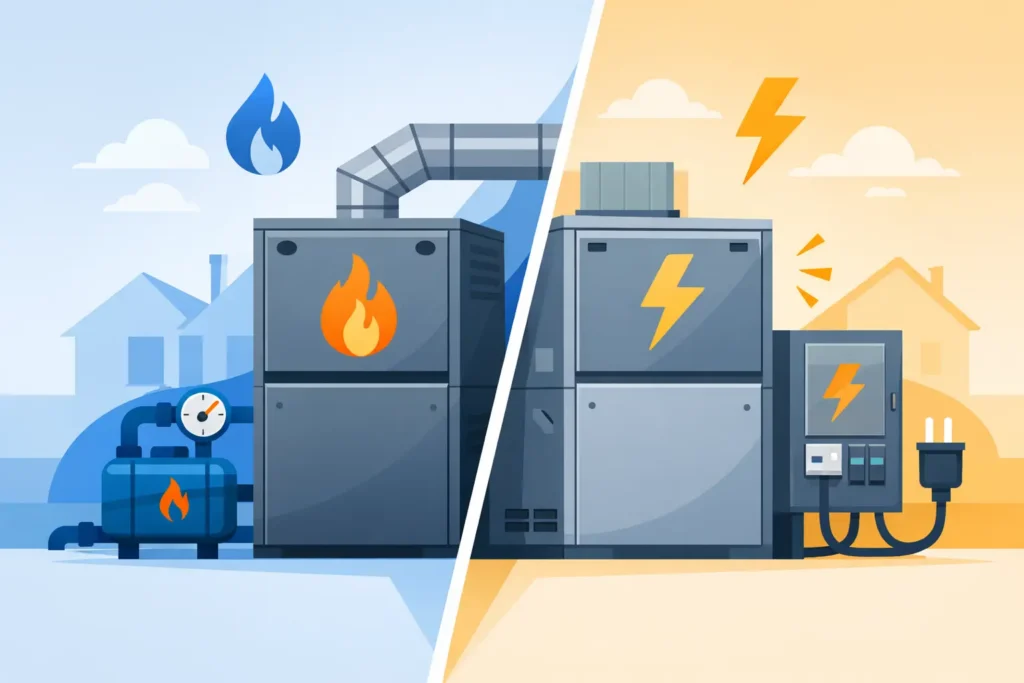
A furnace replacement is not a small decision, especially when your current system fails during a Northern Virginia cold snap. Comparing a gas furnace versus electric furnace means looking beyond the equipment price. Your utility rates, access to natural gas, electrical capacity, home layout, comfort preferences, and long-term plans all affect which option will serve you best.
For many homes, replacing the same type of furnace is the most straightforward path. But when a gas line is unavailable, utility costs have shifted, or major renovations are planned, changing fuel types may make sense. The right answer is the one that delivers dependable heat at a cost and level of maintenance you are comfortable with.
Gas Furnace Versus Electric Furnace: The Main Difference
A gas furnace creates heat by burning natural gas. A heat exchanger transfers that heat to the air moving through your home, while combustion gases are safely vented outdoors. Modern gas furnaces also need electricity for the blower motor, controls, and ignition system.
An electric furnace heats air with electric resistance heating elements, similar in principle to the elements in a toaster or electric oven. The blower then circulates that warmed air through the duct system. It does not burn fuel or require a flue pipe, chimney connection, or gas line.
Both can heat a home effectively when they are properly sized and installed. The more meaningful difference is how they use energy and what that means for installation requirements, monthly bills, and maintenance needs.
Upfront Installation Cost Depends on Your Existing Setup
If your home already has a working natural gas connection, venting arrangement, and ductwork, installing a new gas furnace is often the practical replacement choice. A high-efficiency model may require changes to the venting system or condensate drainage, so the lowest equipment price does not always equal the final installed price.
Electric furnaces can cost less to purchase and have a simpler cabinet design. However, they require substantial electrical power. A larger electric furnace may need dedicated high-amperage circuits or an electrical panel upgrade. Those changes can add materially to the project cost, particularly in older homes.
Switching from gas to electric can also involve removing or capping gas equipment and confirming that the home’s electrical service can handle the added load. Switching from electric to gas requires access to a gas line, proper combustion air, venting, and permits. Before making a decision based on a rough equipment quote, ask for an on-site assessment that accounts for the full installation scope.
Operating Cost Is Often the Deciding Factor
Electric furnaces are highly efficient at the point of use. Nearly all the electricity they consume becomes heat inside the house. That sounds like an automatic win, but the cost of electricity per unit of heat is commonly higher than the cost of natural gas.
In much of Northern Virginia, a high-efficiency gas furnace often costs less to operate through a full heating season than an electric resistance furnace. The size of that gap depends on current utility pricing, outdoor temperatures, insulation levels, thermostat settings, and how long the system runs each day.
Gas furnace efficiency is measured by AFUE, or annual fuel utilization efficiency. A furnace with a 96% AFUE rating converts approximately 96% of its fuel into usable home heat over a season. Standard-efficiency gas units may be closer to 80%, while high-efficiency options are often in the mid-90s or above.
For homeowners considering electric heat because they want lower energy use, it is worth asking whether a heat pump is part of the conversation. A heat pump is not an electric furnace. It moves heat rather than creating it with resistance elements and can be much more economical to run in moderate weather. Depending on the property, it may be paired with a furnace or used as the primary heating system.
Comfort Can Feel Different From One Furnace to Another
Gas furnaces generally produce hotter supply air than electric resistance furnaces. That does not necessarily mean an electric furnace cannot keep the home comfortable, but a gas system may feel warmer sooner when you stand near a register.
Comfort throughout the house depends just as much on proper sizing, airflow, duct design, insulation, and thermostat control as it does on fuel type. An oversized furnace can short cycle, turning on and off too frequently. An undersized furnace may run for long periods and still struggle on the coldest days.
That is why a replacement should begin with a load calculation rather than selecting a furnace based only on the old unit’s capacity. If the home has new windows, added insulation, finished space, or an addition since the prior furnace was installed, its heating needs may have changed.
Maintenance and Safety Considerations
Gas furnaces need annual professional maintenance to help keep combustion safe and efficient. A technician should inspect the heat exchanger, burners, ignition components, venting, gas connections, condensate system on high-efficiency models, safety controls, and airflow. Homeowners should also maintain working carbon monoxide alarms according to manufacturer guidance and local requirements.
Electric furnaces do not involve combustion, carbon monoxide production, or flue venting. Their maintenance needs are generally simpler, although they still need professional inspection of heating elements, wiring, relays, blower components, filters, and controls. Loose electrical connections or worn components can create performance and safety concerns if ignored.
Neither option is maintenance-free. A neglected filter can restrict airflow in either system, increasing wear and reducing comfort. Scheduled service is also the best time to catch small issues before they become a no-heat emergency.
Lifespan and Repair Expectations
A well-maintained gas furnace commonly lasts 15 to 20 years, though usage, installation quality, and repair history matter more than a calendar date. The heat exchanger is one of the most significant components to evaluate in an older gas unit. If it is cracked or severely damaged, replacement is often the safer and more sensible option.
Electric furnaces may last 20 years or longer because they have fewer combustion-related parts. Still, elements, sequencers, blower motors, and electrical components can fail. A long expected lifespan should not be the only reason to choose electric if the ongoing energy cost will be substantially higher for your household.
When deciding whether to repair or replace either system, consider the age of the furnace, the cost of the repair, its efficiency, and whether the issue is likely to recur. Frequent repairs on an aging unit can become more expensive than a planned replacement, especially when downtime affects tenants, employees, or family comfort.
Which Furnace Is Right for Your Property?
A gas furnace is often the better fit when natural gas is already available, winter operating cost is a priority, and the home has appropriate venting. It is also a familiar choice for many area homes because it provides strong heat output during colder weather.
An electric furnace can be a reasonable choice when gas is unavailable, combustion-free equipment is preferred, or the property has electrical capacity already in place. It may be especially practical for a smaller space or a situation where gas installation would require extensive modifications.
For commercial properties, the decision should also account for operating schedules, occupied areas, equipment redundancy, maintenance access, and the cost of downtime. A system that looks economical on paper may not be the best operational choice if it cannot support the building’s comfort requirements during peak use.
The most reliable next step is a professional evaluation of the current furnace, ductwork, electrical capacity, and heating load. AAA HVAC can help you compare practical replacement options, explain the costs clearly, and install a system built for dependable comfort when you need it most.