Ductless Mini Split Versus Central Air
July 2, 2026
Best HVAC Equipment Brands for Your Building
July 4, 2026

A heating problem in a commercial building rarely stays small for long. One cold office, one tenant complaint, or one failed rooftop unit can quickly turn into lost productivity, emergency repair costs, and unhappy occupants. This commercial heating system guide is built for business owners, property managers, and facility teams who need clear answers before a repair turns into a larger operational problem.
What a commercial heating system guide should help you decide
Most commercial clients are not looking for theory. They want to know whether the current system can be repaired, whether replacement makes better financial sense, and what type of equipment will hold up under real operating conditions.
That is why the right guide starts with decision-making, not jargon. A good commercial heating system guide should help you compare system types, understand how building use affects performance, and spot issues that raise monthly operating costs. It should also help you avoid the common mistake of sizing equipment based only on square footage. In commercial buildings, occupancy patterns, ventilation requirements, ceiling height, zoning, and hours of use matter just as much.
The main types of commercial heating systems
Commercial heating is not one-size-fits-all. The right setup depends on building layout, tenant needs, utility access, and how much control you need by zone.
Rooftop units
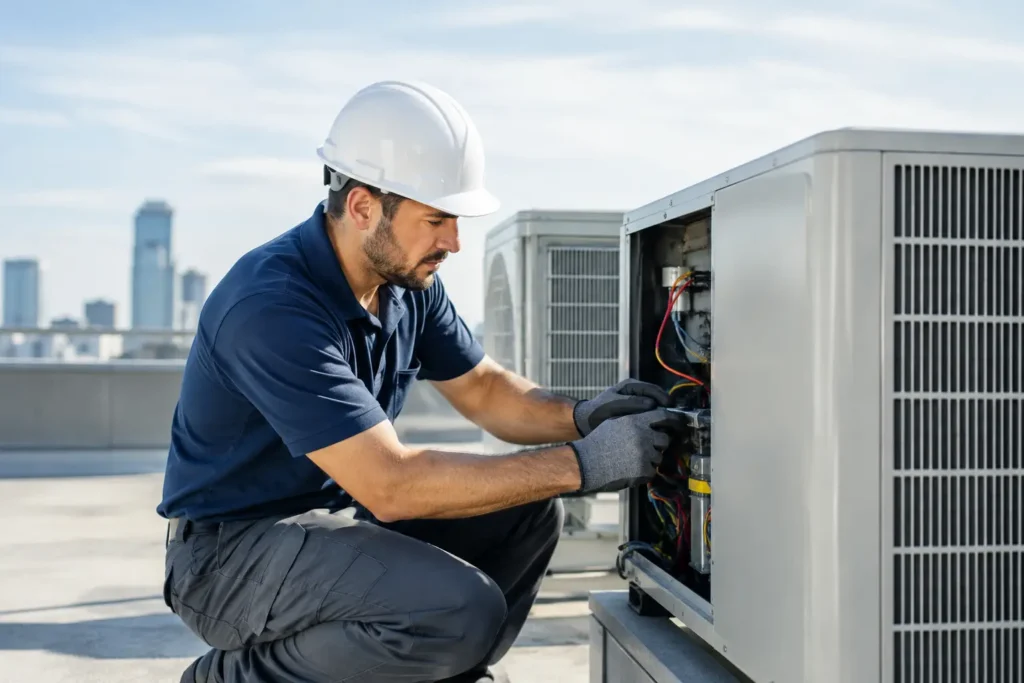
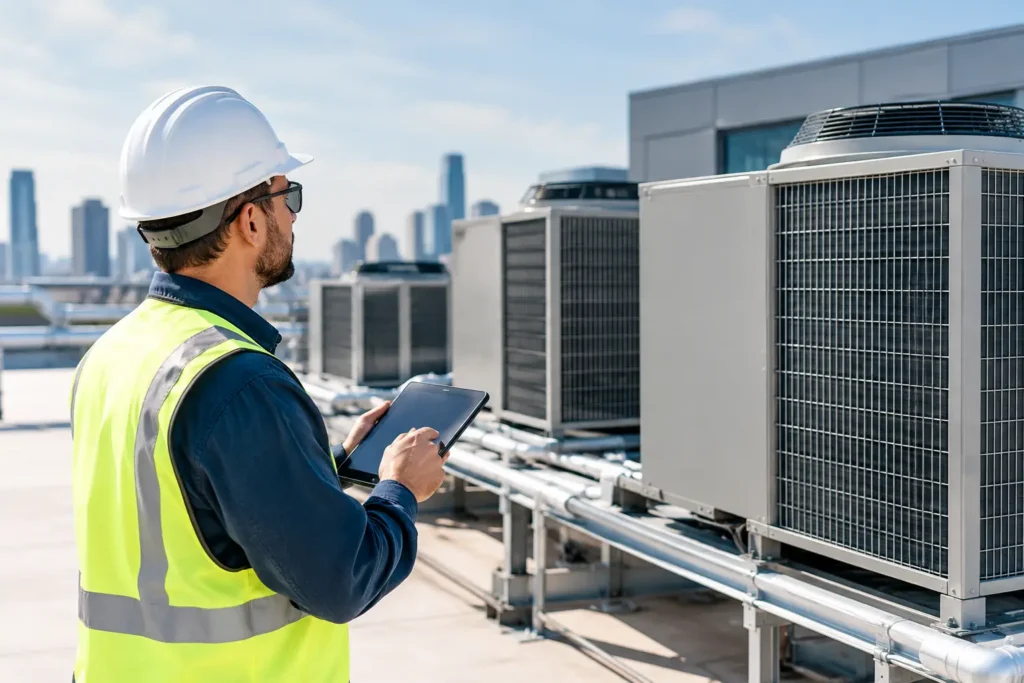
Rooftop units are common in retail spaces, offices, and light commercial buildings because they combine heating and cooling in one packaged system. They save indoor space and are relatively straightforward to service when the unit is accessible.
The trade-off is exposure. Rooftop equipment takes the full impact of weather, and neglected maintenance can lead to premature wear. If your building already uses rooftop units, replacement is often the simplest path, but that does not always mean it is the lowest long-term operating cost.
Split systems
Split systems separate indoor and outdoor components and are often used in smaller commercial properties or in buildings with specific area demands. They can work well where flexibility matters and where rooftop installation is not practical.
They also require careful planning. More components can mean more points of failure, and service access matters. In some properties, the installation is cleaner than a packaged system. In others, it complicates maintenance.
Boilers
Boilers are still a strong fit for certain larger buildings, older properties, and facilities that rely on hydronic heat. They can provide steady, comfortable heating and may support other building functions depending on the setup.
The biggest factor with boilers is condition and efficiency. An older boiler may still be operating, but that does not mean it is operating economically. If repairs are becoming frequent or parts are difficult to source, replacement planning should start before a cold-weather failure forces a rushed decision.
Furnaces and make-up air systems
Some commercial spaces use gas furnaces or dedicated make-up air systems, especially where ventilation needs are part of daily operations. Warehouses, workshops, and service facilities often fall into this category.
These systems can be effective, but they need to match the building’s actual air movement requirements. If outside air volumes are high, heating costs can climb fast unless the system is designed and maintained properly.
Heat pumps and VRF systems
Heat pumps and variable refrigerant flow systems are becoming more common in commercial applications, especially where energy efficiency and zone control are priorities. In the right building, they can reduce operating costs and improve comfort control.
Still, climate, electrical capacity, and upfront budget all matter. In Northern Virginia, these systems can be a strong fit, but they need to be selected with local winter performance in mind.
How to choose the right system for your building
The best system is the one that fits the building you actually operate, not the one that looked good in another property. A medical office has different heating demands than a restaurant. A church, warehouse, and multi-tenant office building will all behave differently in winter.
Start with building use. Consider when the space is occupied, which areas need tighter temperature control, and whether different tenants or departments need separate zones. Then look at utility costs, maintenance access, and equipment age.
If your current system struggles to keep up, the cause may not be capacity alone. It could be poor airflow, failing controls, duct leakage, ventilation imbalance, or deferred maintenance. That is why a proper commercial evaluation matters before you approve a major replacement.
Repair or replace? The decision most owners face
Commercial heating decisions usually come down to timing and risk. If a system is relatively young and the repair is isolated, repair is often the practical choice. If the system is aging, parts are failing repeatedly, and heating complaints are increasing, replacement may be the safer investment.
A few warning signs should move replacement higher on your list. Rising repair frequency is one. Uneven heating across zones is another. So are unusual noises, delayed startup, short cycling, and utility bills that keep rising without a clear reason.
There is also the business risk to consider. A heating system that fails on a Monday morning in January does not just create a service call. It can disrupt tenants, staff, customers, and building operations. For many commercial properties, planned replacement costs less than repeated emergency downtime.
Efficiency is about more than the equipment
Owners often focus on the rated efficiency of new equipment, and that matters. But actual performance depends on installation quality, controls, ductwork or piping condition, and maintenance discipline.
A high-efficiency unit installed on a poorly designed system will not deliver the savings you expect. The same goes for buildings with failing thermostats, dirty filters, blocked coils, or neglected burners. In commercial spaces, controls are especially important. If scheduling, zoning, and occupancy settings are off, heating costs can rise even when the equipment itself is sound.
This is where professional service makes a measurable difference. Qualified commercial technicians should assess the full system, not just the box that makes the heat.
Maintenance is what protects uptime
Most major commercial heating failures do not happen without warning. They build over time through wear, dirt, loose electrical connections, ignition issues, airflow restrictions, and control problems. Preventive maintenance is how you catch those issues before they shut down a building.
A strong service plan should include seasonal inspection, filter checks, burner or heat exchanger review where applicable, electrical testing, thermostat verification, airflow assessment, and safety control checks. For rooftop equipment, cabinet condition and weather exposure should also be part of the visit.
For property managers, maintenance also improves budgeting. It is easier to plan around known system condition than to respond to winter emergencies one by one.
Questions to ask before approving work
Before moving forward with a repair or replacement, ask direct questions. What failed, and why? Is this likely to happen again? How much usable life remains in the system? Are there control or airflow issues contributing to the problem? If replacement is recommended, what operating savings or reliability improvement should you expect?
You should also ask about service response, technician qualifications, and warranty coverage. Commercial properties need accountability, especially when tenants, staff, or customers are affected by downtime. NATE-certified technicians, clear repair recommendations, and a defined maintenance path all help reduce uncertainty.
Planning ahead matters more than reacting fast
Emergency service has its place. When heat is out, speed matters. But the better long-term strategy is to evaluate older equipment before the coldest part of the season arrives.
If your building has a system nearing the end of its service life, now is the time to assess it. Review repair history, inspect performance, and look at whether the current setup still matches how the space is used today. Expansions, renovations, tenant changes, and occupancy shifts can all leave older heating systems undersized, oversized, or poorly zoned.
For commercial clients in Northern Virginia, dependable winter comfort is not just about temperature. It is about protecting operations, controlling costs, and reducing disruption. AAA HVAC works with businesses that need responsive service, qualified technicians, and practical recommendations without the guesswork.
The smartest heating decision is usually the one made before the building forces your hand.