Furnace Installation Step by Step: What to Expect
August 26, 2026
How to Reduce HVAC Noise Without Guesswork
August 28, 2026
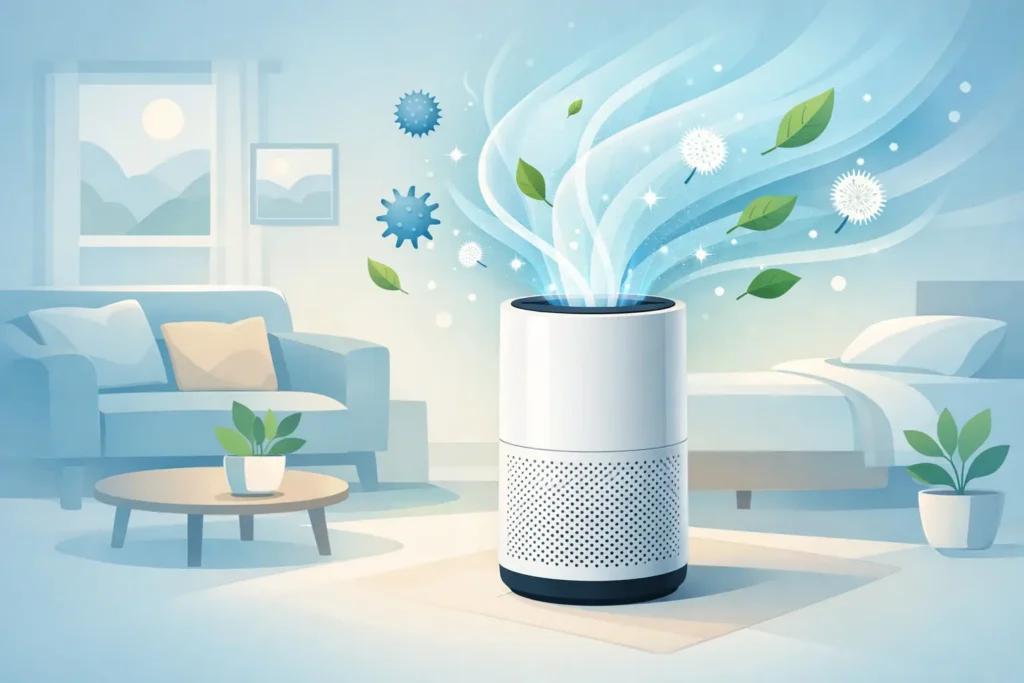
A purifier that looks impressive on the shelf can still leave you sneezing if it is too small for the room, runs too loudly to keep on, or relies on the wrong type of filter. The best air purifier for allergies is not simply the one with the highest price tag. It is the one that removes airborne triggers effectively in the room where you spend the most time.
For Northern Virginia households, allergy symptoms often rise with spring and fall pollen, but indoor triggers can cause trouble year-round. Pet dander, dust, mold spores, and particles tracked in from outdoors can linger in bedrooms, living rooms, and home offices. A properly selected purifier can reduce those airborne particles, but it works best as part of a broader plan for healthy indoor air.
What the Best Air Purifier for Allergies Should Have
Start with a mechanical HEPA filter. A true HEPA filter is designed to capture at least 99.97% of particles measuring 0.3 microns, a testing size often used because it is especially difficult to filter. That includes many fine airborne particles that can aggravate allergies, including pollen fragments, pet dander, and some mold spores.
Be careful with vague labels such as “HEPA-type,” “HEPA-style,” or “99% filtration.” These products may still provide some benefit, but they are not held to the same standard as true HEPA filtration. If allergies are a major concern, look for clear language confirming that the unit uses a true HEPA filter.
A prefilter is also useful. It catches larger particles such as visible dust and pet hair before they reach the HEPA filter, which can help extend the life of the more expensive replacement filter. For homes affected by cooking odors, smoke, or outdoor pollution, an activated carbon filter is a valuable addition. Carbon is intended for gases and odors, while HEPA handles particles. One does not replace the other.
Match the Purifier to the Actual Room
The most common purchasing mistake is choosing a purifier based on the entire house rather than the room where it will operate. Portable units clean the air in a defined space. A compact bedroom purifier may be a smart choice for nighttime allergy relief, but it will not adequately clean the air in a large open living area.
Check the manufacturer’s recommended room size and, when available, its Clean Air Delivery Rate, or CADR. CADR indicates how quickly a purifier delivers filtered air for particles such as dust, pollen, and smoke. Higher numbers generally mean faster cleaning, but the number only helps if it is appropriate for your room.
For allergy relief, size the unit with some margin instead of choosing the smallest model that technically covers the room. A purifier that is slightly oversized can achieve meaningful air cleaning on a lower fan speed. That matters because the quietest setting is often the one people are willing to run all day and overnight.
Room layout matters, too. High ceilings, open floor plans, doorways that stay open, and active pets all increase the air-cleaning challenge. A large great room may need a higher-capacity unit, while a two-story space may need more than one purifier. If your home has several allergy-sensitive areas, placing separate units in the bedroom and main living space is often more effective than relying on one portable machine in a hallway.
Avoid Ozone-Producing Products
Some devices marketed for air cleaning use ionization, plasma, or ozone-generating technology. The marketing can sound appealing, especially when it promises to neutralize pollutants without frequent filter changes. For allergy households, however, a conventional purifier with a true HEPA filter is usually the clearer and safer choice.
Ozone is a lung irritant. It can worsen respiratory symptoms, particularly for people with asthma or other breathing concerns. An ionizer may not intentionally market itself as an ozone generator, so read the product details carefully. If you want an added electronic feature, look for independent certification indicating low or no ozone emissions. When in doubt, prioritize proven mechanical filtration over extra features.
Noise, Energy Use, and Filter Costs Matter
The best purifier on paper is not always the best one to live with. A powerful unit can be distracting if its fan noise interrupts sleep, work calls, or conversations. Look for a low noise rating at the speed you expect to use most often, not only at the lowest setting. A sleep mode can be helpful in bedrooms, but make sure it still moves enough air to be useful.
Filter replacement costs deserve the same attention as the purchase price. Some models use replacement filters that are easy to find and reasonably priced. Others require expensive proprietary filters or frequent replacements. A less expensive purifier may cost more over several years if its filters are unusually costly.
Most households benefit from replacing HEPA and carbon filters according to the manufacturer’s schedule, but real-world conditions can shorten that timeline. Pets, heavy pollen, wildfire smoke, and frequent use can load filters faster. If a unit has a filter-change indicator, treat it as a helpful reminder rather than a reason to ignore visible buildup or reduced airflow.
Energy use is another practical consideration because allergy relief requires consistent operation. Energy-efficient models can make it easier to run the purifier for long periods without worrying about a noticeable jump in utility costs. A timer is convenient, but continuous operation at a manageable fan speed is often more effective during peak allergy season.
Where to Put an Air Purifier for Better Results
Place the purifier in the room where symptoms are most disruptive, usually the bedroom. Position it on a stable, open surface or on the floor if the manufacturer allows it. Leave clearance around the intake and outlet so furniture, curtains, or a wall do not restrict airflow.
Do not hide the unit behind a sofa or in a corner. It needs room to draw in contaminated air and return filtered air to the space. Keep doors and windows closed while it runs when outdoor pollen levels are high. Opening a window can be pleasant, but it also brings in new pollen and makes the purifier work harder.
Avoid placing the purifier directly beside a bed or desk if the airflow feels uncomfortable. A few feet of distance usually provides better circulation without creating a draft. In homes with pets, keep the unit away from spots where hair and toys can block the intake grille.
An Air Purifier Cannot Solve Every Allergy Trigger
A portable air purifier captures particles floating in the air. It does not remove dust mites from bedding, pet dander embedded in upholstery, or pollen already settled on floors and surfaces. That does not make it less worthwhile. It simply means expectations should be realistic.
For stronger results, pair the purifier with regular cleaning, prompt filter changes, and humidity control. Dust mites and mold thrive when indoor humidity stays high. Many homes are most comfortable when humidity is kept in a moderate range, generally around 30% to 50%. If certain rooms feel damp, smell musty, or show signs of moisture, address the source rather than expecting a purifier to fix the issue.
Your heating and cooling system also plays a role in indoor air quality. A properly fitted HVAC filter can reduce the particles circulating through your home while protecting system performance. Higher-efficiency filters can be helpful, but not every system is designed for the same filter resistance. Choosing the wrong filter can reduce airflow and put unnecessary strain on equipment. A qualified HVAC technician can help you select an appropriate filter and identify comfort or humidity issues that may be contributing to symptoms.
A Smart Buying Decision Starts With Your Symptoms
If allergies are worst at night, buy for the bedroom first and choose a true HEPA unit that is quiet enough to run while you sleep. If pets and family activity are the bigger concern, choose a larger-capacity purifier for the main living area with a washable prefilter and readily available replacement filters. For smoke odors or outdoor pollution, add meaningful activated carbon capacity rather than assuming a thin carbon sheet will handle the job.
The right unit should fit your room, your routine, and your willingness to maintain it. If indoor air still feels stale, humid, or uncomfortable after you have addressed portable filtration, AAA HVAC can help evaluate the HVAC factors affecting comfort in your Northern Virginia home. Cleaner air is most useful when it is something your family can actually feel every day.