Single Stage Versus Two Stage HVAC Systems
September 28, 2026
Best Frozen Pipe Prevention Methods for Winter
September 30, 2026

A system that still turns on is not necessarily an efficient system. That distinction matters in Northern Virginia, where humid summer demand, cold winter mornings, and rising operating costs can expose the limits of older equipment. The 2026 HVAC efficiency trends are less about chasing the newest feature and more about getting dependable comfort with lower waste, better control, and fewer surprise breakdowns.
For homeowners, the right upgrade may be a variable-speed heat pump, a properly matched furnace, or simply better system controls. For property managers and business owners, efficiency increasingly means protecting uptime while making energy use easier to monitor. The best choice depends on the building, the existing equipment, the fuel options available, and how the space is actually used.
2026 HVAC Efficiency Trends for Homes and Businesses
Heat pumps are becoming a practical replacement option
Heat pumps continue to be one of the most significant efficiency conversations in 2026. Unlike a traditional air conditioner, a heat pump can provide cooling in summer and heating during much of the year. Modern models are designed to operate more effectively in colder weather than earlier generations, making them a more realistic option for many Northern Virginia properties.
That does not mean every property should replace a furnace with an all-electric heat pump. A well-maintained gas furnace may still be a sensible choice, especially where very cold-weather performance, existing gas infrastructure, or project budget are deciding factors. The better question is whether a heat pump, furnace, or dual-fuel system will provide the best year-round operating cost and comfort for the building.
Dual-fuel systems are worth a close look for homes that want electric heat pump efficiency during milder weather and furnace support during freezing conditions. The system can switch between heat sources based on outdoor temperature and operating cost. Proper setup is essential. A poorly selected or incorrectly configured dual-fuel system can miss the savings it was meant to deliver.
Variable-speed equipment is changing everyday comfort
Older HVAC equipment often runs at one speed: fully on or fully off. Variable-speed compressors, blowers, and fans can adjust output to meet the actual demand in the space. Instead of repeatedly cycling at maximum capacity, they can run longer at lower levels when conditions allow.
That longer, gentler operation can improve temperature consistency and humidity control during Northern Virginia summers. It may also reduce the noise associated with frequent starts and stops. In commercial settings, staged or variable-capacity equipment can help buildings handle changing occupancy without conditioning every area as if it were at peak use.
There is a trade-off. Variable-speed systems generally cost more upfront, and their controls need trained installation and service. They are not automatically the right choice for every rental property, small office, or short-term ownership plan. But for owners planning to stay in a property and prioritize even comfort, the long-term value can be compelling.
Right-sizing is getting the attention it deserves
Buying the largest system available is not an efficiency strategy. An oversized air conditioner can cool a space too quickly, shutting off before it removes enough moisture from the air. An oversized furnace can cause temperature swings and unnecessary cycling. An undersized system, meanwhile, may run constantly without keeping up during extreme weather.
In 2026, more replacement decisions are focusing on load calculations rather than square footage alone. A proper evaluation considers insulation, windows, ceiling height, sun exposure, building layout, occupancy, and the condition of the existing system. A home that received new windows or attic insulation may need a different equipment size than it did ten years ago.
For commercial properties, right-sizing also means evaluating zones separately. A server room, a sunny conference room, and an interior office area rarely have the same cooling load. Equipment and controls should account for those differences instead of forcing one thermostat setting across the entire building.
Smart controls are moving beyond convenience
Smart thermostats remain popular, but efficiency in 2026 is about more than adjusting the temperature from a phone. Better controls can create schedules around occupancy, track runtime patterns, flag unusual performance, and help prevent the system from running when a space is empty.
The potential savings depend on how the controls are used. A thermostat cannot correct a failing capacitor, low refrigerant charge, poor equipment sizing, or neglected maintenance. It can, however, make an already sound system easier to operate efficiently.
Commercial controls are becoming especially useful for facility teams managing several areas or locations. Remote alerts can help identify a temperature problem before it becomes a comfort complaint or a business interruption. The goal is not to add technology for its own sake. It is to give decision-makers clearer information and faster response options.
Refrigerant Changes Affect New HVAC Equipment
Refrigerant regulations and manufacturer transitions are another major factor shaping 2026 HVAC efficiency trends. New residential equipment is increasingly being designed around lower-global-warming-potential refrigerants, including refrigerants classified as A2L. These are mildly flammable, which means equipment installation, service procedures, tools, and safety practices must meet updated requirements.
For property owners, this does not mean an existing system must be replaced just because it uses an older refrigerant. If the system is cooling reliably and a repair makes financial sense, replacement may not be necessary. However, when an older unit has a major failure or needs frequent repairs, it is wise to discuss current equipment options and future service considerations before investing heavily in it.
The practical takeaway is simple: work with qualified technicians who understand the equipment being installed and can explain the choices clearly. Refrigerant changes are a technical issue, but they affect real decisions about repair costs, replacement timing, and available models.
Maintenance Is Still One of the Best Efficiency Investments
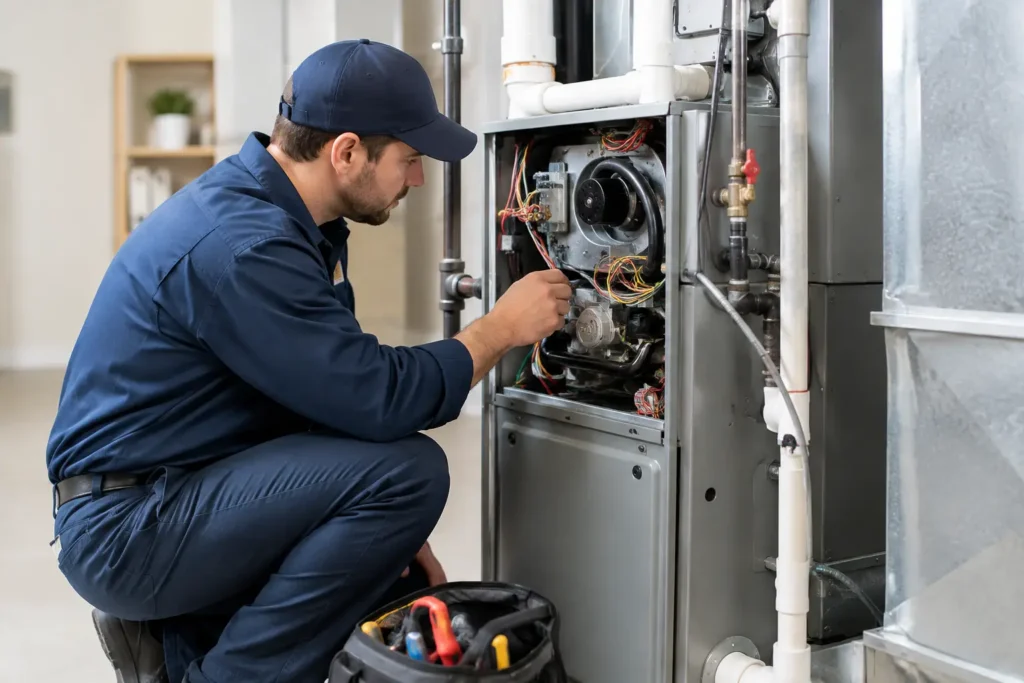
High-efficiency equipment cannot deliver its rated performance when basic maintenance is ignored. Dirty filters restrict airflow. Worn electrical components can cause hard starts. Loose connections, drain issues, thermostat problems, and refrigerant leaks can all raise energy use while increasing the risk of a no-cooling or no-heat call.
Preventive maintenance is particularly valuable before the seasons place the greatest strain on equipment. For a homeowner, that means having cooling equipment checked before sustained heat arrives and heating equipment inspected before winter. For commercial properties, a maintenance plan supports budgeting, reduces avoidable downtime, and creates a service record that helps identify recurring problems.
Maintenance does not eliminate every repair. Parts eventually wear out, and older systems may become less economical to keep. What it does provide is a clearer picture of equipment condition, so replacement becomes a planned decision rather than an emergency purchase during a heat wave.
What Efficiency Upgrades Make Sense in 2026?
Start with the problem you are trying to solve. If certain rooms are uncomfortable, the answer may involve airflow, controls, zoning, or equipment capacity rather than a full replacement. If utility bills have risen while comfort has declined, the system should be inspected for performance issues before assuming the only answer is new equipment.
When replacement is appropriate, compare more than the equipment price. Consider expected efficiency, warranty coverage, installation quality, available financing, maintenance needs, and how long you expect to own the property. A lower-cost system can be the right decision in some circumstances. In others, higher-efficiency variable-speed equipment may better protect comfort and operating costs over time.
For businesses, include downtime and tenant or employee comfort in the calculation. The least expensive repair is not always the least costly choice if repeated failures disrupt operations. A qualified assessment can help establish whether repair, phased replacement, or a full system upgrade is the responsible path.
Energy efficiency is most valuable when it supports the comfort you expect every day. If your HVAC system is struggling to keep up, making unusual noises, running constantly, or driving up operating costs, schedule a professional evaluation before peak weather turns a manageable concern into an urgent repair. AAA HVAC can help Northern Virginia homeowners and businesses assess practical options and move forward with confidence.