Can Refrigerant Leaks Be Repaired? What to Know
November 23, 2026
A breaker that trips the moment your AC starts, or after it has run for a few minutes, is not an inconvenience to work around. It is a safety device reacting to a problem. Understanding why AC circuit breaker trips can help you protect your equipment, avoid an overheated electrical component, and decide when it is time to schedule AC repair.
Your air conditioner uses more power during startup than it does while maintaining a cool indoor temperature. A brief surge is normal. Repeated breaker trips are not. Resetting the breaker may restore cooling temporarily, but it does not correct the condition that caused it to open.
Why an AC Circuit Breaker Trips
A circuit breaker trips when it detects a condition that could overheat wiring or damage equipment. For an air conditioning system, the cause is usually an electrical fault, excessive current draw, or a mechanical issue forcing the system to work harder than it should.
The timing of the trip offers useful clues. If it trips immediately when cooling begins, the issue may involve a short circuit, compressor, outdoor fan motor, or wiring. If the AC runs for a while before the breaker opens, restricted airflow, a dirty outdoor unit, or a failing component that overheats during operation may be more likely.
Whatever the pattern, do not keep resetting a breaker that continues to trip. One reset is reasonable after you have turned the thermostat off and allowed the system a few minutes to rest. If it trips again, leave it off and arrange for a qualified AC technician to inspect the system.
Common Causes of a Tripping AC Breaker
A clogged air filter restricts airflow
A heavily clogged filter can make an air conditioner run longer and place added stress on the system. It is not the most common reason for an immediate breaker trip, but it can contribute to overheating and higher energy use, particularly during a Northern Virginia heat wave.
Check your filter if you can do so safely. If it is visibly gray, packed with dust, or overdue for replacement, install the correct size and type recommended for your system. Do not run the AC without a filter, and do not use an overly restrictive filter if your system is not designed for it.
The outdoor unit cannot release heat
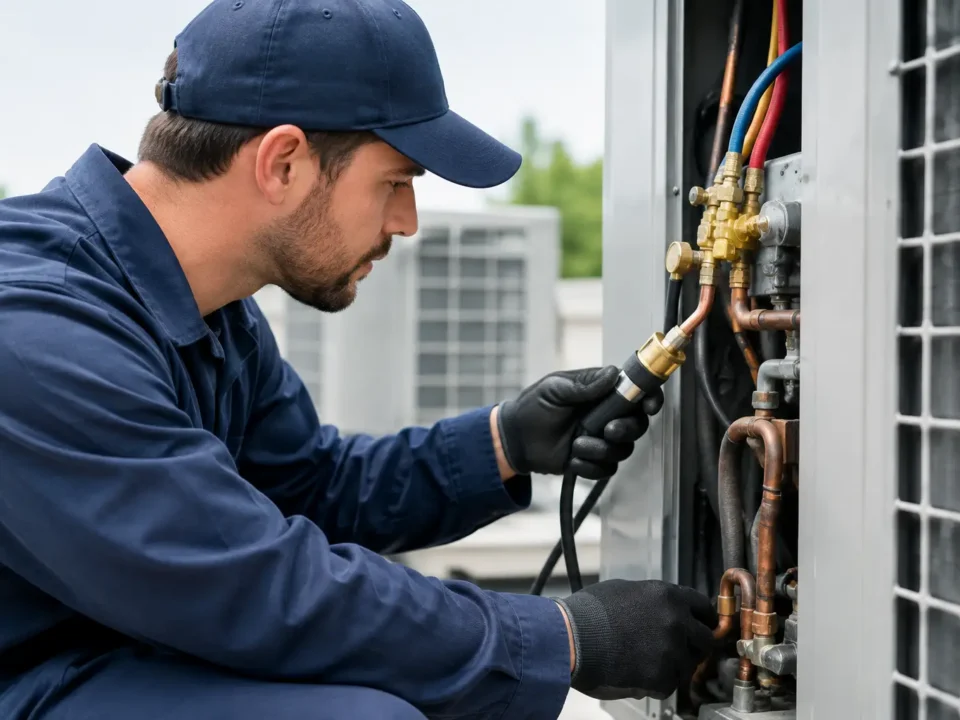
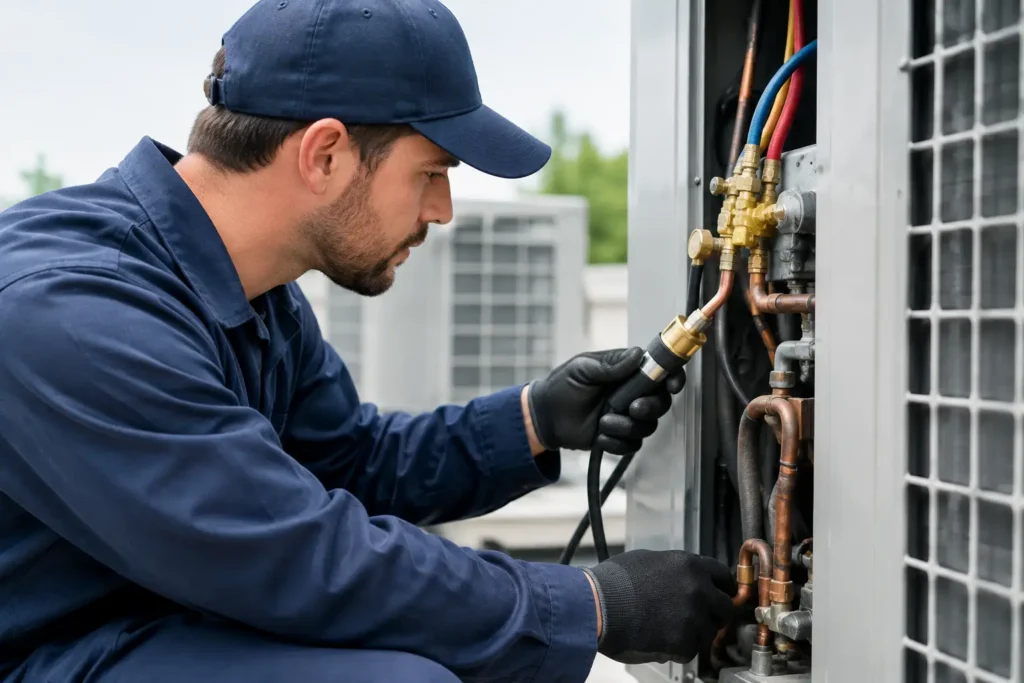
Your outdoor condenser must move heat out of the refrigerant and into the outdoor air. When leaves, grass clippings, cottonwood, or debris coat the coil, heat transfer suffers. The compressor may run hotter and draw more power as it struggles to keep up.
Keep vegetation and stored items away from the outdoor unit. A clear area around it helps air move through the coil. Avoid spraying the unit with a high-pressure nozzle or attempting to take electrical panels apart. Bent coil fins and damaged components can turn a maintenance task into a repair.
A failing capacitor or contactor affects startup
The outdoor unit relies on electrical components to start the compressor and fan motor. A weak capacitor may not provide the starting boost a motor needs. A worn contactor can create unreliable electrical connections. Either condition can make startup difficult and may lead to unusual humming, clicking, delayed operation, or breaker trips.
These components should be tested with the proper equipment. They can retain a dangerous electrical charge even after power is shut off, so this is not a homeowner repair.
The compressor is drawing too much power
The compressor is the heart of the cooling system and one of its largest electrical loads. As compressors age, they can become harder to start or develop internal electrical problems. Low refrigerant, extreme outdoor temperatures, and neglected maintenance can also increase strain, although the exact cause requires professional diagnosis.
A compressor-related trip can be a significant repair, but replacement is not always the immediate answer. A technician should evaluate the compressor’s electrical readings, the refrigerant system, the condition of related components, and the age of the equipment before recommending the most practical path forward.
A fan motor is overheating or failing
The indoor blower and outdoor fan motor both play essential roles in keeping the system cool. If a motor is failing, obstructed, or overheating, it may pull more current than normal. You might notice weak airflow indoors, a fan that does not spin outside, unusual grinding sounds, or an AC system that shuts down during the hottest part of the day.
Turn the thermostat off if you hear loud mechanical noise or see that the outdoor fan is not running. Continuing to operate the unit can increase damage to the compressor.
Damaged wiring or a short circuit is present
Frayed wires, loose connections, damaged insulation, moisture intrusion, or pest damage can create a short circuit or ground fault. This often causes the breaker to trip quickly, sometimes as soon as the AC calls for cooling.
This situation needs prompt professional attention. Never bypass a breaker, replace it with a larger breaker, or hold it in the on position. Those actions remove the protection designed to prevent overheating and fire risk.
The breaker itself may be worn or undersized
Breakers do not last forever. An older breaker can become overly sensitive, or it may no longer perform as intended. In other cases, the installed breaker may not match the AC unit’s required electrical specifications.
This diagnosis requires more than looking at the breaker label. The system’s data plate, wire sizing, electrical load, and breaker condition all need to be evaluated together. Installing a larger breaker without verifying the rest of the circuit can create a serious hazard.
What You Can Check Before Scheduling Service
There are a few safe, practical checks that can help without opening equipment panels or handling wiring. Set the thermostat to Off, then check whether the air filter needs replacement. Look around the outdoor unit for leaves, grass, or objects blocking airflow, and confirm that the disconnect box near the unit has not been accidentally switched off.
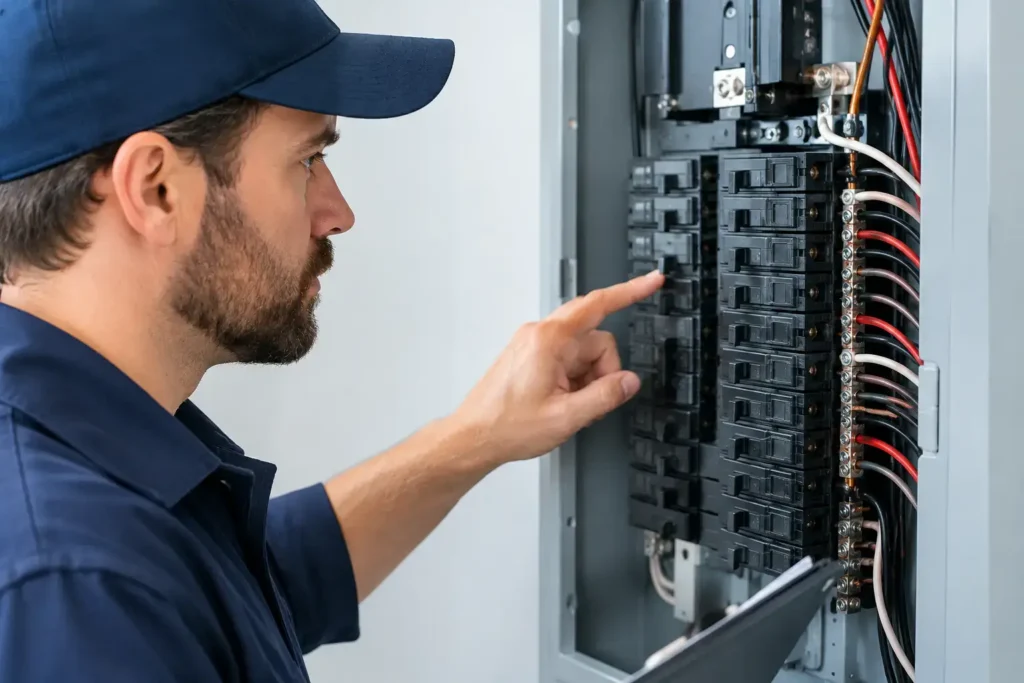
Next, locate the breaker panel and identify the AC breaker. If it is tripped, move it fully to Off before returning it to On. Then set the thermostat to Cool and monitor the system. If the breaker trips again, stop there. Do not attempt repeated resets.
Also pay attention to what happened before the trip. Did the AC make a buzzing or grinding sound? Did it cool poorly for days beforehand? Did it trip during a storm or after landscaping work near the outdoor unit? Those details can help the technician narrow down the cause faster.
When a Tripped Breaker Is an Urgent AC Repair Call
Some symptoms call for same-day attention. Turn the system off and seek prompt help if you smell burning, see smoke, hear persistent buzzing, notice melted insulation, or find that the breaker trips immediately every time you try to run the AC.
The same applies if indoor temperatures are rising quickly for young children, older adults, pets, or anyone with a medical condition affected by heat. For property managers and commercial facilities, a repeat trip can also threaten tenant comfort, equipment uptime, and temperature-sensitive operations. Fast diagnosis is usually less costly than allowing a stressed system to continue cycling until a larger component fails.
Preventing Future AC Breaker Trips
Not every breaker trip is preventable, especially when a component reaches the end of its service life. Still, routine AC maintenance catches many contributing issues early. A professional visit can identify dirty coils, weakening capacitors, loose connections, declining motors, abnormal compressor readings, and airflow problems before they turn into a no-cooling emergency.
At home or at your property, replace filters on schedule, keep the outdoor unit clear, and pay attention when the system begins making new noises or taking longer to cool. Small changes in performance are often the first sign that the AC is working under strain.
A tripped breaker is your air conditioner’s warning signal, not a problem to reset away. If it returns after one careful reset, leave the system off and let a trained AC professional find the reason before a hot day turns a manageable repair into a full comfort outage.