Commercial HVAC Diagnostics for Fewer Failures
November 3, 2026
A hot shower that turns cold halfway through a busy morning makes the water heater decision feel very simple: you need dependable hot water when you need it. But tankless versus traditional water heaters is not a one-size-fits-all choice. The better system depends on your household’s demand, available fuel, installation conditions, budget, and how long you expect to stay in the property.
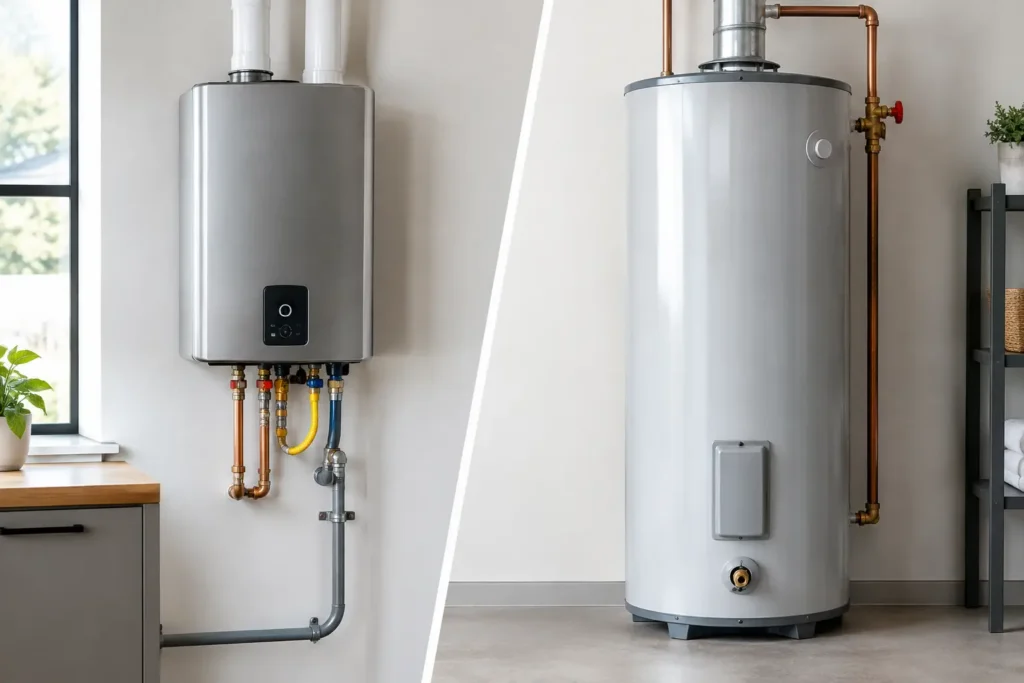
A tank-style water heater stores and heats a set supply of water, usually 40 to 75 gallons for a home. A tankless unit heats water only as it passes through the system. Both can deliver reliable service when properly sized and installed. The key is choosing the model that matches real-life use rather than selecting based on a single claim about efficiency or endless hot water.
Tankless Versus Traditional Water Heaters: The Core Difference
A traditional water heater keeps a reservoir of water hot around the clock. When someone opens a hot-water fixture, hot water leaves the tank and cold water enters to replace it. Once the stored hot water is used, the tank needs time to recover before it can deliver its full capacity again.
A tankless water heater has no storage tank. It detects water flow and activates a powerful burner or electric heating element to warm the water on demand. Because it does not run out of stored water, it can provide hot water continuously. That does not mean it can handle unlimited demand. Every tankless unit has a maximum flow rate, measured in gallons per minute.
For example, a family may be able to run one shower, a dishwasher, and a washing machine at the same time with a properly sized tankless system. If demand exceeds the unit’s capacity, water temperature can drop. Cold winter groundwater in Northern Virginia can also reduce the amount of hot water a tankless unit can produce at once, making professional sizing especially important.
When a Traditional Water Heater Makes More Sense
A standard tank water heater is often the practical choice for homeowners who want a lower upfront investment and straightforward replacement. If an existing tank is working from an established gas or electric connection, replacing it with a similar unit can be less complex than converting to tankless.
Storage heaters also perform well for homes with predictable usage and enough room for a tank. A properly sized 50-gallon or 75-gallon model can support many households comfortably, particularly when family members are not all showering at the same time.
The main limitation is recovery time. A tank can run low during periods of heavy use, such as several back-to-back showers followed by laundry. Its first-hour rating is more useful than tank size alone because it estimates how much hot water the unit can supply during a busy hour.
Traditional units also lose some energy through standby heat loss. The tank and its stored water cool gradually, so the system periodically reheats water even when no one is using it. Modern high-efficiency tank models limit those losses, but they do not eliminate them.
For a rental property, a smaller home, or a replacement situation where upfront cost matters most, a quality tank water heater can be the sound decision. It is familiar, effective, and usually easier to install quickly when an aging unit fails.
Where Tankless Water Heaters Stand Out
The biggest appeal of a tankless water heater is continuous hot water. For larger families, homes with frequent guests, or households where multiple bathrooms are in use each morning, that convenience can be meaningful. As long as water demand stays within the unit’s rated flow capacity, a tankless system keeps heating.
Tankless systems are also compact. They mount on a wall rather than taking up floor space, which can free up room in a utility area, closet, or mechanical room. Their smaller footprint is useful in condos, townhomes, and commercial spaces where every square foot matters.
Efficiency is another advantage. Since a tankless system heats water when requested rather than maintaining a full tank all day, it can use less energy in many homes. Savings vary widely, though. A household with very low hot-water use may see a clearer efficiency benefit than a large household with constant demand.
Tankless equipment often has a longer service life than a conventional tank, particularly when it receives regular maintenance. That longer lifespan can improve its value over time, but it does not erase the higher installation cost. The decision should account for the full project price, expected energy use, maintenance needs, and your plans for the property.
Installation Cost Is More Than the Unit Price
Comparing equipment prices alone can be misleading. A tankless water heater usually costs more to purchase and may require changes to gas supply, venting, electrical capacity, or condensate drainage. Gas-fired models often need a larger gas line because they produce heat very quickly. High-output electric tankless units may require significant electrical upgrades.
Venting is another major consideration. Some high-efficiency gas tankless systems use specialized vent materials and may require new routing to the exterior. A qualified technician should evaluate the existing setup before promising that a tankless unit is an easy swap.
A traditional replacement can also involve important installation work, especially if the current unit is old or does not meet present code requirements. Still, it is generally the simpler path when replacing like for like.
Ask for an estimate that separates equipment, installation changes, permits where required, and any recommended accessories. Clear pricing helps you compare options fairly instead of being surprised after the work starts.
Capacity Should Be Based on Your Busiest Hour
The right water heater is sized for peak use, not average use. Think about what happens during the busiest hour of a typical weekday. Do two people shower while the dishwasher runs? Does a large soaking tub need to be filled? Is laundry often running before work or school?
For tank systems, a technician will look at the first-hour rating and household needs. For tankless systems, the focus is gallons per minute at the needed temperature rise. A shower may use around 2 gallons per minute, while appliances and additional fixtures add to the load. The incoming water temperature matters because colder water takes more energy to heat.
Do not assume that the largest unit is automatically the best choice. Oversizing can increase purchase cost and may not improve everyday comfort. Undersizing, however, creates the exact problem homeowners want to avoid: inconsistent water temperature when several fixtures are in use.
Maintenance Matters for Both Options
Every water heater benefits from regular attention. Traditional tank systems should be checked for signs of corrosion, leaks, unusual noises, and pressure-relief valve concerns. Sediment can collect in the tank over time, reducing efficiency and contributing to premature wear.
Tankless units need maintenance too. Mineral buildup can affect the heat exchanger, especially in areas with harder water. Periodic flushing and inspection help preserve performance and protect the system’s lifespan. Neglecting tankless maintenance can lead to reduced flow, error codes, and costly repairs.
A water heater should also be evaluated promptly if you notice rusty hot water, puddling around the unit, banging sounds, fluctuating temperatures, or a sudden rise in utility costs. Waiting for a complete failure can turn a planned replacement into an urgent decision.
A Practical Choice for Homes and Commercial Properties
For many homeowners, the choice comes down to priorities. Choose a traditional water heater when you need a cost-conscious replacement, have moderate and predictable demand, and prefer a familiar system with a lower installation expense. Choose tankless when continuous hot water, space savings, and long-term efficiency are worth a larger initial investment.
Commercial properties need an even closer look at demand patterns. A small office may have modest needs, while a salon, restaurant, fitness facility, or multi-tenant property can have heavy and variable hot-water loads. In those situations, multiple tankless units, a larger commercial tank system, or a hybrid design may be the better answer.
AAA HVAC can evaluate your current water heater, household demand, and installation conditions before recommending a replacement. The right decision is the one that delivers consistent hot water without paying for more capacity than your property actually needs.