Do HVAC Warranties Transfer When You Sell?
November 17, 2026
A Northern Virginia summer can make a house feel sticky even when the thermostat says 72 degrees. That is because temperature is only part of comfort. Removing home humidity helps your air conditioner cool more effectively, protects wood floors and furnishings, and makes rooms feel noticeably better without forcing the system to run harder than necessary.
The goal is not bone-dry air. Homes generally feel healthiest and most comfortable when relative humidity stays between 30% and 50%. Once indoor humidity regularly climbs above 60%, you may notice condensation, musty odors, clammy rooms, or signs that your cooling system needs attention.
Signs Your Home Has Too Much Humidity
High humidity is often obvious, but not always. A portable hygrometer gives you a clear reading and is useful for checking problem rooms such as basements, bathrooms, and bedrooms. Still, your home may show other clues before you check a number.
Windows that collect moisture, paint that peels in damp areas, swollen doors, and a persistent musty smell are all warning signs. You may also feel sweaty while sitting still, wake up uncomfortable despite cool air, or find that towels and laundry take too long to dry indoors.
For property managers and business owners, elevated humidity can affect more than comfort. It can contribute to moisture damage, tenant complaints, and harder-to-control indoor conditions in offices, retail spaces, and other occupied areas.
Removing Home Humidity Starts With the Right Cause
A dehumidifier can help, but it is not always the complete answer. Humidity gets into a home in several ways: outdoor air leaks through gaps around doors and windows, showers and cooking create moisture indoors, and basements can absorb moisture from the surrounding ground. In summer, the HVAC system should also remove a meaningful amount of moisture as it cools the air.
If humidity is happening throughout the house, the cooling system deserves a closer look. An air conditioner that is too large can cool the thermostat area quickly and shut off before running long enough to pull out moisture. This is called short cycling. A system with low airflow, a dirty filter, incorrect settings, or a maintenance issue may also struggle to dehumidify.
The timing matters. If the problem appears only after long showers or while cooking, better ventilation may solve much of it. If every room feels damp during the cooling season, especially when the AC is running, a whole-home HVAC assessment is usually more useful than buying several small dehumidifiers.
Practical Steps to Lower Humidity Indoors
Start with the changes that reduce moisture at its source. Run bathroom exhaust fans during showers and leave them on for about 20 minutes afterward. Use the kitchen exhaust fan when boiling water or cooking foods that produce steam. If a fan is noisy, weak, or does not seem to move air effectively, it may need service.
Keep windows closed when outdoor air is hot and humid. Opening windows on a pleasant morning can feel natural, but humid air can raise indoor moisture quickly in Northern Virginia. Use your air conditioner and ceiling fans instead. Ceiling fans do not remove humidity, but they improve air movement and can help occupants feel cooler at a slightly higher thermostat setting.
Check for straightforward air leaks around exterior doors, windows, and utility penetrations. Weatherstripping and caulk can reduce the amount of humid outdoor air entering the home. In a basement, look for obvious water intrusion, wet walls, or puddling after rain. A dehumidifier cannot correct an active water problem.
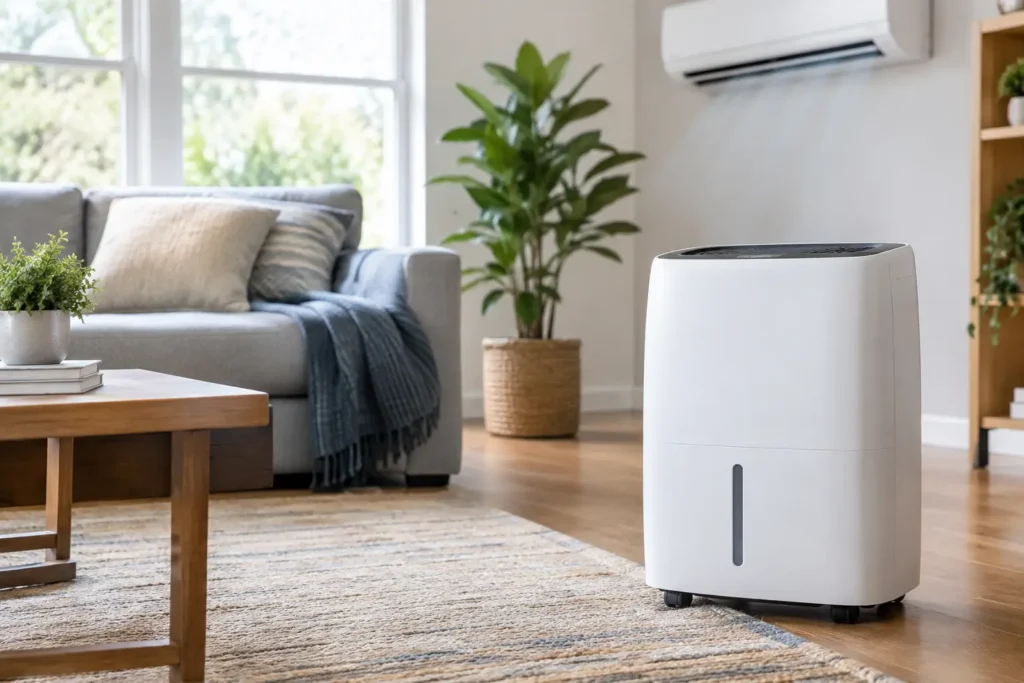
For isolated trouble spots, a portable dehumidifier is often a practical solution. Choose a unit sized for the room or basement, keep doors and windows closed while it runs, and clean its filter as directed. If you are emptying the collection bucket every day or the unit runs constantly with little improvement, the moisture load may be too high for a portable unit alone.
Help Your Air Conditioner Dehumidify Properly
Your air conditioner removes moisture when warm indoor air passes over its cold evaporator coil. Good airflow and proper run time are essential. A clogged air filter can restrict airflow and reduce performance, so check it monthly during heavy cooling use and replace it when dirty. The right replacement interval depends on filter type, pets, occupancy, and system use.
Avoid setting the thermostat extremely low in an attempt to dry out the house. This can increase energy use without addressing the underlying issue. Instead, use a consistent setting and pay attention to how long the system runs. Moderate, steady cooling cycles usually do a better job of moisture removal than frequent short cycles.
Thermostat fan settings matter, too. In most homes, the fan should be set to AUTO rather than ON during humid weather. With the fan set to ON, it may continue blowing after the cooling cycle ends. That can reintroduce some moisture from the indoor coil back into the air before it drains away.
Routine HVAC maintenance is also a humidity-control measure. A technician can inspect refrigerant performance, airflow, electrical components, the evaporator coil, and the condensate drain system. Small issues in these areas can become comfort problems long before the air conditioner stops cooling completely.
When Equipment Size Is the Problem
If high humidity has been a problem since a new system was installed, system sizing and setup should be evaluated. Bigger is not automatically better for air conditioning. Equipment must be matched to the home, insulation levels, window exposure, occupancy, and the local climate.
A qualified technician may also evaluate whether a variable-speed system, thermostat adjustments, or a whole-home dehumidifier would make sense. A whole-home dehumidifier is especially helpful for homes with damp basements, consistently high indoor humidity, or residents who need tighter moisture control. It adds cost and requires professional installation, but it can provide more even results than managing several portable units.
When to Schedule HVAC Service
Call for professional help if your home stays above 60% relative humidity even with the AC running, if rooms feel clammy while the system runs, or if you see water around indoor equipment. Other concerns include weak airflow, ice on refrigerant lines, frequent system cycling, unusual noises, or a condensate drain that appears backed up.
Do not ignore a musty odor that returns after cleaning or an increase in condensation on windows. Those symptoms can point to a moisture issue that needs diagnosis before it affects finishes, stored belongings, or indoor comfort.
AAA HVAC can inspect the cooling system and identify whether the issue is maintenance-related, caused by airflow or controls, or tied to equipment capacity. Certified service helps replace guesswork with a clear plan, whether the right answer is a repair, preventive maintenance, or a humidity-control upgrade.
A home should feel cool, dry, and comfortable – not chilled but sticky. Take humidity concerns seriously early, because a small adjustment now can prevent a much larger comfort or moisture problem later.