Commercial Rooftop Unit Repair Guide
June 28, 2026
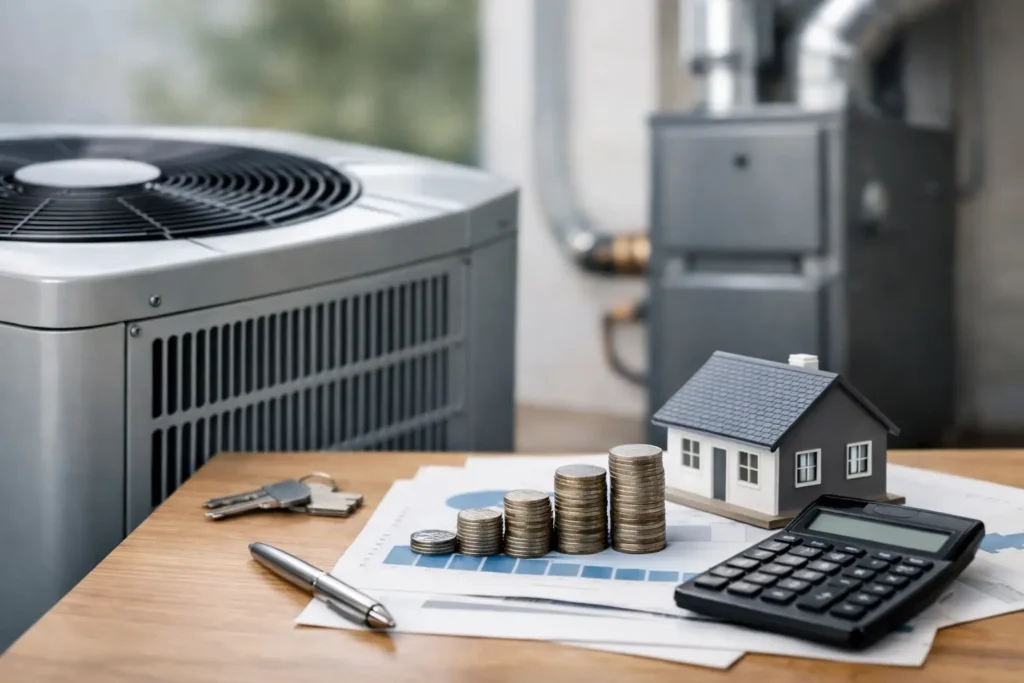
A failed AC in July or a furnace that quits during a cold snap rarely shows up at a convenient time. That is why HVAC financing options matter for homeowners, property managers, and business owners who need to restore comfort fast without draining cash reserves.
When a system goes down, the cheapest short-term choice is not always the smartest long-term one. A low monthly payment can look attractive, but if the terms are unclear or the equipment is not the right fit, you can end up paying more over time. The goal is not just to get approved. It is to choose financing that supports the right repair or replacement decision.
Why HVAC financing options matter
Heating and cooling work is often urgent, but the cost can vary widely. A smaller repair may be manageable out of pocket. A full system replacement, ductwork correction, or commercial equipment upgrade is a different conversation. Financing gives you room to address the real problem instead of patching over it because of timing.
That flexibility matters in Northern Virginia, where both summer heat and winter cold can put serious pressure on aging systems. If your equipment is unreliable, every delay increases the chance of another breakdown, higher utility bills, or added wear on related components. Financing can help you move sooner, not after the next failure.
For commercial properties, the stakes are even higher. Tenant comfort, server room temperatures, customer experience, and employee productivity all depend on reliable HVAC performance. Preserving working capital while handling a necessary replacement is often a practical business decision, not just a convenience.
The most common HVAC financing options
Most customers will see a few standard financing paths. Each one has benefits, and each comes with trade-offs.
Contractor financing
Many HVAC companies offer financing through a third-party lending partner. This is often the most direct route because the financing process is tied to the estimate and installation. It can be a good fit when speed matters and you want one coordinated process.
The advantage is convenience. Approval decisions may be fast, and some plans include promotional terms such as deferred interest or fixed monthly payments. The trade-off is that not every promotional offer is as simple as it sounds. If a deferred-interest balance is not paid within the promotional window, interest can sometimes be added retroactively. Before signing, make sure you understand whether the offer is truly no-interest or only deferred.
Personal loans
A personal loan from a bank, credit union, or online lender can offer predictable payments and a fixed payoff schedule. For homeowners who want to separate financing from the contractor relationship, this option can provide more control.
Personal loans may work well for mid-range repair or replacement projects, especially if you have strong credit. On the other hand, rates can be higher than secured borrowing, and funding speed depends on the lender. If your system is down now, timing matters just as much as the rate.
Home equity financing
Home equity loans and home equity lines of credit can offer lower rates than unsecured borrowing because the loan is backed by your property. For larger projects, such as full HVAC replacement combined with electrical upgrades or duct improvements, this can be worth considering.
Still, this approach is not right for every household. Closing can take longer, fees may apply, and your home is tied to the loan. If the problem is urgent, the approval timeline may not match the reality of the repair.
Credit cards
A credit card can make sense for smaller repairs or for covering a deductible, especially if you qualify for a low introductory APR and can pay the balance off quickly. It is usually not the best choice for a major system replacement unless you have a very clear payoff plan.
The reason is simple. Standard credit card rates can turn a manageable project into an expensive one fast. A temporary fix becomes much more costly if the balance lingers for months or years.
Commercial equipment financing
For business owners and property managers, specialized commercial financing may be available for larger HVAC projects. These programs are often structured around equipment costs, business cash flow, and operational needs.
This type of financing can be useful when uptime matters and preserving liquidity is a priority. Terms vary widely, so it is important to review payment structure, ownership terms, and any penalties tied to early payoff or equipment replacement.
How to compare HVAC financing options without getting burned
The monthly payment matters, but it should never be the only number you look at. A lower payment over a longer term can cost substantially more overall. Ask for the total financed amount, interest rate or APR, repayment term, and total repayment cost.
You should also ask whether there are prepayment penalties, late fees, or deferred-interest triggers. Those details can change the real cost of the project. If the financing is tied to a promotional period, confirm exactly what happens after that period ends.
For replacement projects, compare the financing with the projected value of the system being installed. A higher-efficiency unit may cost more up front, but if it lowers operating costs and reduces repair frequency, the financing may support a better long-term decision. The reverse is also true. There is no point financing premium equipment if the building does not need that level of performance.
When financing a repair makes sense and when replacement is better
This is where many customers need straight answers. Financing a repair can make sense when the unit is relatively young, the issue is isolated, and the rest of the system is in good condition. Paying over time for a quality repair can be more sensible than rushing into a full replacement.
But financing an older system that keeps failing is often money spent in the wrong direction. If you are facing expensive repairs on aging equipment, especially when efficiency is declining and warranty coverage is gone, replacement may be the better financial decision even if the total project cost is higher.
A good contractor should be able to explain both paths clearly. You should know what the repair is expected to solve, how long the fix is likely to hold, and whether other components are close to failure. Financing should support an informed decision, not pressure you into one.
What homeowners should ask before choosing a plan
Start with the basics. Is the financing for the full project, including labor and materials, or only for equipment? Are there down payment requirements? Will applying affect your credit score, and if so, how?
Then move to practical questions. What is due each month, when does the first payment begin, and what happens if you want to pay the balance off early? If the project includes accessories like air quality upgrades, smart thermostats, or electrical work, ask whether those can be included in the same financing package.
It is also worth asking whether the financing changes based on the equipment selected. Sometimes a contractor can offer stronger promotional terms on certain systems or seasonal installation packages. That does not automatically make them the best choice, but it is useful context for comparing bids.
What commercial clients should consider
Commercial buyers usually have a different set of concerns. The first is downtime. If financing helps you replace a failing unit before it affects operations, it can protect revenue as much as comfort.
The second is budgeting. Many businesses prefer predictable monthly costs over large capital hits, especially when multiple sites or aging assets are involved. Financing can support phased upgrades rather than forcing a reactive replacement strategy.
The third is accountability. Work with a provider that can explain scope, scheduling, equipment recommendations, and financing terms in plain language. Fast service matters, but so does confidence that the repair or installation is being done right. That is especially true for property managers balancing tenant expectations and owner budgets.
A practical way to decide
If you need HVAC work now, start with the system need first and the financing second. Get a clear diagnosis. Understand whether you are looking at a one-time repair, a short-term patch, or a replacement that will improve reliability and energy performance.
Then compare financing based on total cost, not just the monthly number. The right option should fit your budget, your timeline, and the expected life of the solution. For many customers, the best financing plan is the one that makes a sound repair or replacement possible without adding surprises later.
At AAA HVAC, that conversation should feel straightforward. If a payment plan helps you restore comfort quickly and confidently, it should also be easy to understand. When the numbers are clear and the work is done right, financing becomes a tool that protects your home or business instead of adding another problem to solve.
If your system is failing and the timing is bad, you are not out of options. The right financing plan can buy more than equipment – it can buy stability, better performance, and a little less stress when you need it most.