How Often Should HVAC Be Serviced?
June 27, 2026
HVAC Financing Options That Make Sense
June 29, 2026
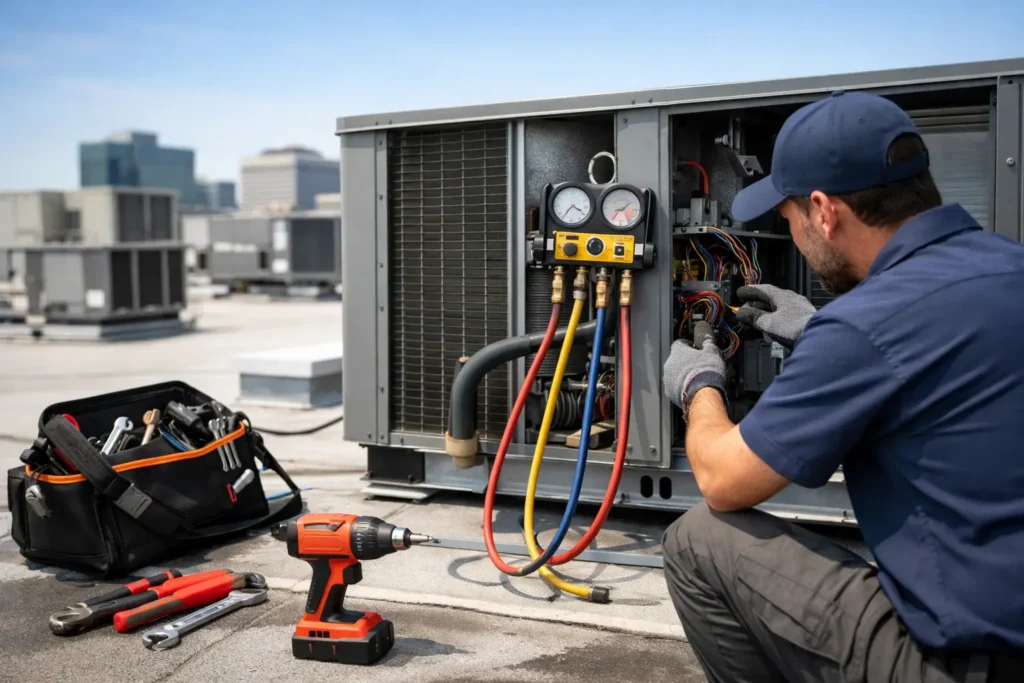
A failing rooftop unit rarely gives you the courtesy of breaking down at a convenient time. It starts with a hot office, uneven cooling across tenant spaces, a strange shutdown during business hours, or utility bills that climb without a clear reason. When you need commercial rooftop unit repair, speed matters, but so does getting the diagnosis right the first time.
For property managers, facility teams, and business owners in Northern Virginia, the real cost of an RTU problem is not just the repair invoice. It is lost comfort, unhappy occupants, strained equipment, and the risk of a bigger failure if a small issue is ignored. That is why rooftop unit service should be approached with urgency, but not guesswork.
What commercial rooftop unit repair usually involves
A commercial rooftop unit handles a lot in one package. It may cool, heat, ventilate, and manage airflow for offices, retail space, light industrial buildings, restaurants, and mixed-use properties. Because everything is housed on the roof, problems can affect multiple zones or an entire building faster than many people expect.
Commercial rooftop unit repair can involve electrical components, refrigerant circuits, blower assemblies, economizers, ignition systems, control boards, contactors, belts, motors, sensors, and drainage. In some cases, the repair is straightforward, such as replacing a failed capacitor or contactor. In other cases, the issue is layered, with one failed part exposing wear in several other areas.
That is where experience matters. A quick fix that gets the unit running for a day is not the same as a repair that protects reliability through the rest of the season.
The most common rooftop unit problems
Most RTU failures fall into a few familiar categories, though the cause can vary by building use, maintenance history, and equipment age.
Electrical failures are common. Worn contactors, failed capacitors, loose wiring, tripped breakers, and damaged relays can all stop a unit or cause short cycling. Electrical issues are especially common during periods of heavy summer demand, when systems run for longer hours and under higher stress.
Airflow problems are another major source of service calls. Dirty filters, failing blower motors, broken belts, and clogged coils can reduce performance and push the unit harder than it should run. Poor airflow often shows up first as uneven temperatures, weak supply air, or complaints from only one part of the building.
Refrigerant-related issues can be more serious. Low charge, leaks, frozen coils, and compressor strain all affect cooling performance. If a unit is low on refrigerant, the answer is not simply topping it off. The leak needs to be found, repaired properly, and the system tested.
Heating issues matter too, especially in packaged gas-electric units. Ignition problems, dirty burners, cracked components, or failed safety controls can shut down heat when tenants or employees need it most.
Controls and sensor problems are easy to overlook because they can mimic larger mechanical failures. Faulty thermostats, communication errors, and bad sensors can cause erratic cycling, comfort complaints, and wasted energy even when the main equipment is still mechanically sound.
Signs you need commercial rooftop unit repair now
Some symptoms give you a little time. Others should move to the top of the maintenance list immediately.
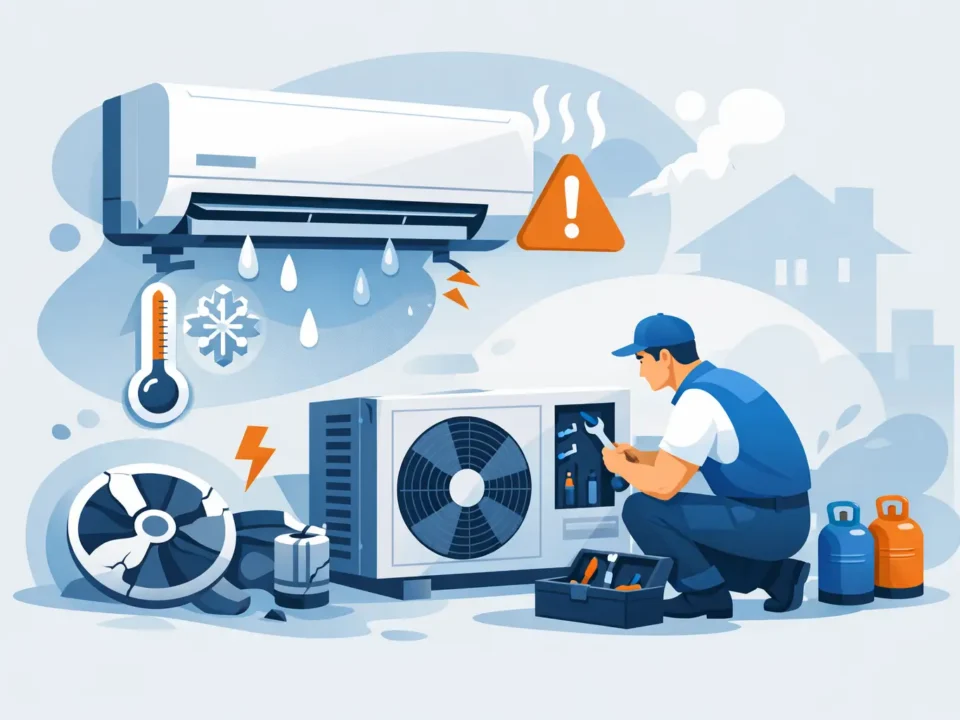
If the unit is not cooling or heating at all, that is an obvious service call. But partial failures can be just as disruptive. Warm air during cooling mode, rooms that never reach setpoint, loud operation, frequent restarts, water around ductwork or ceiling areas, and sudden increases in utility usage all point to trouble.
Watch for repeated occupant complaints from the same suite or zone. In commercial buildings, comfort issues are often first reported as a people problem before they are recognized as an HVAC problem. If one area is always hot, stuffy, or noisy, the rooftop unit may be signaling a developing failure.
A burning smell, tripping breaker, hard shutdown, or visible ice on the unit should never be ignored. Those symptoms can indicate electrical danger, severe airflow restriction, or compressor stress. Waiting usually makes the repair more expensive.
Repair or replace? It depends on age, condition, and downtime risk
Not every rooftop unit should be repaired indefinitely. But replacement is not always the smartest first move either.
If the unit is relatively new, the repair is isolated, and the overall condition is good, repair is usually the practical choice. This is especially true when the issue is with controls, motors, contactors, belts, capacitors, or minor refrigerant repairs.
If the equipment is older, repair decisions become more strategic. A compressor failure on a unit near the end of its service life is very different from a failed fan motor on a well-maintained system. The right decision depends on repair cost, expected remaining life, parts availability, energy performance, and how critical that unit is to your operations.
For a medical office, server room support space, or tenant-sensitive retail environment, downtime risk may matter more than simple repair cost. A cheaper repair that leaves you vulnerable to another breakdown next month may not be the most cost-effective path.
A trustworthy technician should explain the options clearly, including when repair makes sense and when replacement deserves serious consideration.
Why fast diagnosis matters more than a fast guess
Commercial buildings do not have much patience for repeated callbacks. Every extra visit affects schedules, occupants, and operating costs. That is why commercial rooftop unit repair should start with a thorough diagnosis, not a rushed parts swap.
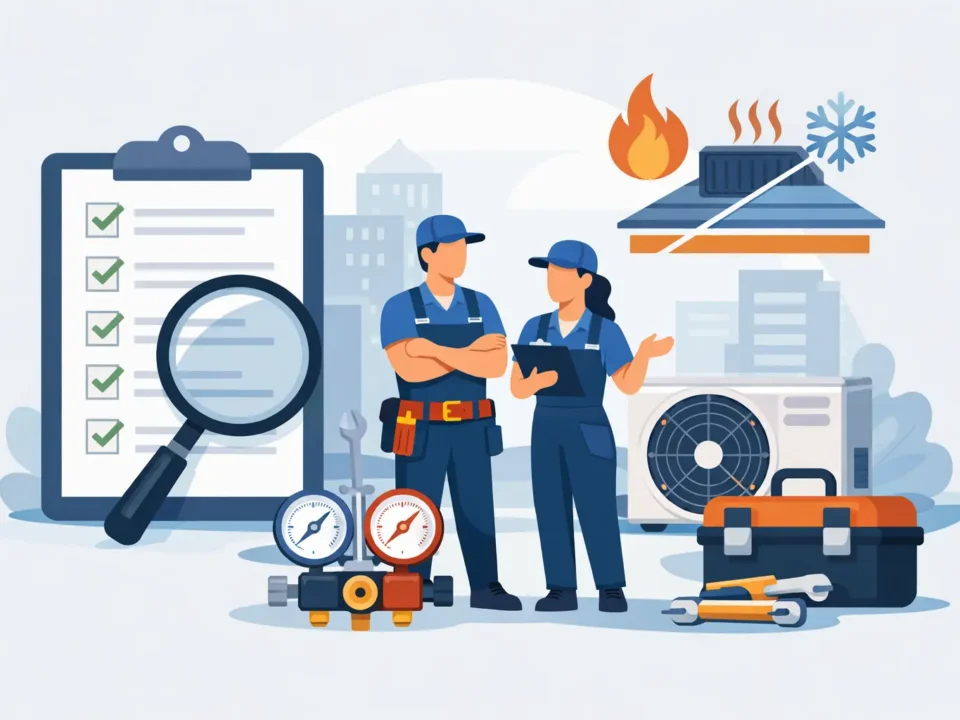
A proper inspection looks at the full operating picture: electrical draw, airflow, refrigerant pressures, control response, safety switches, drain condition, coil cleanliness, and mechanical wear. The goal is to identify the root cause, not just the symptom that caused the latest shutdown.
For example, a failed compressor may be the headline issue, but the underlying cause could be dirty coils, low airflow, voltage problems, or a long-term refrigerant leak. If the root issue is missed, the replacement part is put at risk from day one.
This is one reason many commercial clients prioritize certified, experienced technicians. Accurate diagnosis saves time, protects the equipment, and reduces the chance of repeat failures.
How maintenance reduces repair frequency
The cheapest repair is often the one you never need. Preventive service does not eliminate breakdowns completely, but it dramatically improves the odds of catching problems early.
Routine maintenance for rooftop units should include filter checks, coil cleaning, belt inspection, motor testing, electrical tightening, condensate drain inspection, refrigerant evaluation, combustion checks where applicable, and control verification. On commercial equipment, even small maintenance gaps can escalate quickly because run times are high and demand is less forgiving.
Seasonal service is especially important before summer and winter peak periods. A unit that appears to be running fine in mild weather can fail fast when temperatures spike and the load increases.
Maintenance also helps with budget planning. It is easier to schedule repairs when wear is spotted in advance than to react to a same-day outage during occupied hours.
What to expect from a reliable repair visit
A solid service call should bring more than a temporary restart. You should expect a clear explanation of the problem, what caused it, what needs immediate attention, and whether any secondary issues are likely to create near-term trouble.
For commercial clients, communication matters almost as much as the wrench work. Property managers and business owners need to know whether the unit can operate safely, whether a part needs to be ordered, how long downtime is expected to last, and whether a temporary workaround is possible.
This is also where service accountability matters. Companies that stand behind their repair work, use qualified technicians, and respond quickly when systems fail provide more than convenience. They reduce risk. In a market like Northern Virginia, where weather swings can be sharp and building schedules are tight, that reliability counts.
AAA HVAC serves commercial clients with that same practical focus – fast response, certified technicians, and repairs aimed at restoring comfort without unnecessary delay.
Choosing a commercial rooftop unit repair partner
Not every HVAC company is built for commercial service. Rooftop equipment requires safe roof access, commercial troubleshooting experience, and an understanding of how building operations affect service priorities.
Look for a provider that can handle emergency response, explain repair options plainly, and support preventive maintenance after the immediate problem is fixed. If a contractor cannot speak clearly about lead times, parts, system condition, and next-step recommendations, that is usually a warning sign.
The best repair partner is not simply the one who can show up. It is the one who can solve the problem responsibly, protect uptime, and help you avoid the next avoidable failure.
When a rooftop unit starts acting up, waiting for a total shutdown rarely saves money. Early action gives you more options, less disruption, and a better chance of keeping your building comfortable when it matters most.