How to Choose AC Size for Your Northern Virginia Home
July 19, 2026
10 Air Conditioner Repair Warning Signs to Know
July 21, 2026
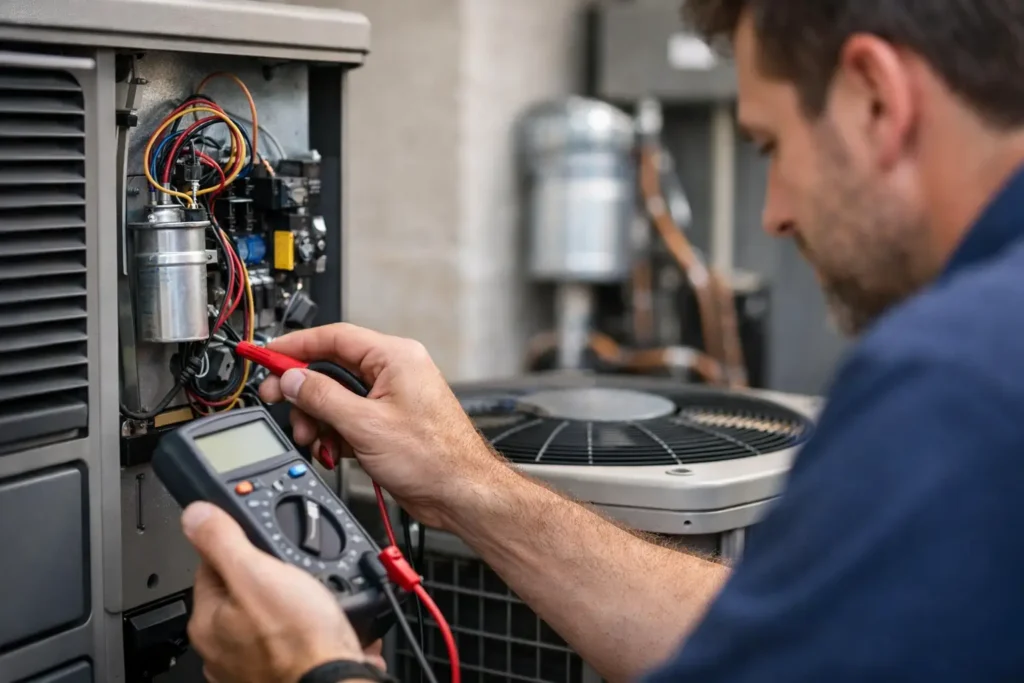
A thermostat set to 72 degrees cannot cool a home if the system never receives reliable power. Electrical issues affecting HVAC equipment are often mistaken for a failed air conditioner or furnace, especially when the system suddenly will not start, cycles off early, or blows air without heating or cooling it. In Northern Virginia, where summer heat and winter cold can put real pressure on a building, a power-related HVAC problem deserves prompt attention.
Some causes are simple, such as a tripped breaker. Others involve high-voltage components, damaged wiring, or a failing control board. The safest approach is to recognize the warning signs, handle only basic checks, and bring in a qualified technician when the issue is not immediately clear.
How Electrical Issues Affecting HVAC Systems
Your HVAC system relies on more than the power outlet or breaker panel. It uses a network of electrical components to receive a call from the thermostat, start motors, operate safety controls, and manage the heating or cooling cycle. A fault anywhere in that chain can leave the equipment unable to do its job.
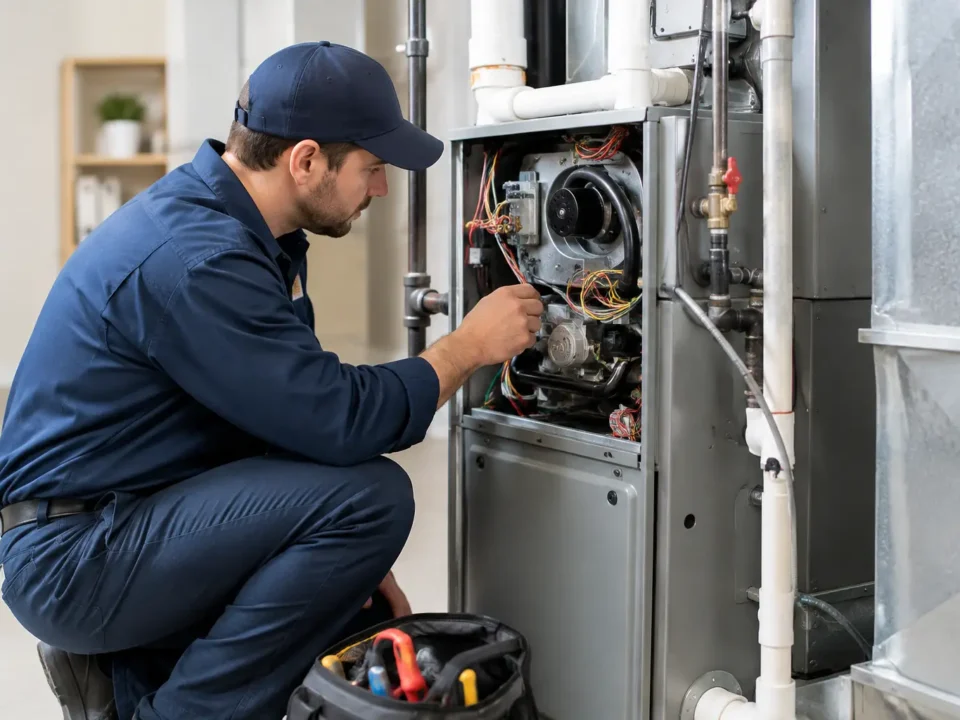
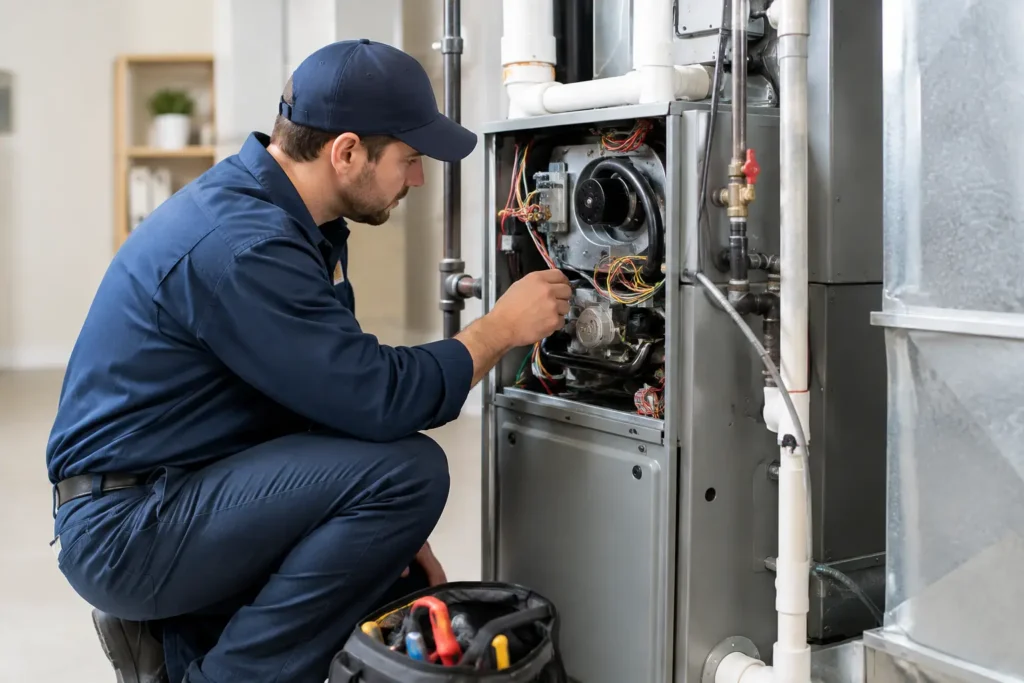
Central air conditioners and heat pumps depend on an outdoor condenser unit, indoor air handler or furnace, thermostat wiring, disconnect switch, capacitors, contactors, relays, and circuit boards. Furnaces may also use electrical power for the blower motor, ignition system, inducer motor, and controls, even if they burn natural gas for heat.
That is why an electrical problem can produce symptoms that seem unrelated. A furnace may run but not circulate air. An AC unit may hum without starting. A thermostat screen may go blank. A breaker may trip only when the outdoor unit attempts to turn on.
Warning Signs You Should Not Ignore
A single unusual event does not always mean a major repair is needed. A breaker can trip after a temporary power surge, for example. But repeated symptoms should be investigated before they damage equipment or create a safety risk.
Watch for breakers that trip more than once, burning or hot electrical smells, buzzing from the outdoor unit, flickering lights when HVAC equipment starts, or a thermostat that loses power intermittently. You may also notice that the outdoor unit does not run while the indoor blower does, or that the system starts and stops in rapid cycles.
If you see smoke, visible sparks, scorched wiring, or signs of overheating at the electrical panel or HVAC disconnect, turn the system off if it is safe to do so and request emergency service. Do not repeatedly reset the breaker in an effort to force the system to run. Repeated resets can worsen a short circuit, damaged motor, or overloaded component.
A Tripped Breaker Is a Symptom, Not Always the Cause
When an HVAC breaker trips, it is doing its job by interrupting power when it senses an unsafe condition. The question is why it tripped. It could be a weak breaker, but it could also point to a compressor drawing too much current, a shorted wire, a failing capacitor, or an outdoor unit with a damaged electrical component.
Homeowners can check whether the breaker is fully in the off position before resetting it once. If it trips again, leave it off. Property managers should take the same approach: document the timing and conditions, but do not ask occupants or maintenance staff to keep resetting a breaker that will not hold.
Thermostat and Low-Voltage Wiring Problems
Not every HVAC electrical failure involves the main power supply. Thermostats work through low-voltage wiring that communicates with the system’s controls. Loose connections, damaged wires, corroded terminals, dead batteries in certain models, or a failed transformer can stop that communication.
The result may look like a system failure even when the mechanical equipment is still sound. If the thermostat is blank, first check its batteries if applicable and verify that the HVAC breaker has not tripped. Beyond that, testing low-voltage circuits requires the right tools and experience. A miswired thermostat or shorted control wire can damage the transformer or control board.
Common Electrical Causes Behind HVAC Breakdowns
Electrical diagnosis is not about replacing the first part that looks suspicious. A qualified technician checks voltage, amperage, wiring condition, safety switches, and component operation to identify the actual source of the problem.
A failed capacitor is common in air conditioners, heat pumps, and blower assemblies. Capacitors provide the electrical boost motors need to start and run. When one weakens or fails, the unit may make a humming sound, struggle to start, or shut down on a safety limit. Because capacitors can retain an electrical charge even after power is turned off, they are not a safe DIY replacement.
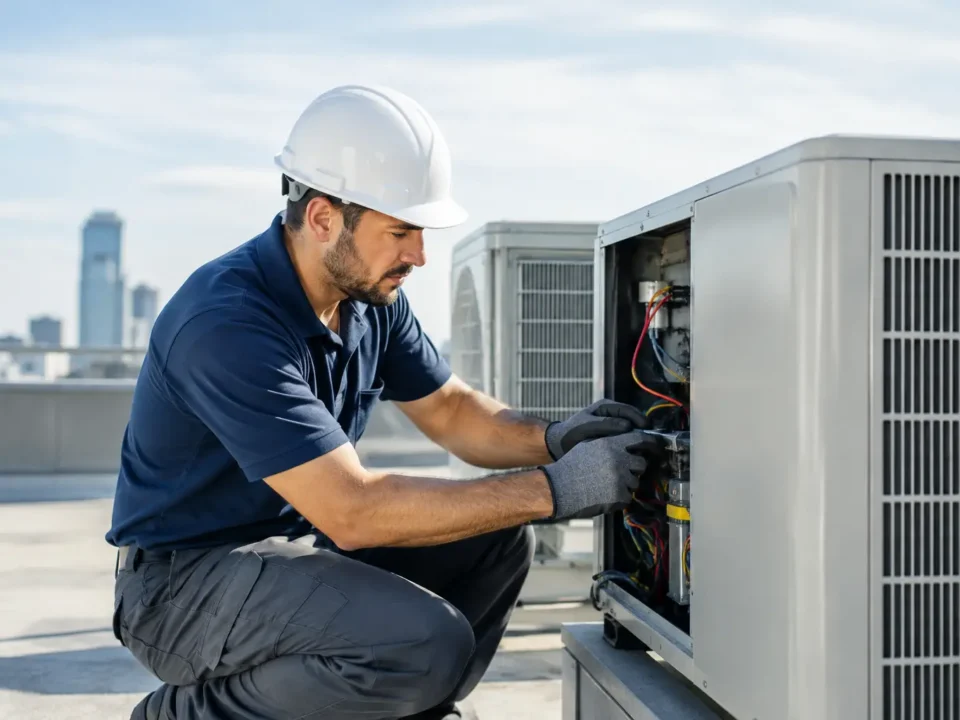
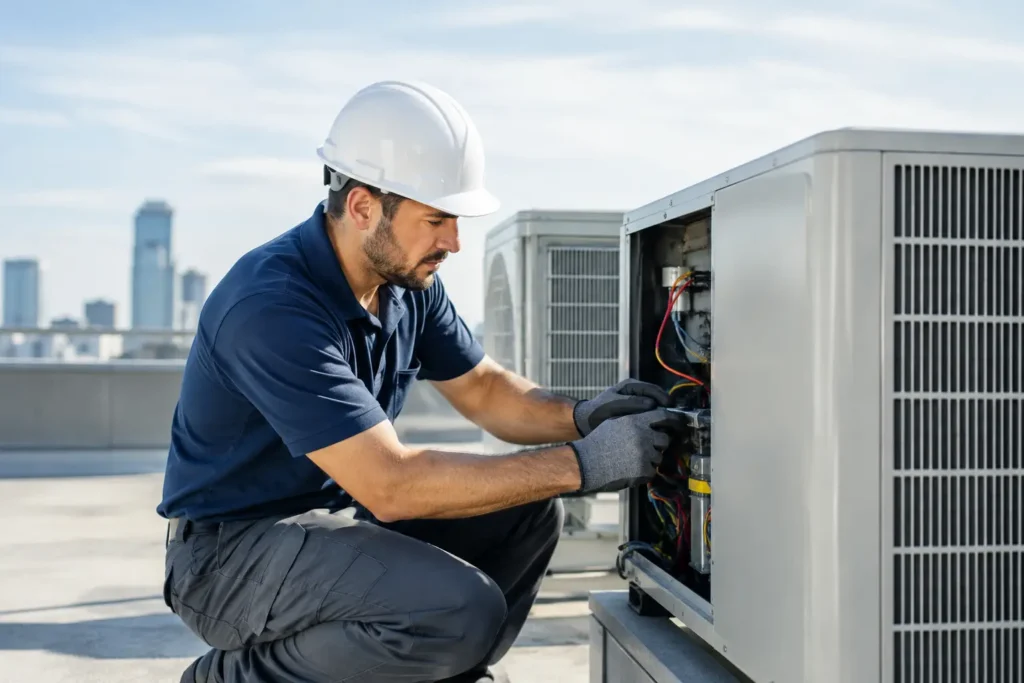
A worn contactor can also prevent an outdoor unit from starting. This electrically controlled switch tells the condenser when to turn on. Pitted or burned contacts may cause intermittent cooling, chattering sounds, or a unit that receives the thermostat signal but does not fully engage.
Other causes include loose wire connections, damaged insulation, rodents chewing wires, water intrusion around the outdoor disconnect, and failed control boards. In older homes and commercial spaces, undersized circuits or aging electrical panels may also be part of the concern. The right repair depends on the load requirements of the equipment and the condition of the building’s electrical system.
What You Can Check Safely Before Calling
A few basic checks can save time and give your technician useful information. Confirm that the thermostat is set to the correct mode and temperature, replace thermostat batteries if your model uses them, and make sure the air filter is not severely clogged. Then check the breaker panel and the outdoor disconnect only for obvious signs of a tripped switch or damage.
Do not remove service panels, touch exposed wiring, bypass a safety switch, or attempt to install a larger breaker. A larger breaker does not solve an overload. It can allow wires or equipment to overheat before the circuit shuts down.
For commercial facilities, note whether the failure affects one zone or the entire building, whether it began after a power outage, and whether any recent electrical or construction work occurred nearby. Those details can shorten diagnosis and help protect uptime.
When the HVAC Problem Requires Professional Service
Call for service when a breaker trips repeatedly, the system makes electrical noises, the thermostat has no power after basic checks, or cooling and heating fail without an obvious setting issue. Professional diagnosis is especially important when the outdoor condenser will not start, because capacitors, contactors, compressor circuits, and line-voltage wiring may all be involved.
AAA HVAC technicians can evaluate HVAC electrical components as part of a heating or cooling repair visit, then explain what failed, what the repair involves, and whether another electrical issue in the property needs attention. For homeowners, that means clearer decisions without guessing at expensive parts. For property managers and business owners, it helps prevent a small interruption from becoming a longer comfort or operations problem.
Preventing Electrical HVAC Problems
Preventive maintenance cannot prevent every power surge or component failure, but it gives technicians an opportunity to spot loose connections, deteriorating capacitors, damaged wiring, and unusual electrical readings before the system stops on a hot or cold day. Maintenance is particularly valuable for older equipment, systems that run heavily, and properties with a history of breaker trips or inconsistent cooling.
Keep the area around the outdoor unit clear, protect equipment from avoidable water exposure, change filters on schedule, and avoid running the system with recurring warning signs. If your home has frequent power fluctuations, ask a qualified professional whether whole-home surge protection or additional electrical evaluation makes sense for your setup.
Comfort equipment should start quietly, run consistently, and shut down normally. If yours does not, acting early is often the safest and most cost-conscious way to protect your HVAC system and the people who rely on it.