How to Prepare AC for Summer the Right Way
July 9, 2026
What Does HVAC Maintenance Include in a Visit?
July 11, 2026
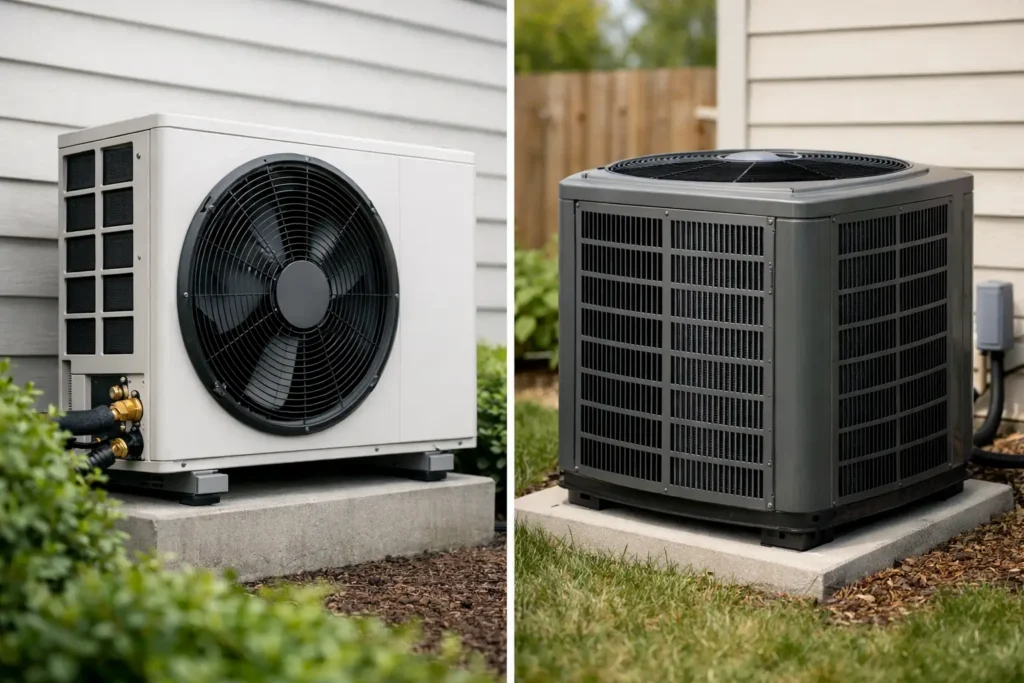
If your cooling system is aging out, the heat pump versus air conditioner question usually shows up at exactly the wrong time – during a hot spell, with repair costs climbing, and no one interested in making a rushed five-figure decision. For homeowners and property managers in Northern Virginia, the right answer depends on more than summer comfort. It also depends on how you heat the building, what your utility costs look like, and how long you plan to stay put.
Heat pump versus air conditioner: what changes?
At a glance, a heat pump and an air conditioner can look almost identical from the outside. Both use refrigerant, both move heat, and both can keep indoor spaces cool in summer. The biggest difference is simple: an air conditioner only cools, while a heat pump cools and heats.
That heating function matters. In cooling mode, a heat pump works much like a standard central AC system. In colder weather, it reverses the refrigeration cycle and pulls heat from outside air to warm the building. That means one piece of equipment can handle both seasons, although some systems still rely on backup heat when temperatures drop far enough.
For many Northern Virginia properties, that makes a heat pump a practical option, not a niche one. Winters here are real, but they are often moderate enough for modern heat pumps to perform well for much of the season.
How each system works in real-world terms
A central air conditioner is designed to work with a furnace or another separate heating system. In summer, the AC cools your indoor air. In winter, the furnace takes over. This split setup is familiar, and for homes that already have a solid gas furnace, it can still make a lot of sense.
A heat pump handles cooling in summer and heating in winter. If it is installed as part of a ducted system, it uses the same air distribution approach most homeowners already know. If it is paired with auxiliary electric heat or an existing furnace in a dual-fuel setup, it can switch methods depending on outdoor temperatures.
That flexibility is one reason heat pumps have become more common. But flexibility is not the same as one-size-fits-all. A building with old ductwork, poor insulation, or unusually high heating demand may need a more tailored approach.
Energy efficiency and operating costs
This is where the choice gets more nuanced. In cooling mode, a heat pump and a high-efficiency air conditioner can be fairly comparable. Both are rated for seasonal cooling efficiency, and both can deliver strong summer performance when sized and installed correctly.
The bigger difference shows up in heating season. A heat pump does not create heat the way electric resistance heat does. It transfers heat, which is generally more efficient. If you are replacing electric baseboard heat, electric resistance strips, or an older inefficient system, a heat pump can reduce operating costs significantly.
If your property already uses natural gas and the furnace is in good condition, the math can shift. Depending on utility rates, gas heating may remain competitive or cheaper during the coldest months. In that case, replacing only the cooling side with a new air conditioner may be the more cost-effective move.
This is why blanket advice can be misleading. The better question is not which system is better in theory. It is which system is better for your utility profile, your building, and your comfort expectations.
Comfort is not just about temperature
Many people think only in terms of whether the house feels warm or cool enough. Comfort is broader than that. It includes humidity control, airflow, noise level, and how steady the indoor temperature feels throughout the day.
A properly matched air conditioner does a strong job during hot, humid Virginia summers, especially when paired with the right indoor equipment and airflow setup. A well-designed heat pump can do the same. In fact, many newer variable-speed heat pumps offer excellent humidity control and more even temperatures because they can run longer at lower output.
That said, some homeowners notice a difference in winter heat delivery. A gas furnace typically produces hotter supply air, which can feel warmer coming from the vents. A heat pump often delivers air at a lower temperature, even when the house is heating properly. It is still comfortable, but it can feel different if you are used to furnace heat.
Neither experience is automatically better. It comes down to what kind of comfort you prefer and how the system is designed.
Upfront cost and replacement planning
An air conditioner paired with an existing furnace can be the lower-cost replacement if the furnace still has useful life left. That can be appealing when the immediate goal is to restore cooling without overhauling the whole HVAC system.
A heat pump installation may cost more upfront depending on system type, electrical requirements, controls, and whether backup heat is needed. But it can also replace more than one function at once, which changes the long-term value. If both your cooling and heating equipment are aging, a heat pump may be the cleaner solution.
For commercial properties and larger residential systems, the planning becomes even more important. Equipment compatibility, zoning, building use patterns, and maintenance access all affect the final recommendation.
This is also where financing and lifecycle cost matter. The cheapest install is not always the least expensive option over ten to fifteen years. Repair history, energy use, and expected service life should all be part of the conversation.
Heat pump versus air conditioner in Northern Virginia
Northern Virginia sits in a climate where either option can work well, but not always for the same customer.
A heat pump is often a strong fit for all-electric homes, properties with aging electric heat, and owners who want one system to handle both heating and cooling. It can also be a smart move for people planning a full HVAC upgrade rather than a single-component replacement.
An air conditioner may be the better fit if you already have a dependable gas furnace, prefer the feel of furnace heat, or want to control upfront replacement costs while keeping a proven heating setup in place.
For property managers and commercial operators, uptime can outweigh theory. If a building has an established heating system that performs reliably and the cooling side is the weak link, replacing the AC may be the most practical decision. If the whole system is dated and service calls are becoming frequent, a broader replacement strategy may save time and money later.
Installation quality matters more than most people realize
Even the best equipment can disappoint if it is oversized, undersized, or poorly installed. This is especially true when customers compare system types based on neighbor advice or online reviews without looking at the actual building.
Load calculations, duct condition, insulation levels, thermostat compatibility, and refrigerant setup all affect performance. A heat pump that is not properly matched may struggle in cold weather or short-cycle in milder conditions. An air conditioner that is too large may cool fast but leave too much humidity behind.
For that reason, the choice should never be made on equipment label alone. Certified installation and clear system design are what turn efficiency ratings into real comfort.
When a heat pump makes the most sense
A heat pump tends to stand out when you want year-round efficiency from one system, especially if your current heating is electric or your existing equipment is near the end of its life. It also fits well for households that want lower carbon impact or access to newer, high-efficiency technology.
Modern systems have improved quite a bit. Many perform far better in cooler weather than older models did, which is one reason more homeowners are considering them seriously now.
When an air conditioner is the smarter call
If your furnace is relatively new, heats well, and uses affordable fuel, replacing just the air conditioner can be the most sensible move. It keeps the project focused, often lowers initial cost, and avoids replacing equipment that still has solid value left.
That approach can also simplify service planning for some commercial properties where heating and cooling budgets are managed separately.
The best choice is the one that fits your building
There is no universal winner in the heat pump versus air conditioner decision. There is only the system that makes the most sense for your property, your energy costs, and your comfort goals. In a market like Northern Virginia, that decision deserves more than a quick guess.
If you are comparing options because your current system is struggling, ask for a recommendation based on how the building actually performs, not just what is easiest to swap. A dependable contractor should be able to explain the trade-offs clearly, size the system correctly, and help you choose with confidence. AAA HVAC works with homeowners and businesses across the area to do exactly that. The right system should not just run – it should make the next several years easier.