Best HVAC Upgrades for Comfort in Northern Virginia
July 31, 2026
HVAC Repair Versus Replacement: Which Pays Off?
August 4, 2026
A failed air conditioner on a 95-degree Northern Virginia afternoon is more than an inconvenience. Indoor temperatures can rise quickly, especially in upper floors, homes with young children or older adults, server rooms, retail spaces, and occupied offices. Knowing your emergency AC repair options helps you protect people, prevent additional equipment damage, and make a clear decision without rushing into the wrong repair.
Not every cooling problem requires an after-hours visit. But when heat, safety, business operations, or the condition of the equipment is at stake, waiting until the next business day can cost more than a prompt service call.
When Is an AC Problem an Emergency?
An AC emergency is usually defined by impact, not just discomfort. A system that is running but cannot quite reach the thermostat setting may be frustrating, yet it can often wait for a regular appointment if the home remains safe. A complete loss of cooling during extreme heat is different, particularly when vulnerable people or pets are inside.
For homeowners, seek urgent service when the AC has stopped entirely during a heat advisory, the system is repeatedly tripping the breaker, water is leaking near electrical components, or you smell burning insulation, melting plastic, or smoke. Turn the system off if you notice those electrical warning signs. If you see smoke or suspect an immediate fire risk, leave the area and contact emergency services.
For businesses and property managers, the urgency can be even higher. Loss of cooling can affect tenant comfort, inventory, electronics, food storage, employee safety, and lease obligations. A failing unit serving a restaurant kitchen, medical office, data closet, or multi-tenant building deserves immediate attention even if another part of the building remains cool.
Emergency AC Repair Options to Consider
The right response depends on the symptoms, the building, and the weather. In many cases, a qualified technician can diagnose and repair the issue during the same visit. In others, the safe solution may involve stabilizing the situation first and returning with a specific part or replacement equipment.
24/7 Emergency HVAC Service
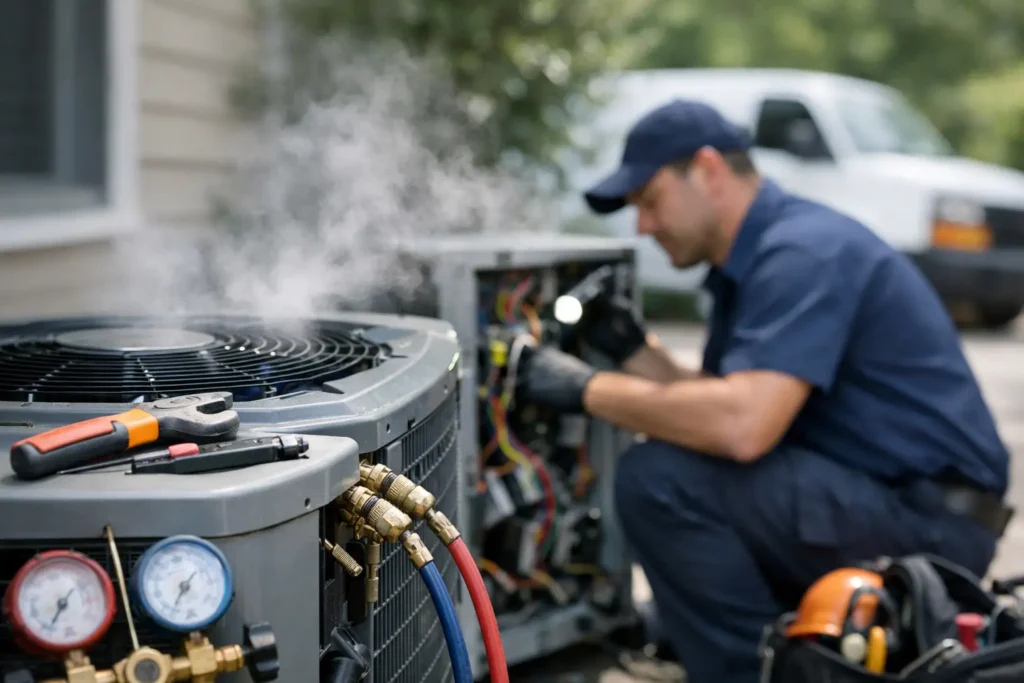
After-hours emergency service is the best option when the system is completely down, conditions are unsafe, or the problem is likely to cause more damage if ignored. A trained technician can inspect the electrical supply, thermostat controls, indoor and outdoor components, drainage system, refrigerant circuit, and safety controls.
Common emergency repairs include failed capacitors, contactors, blower motors, condensate drain clogs, damaged wiring, failed breakers, frozen evaporator coils, and thermostat malfunctions. Some of these repairs can be completed promptly when the needed part is available. More complex failures, such as a failed compressor or major refrigerant leak, may require additional planning.
A dependable provider should explain what failed, what the repair involves, and what the expected cost is before work begins. Fast service matters, but clear information matters too.
Same-Day Repair During Normal Hours
If your system fails early in the day and the indoor temperature is still manageable, same-day service may be the practical choice. It can address the problem quickly while avoiding an after-hours dispatch when the situation is not yet a health or property concern.
Do not wait until evening simply because the house feels tolerable in the morning. AC problems can worsen as outdoor temperatures climb. Calling as soon as you recognize a complete cooling failure gives you more appointment options and more time to make a sound decision.
Temporary Cooling While You Wait
Portable fans, window units, and portable AC units can help maintain a safer room temperature while repairs are underway. Focus cooling on one occupied room, close blinds against direct sun, limit heat-producing appliances, and keep interior doors open where airflow will help.
Temporary cooling is not a repair, and it should not be used to ignore a dangerous electrical issue. Never run an extension cord through standing water or overload outlets with multiple high-draw appliances. For commercial properties, portable cooling may protect a limited critical area, but it rarely substitutes for restoring the central system.
Repair Versus Replacement
An emergency does not automatically mean you need a new air conditioner. Many no-cool calls are caused by repairable components. Still, replacement may be the better long-term choice if the equipment is near or beyond its expected service life, needs an expensive major component, has recurring refrigerant leaks, or has become unreliable during peak summer demand.
The trade-off is straightforward: a repair may restore comfort at a lower immediate cost, while a replacement can reduce repeat breakdowns and improve efficiency. Ask for an honest comparison based on the condition of your specific system, not a one-size-fits-all recommendation. If replacement is appropriate, financing options may help prevent an urgent equipment failure from becoming an unmanageable expense.
What to Do Before the Technician Arrives
A few safe checks can eliminate simple causes and give the technician useful information. First, confirm that the thermostat is set to COOL and set below the current room temperature. Check whether the thermostat display is active and whether the air filter is severely clogged. A blocked filter can restrict airflow and contribute to frozen coils.
Next, look at the electrical panel only if you can do so safely. If the AC breaker has tripped once, you may reset it one time. If it trips again, leave it off. Repeatedly resetting a breaker can damage equipment and may point to an electrical fault that needs professional diagnosis.
If the indoor unit is running but warm air is coming from the vents, turn the cooling system off at the thermostat. This is especially helpful if you see ice on the refrigerant line or indoor coil area. Continuing to run a frozen system can create more strain and does not solve the underlying airflow or refrigerant issue.
Clear away leaves, grass, and stored items from around the outdoor unit, but do not remove panels or attempt to handle wiring or refrigerant lines. Refrigerant work, electrical diagnosis, and internal component repairs require trained professionals and proper equipment.
Information That Speeds Up an Emergency Visit
When you call, be ready to describe what the system is doing. Let the dispatcher know whether the AC is completely off, blowing warm air, making unusual noises, leaking water, freezing up, or tripping a breaker. Mention any burning smell, smoke, recent storm damage, or changes you noticed before the failure.
It also helps to provide the system’s approximate age, the make and model if visible, and whether the issue affects the entire building or only certain areas. Commercial callers should explain which spaces are affected and whether the outage threatens operations, equipment, or occupants.
This information does not replace an on-site diagnosis. It does help the service team prepare for the likely issue and prioritize the right response.
Avoid These Costly Emergency Mistakes
The pressure of a hot building can lead to decisions that create bigger problems. Do not keep lowering the thermostat in hopes that the AC will suddenly recover. If the system has failed, setting the thermostat far below the room temperature only keeps it calling for cooling.
Avoid opening equipment panels, bypassing safety switches, or adding refrigerant from a store-bought product. Air conditioners are closed systems. If refrigerant is low, there is usually a leak or another condition that needs to be identified and corrected. Adding refrigerant without diagnosing the cause can waste money and delay the real repair.
Also, do not accept vague answers about a major repair. You deserve to know what component failed, whether the repair is guaranteed, whether the system has related concerns, and why replacement is or is not being recommended.
Choosing a Provider for Urgent AC Service
During an emergency, availability is only the first requirement. Look for a provider that offers true 24/7 access, employs qualified technicians, communicates clearly about pricing and repair recommendations, and stands behind completed work. Credentials such as NATE-certified technicians can provide additional confidence that the person working on your system understands modern HVAC equipment and diagnostic practices.
AAA HVAC serves homeowners and commercial customers in Reston and throughout Northern Virginia with same-day and emergency service access. The goal of an urgent visit should be simple: identify the problem accurately, restore safe comfort where possible, and give you a clear path forward when a larger repair or replacement is needed.
A cooling failure is stressful, but you do not have to guess your way through it. Shut down the system when there is an electrical or safety concern, take reasonable steps to keep occupants cool, and request qualified help before a manageable repair becomes a longer and more expensive interruption.