What Does HVAC Maintenance Include in a Visit?
July 11, 2026
How to Choose an HVAC Contractor You Can Trust
July 13, 2026

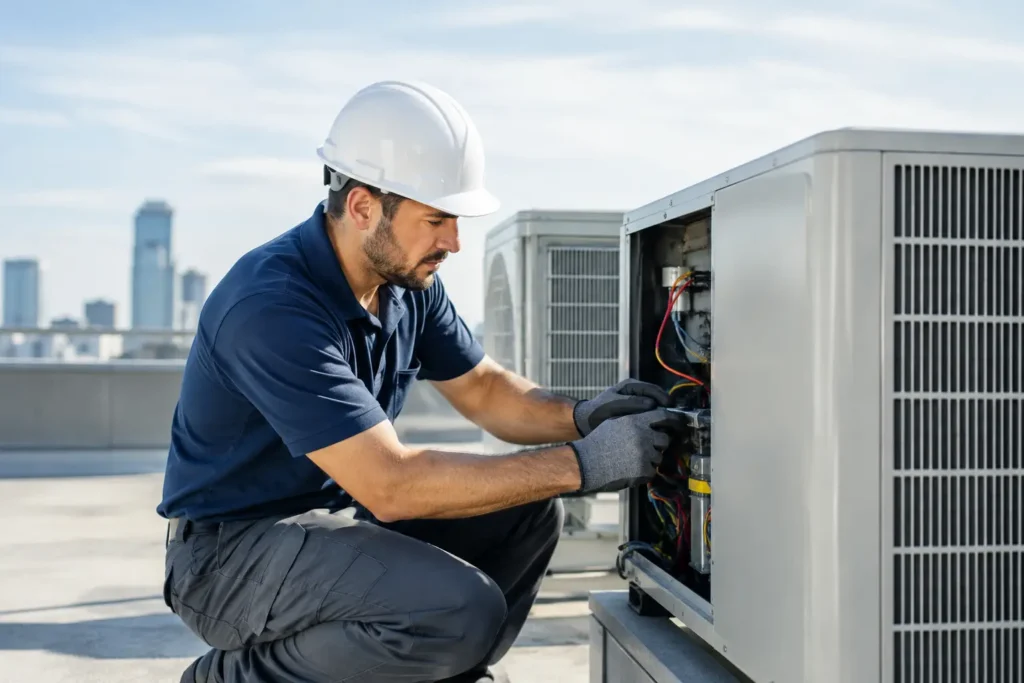
A failed rooftop unit in July is expensive enough. Finding out that its refrigerant is limited, costly, or no longer the right fit for a replacement can turn a routine service call into a capital-planning decision. Commercial HVAC refrigerant changes are reshaping how Northern Virginia property managers, business owners, and facility teams should approach repairs, maintenance, and equipment replacement.
The practical message is straightforward: most existing systems do not need to be replaced simply because refrigerant rules are changing. But waiting until an aging system fails can reduce your options, extend downtime, and create avoidable costs. A qualified HVAC contractor can help you understand what refrigerant your equipment uses, whether a repair makes sense, and when replacement should move into the budget.
Why Commercial HVAC Refrigerant Changes Are Happening
Federal refrigerant policy is moving away from hydrofluorocarbons, or HFCs, with higher global warming potential. The phasedown is intended to reduce emissions over time, and it affects the refrigerants used in many air conditioning, heat pump, refrigeration, and commercial comfort systems.
For facility decision-makers, this does not mean every HFC system becomes unusable overnight. Existing equipment can generally continue operating and be repaired with approved refrigerant. The change is more significant when you are purchasing new equipment, facing a major repair, or trying to source refrigerant for an older unit.
R-22 is the clearest example of a refrigerant transition that commercial property owners have already experienced. New R-22 production and import ended years ago, so supplies for existing systems come from reclaimed or recovered refrigerant. That can make a large leak or compressor failure on an R-22 unit a much different financial decision than it would have been in the past.
Many newer commercial systems use R-410A, which remains common in existing equipment but is also part of the broader HFC phasedown. New equipment is increasingly being designed for lower-global-warming-potential refrigerants, including options such as R-454B and R-32 in applicable comfort-cooling equipment. The correct refrigerant depends on the equipment design. Refrigerants are not interchangeable, and substituting one without manufacturer approval can damage the system, create safety concerns, and void warranty coverage.
What This Means for Your Existing Equipment
The refrigerant label on your condenser, rooftop unit, or mechanical equipment tells only part of the story. A system’s age, condition, leak history, maintenance record, cooling load, and availability of parts all matter when deciding whether to repair or replace it.
If a well-maintained system has a minor, repairable leak and several years of expected service life, repair may be the sensible choice. A refrigerant change alone does not make a functioning unit obsolete. On the other hand, if a unit has repeated leaks, declining capacity, major electrical or compressor issues, and rising refrigerant costs, investing heavily in a repair may only postpone a larger problem.
This is especially true for businesses that cannot tolerate downtime. Restaurants, medical offices, retail spaces, server rooms, multifamily common areas, and occupied office buildings all have different comfort and operational risks. The least expensive repair today is not always the lowest-cost decision if it creates another outage during peak cooling season.
A professional assessment should give you a clear picture of your choices: repair the current system, plan a replacement before failure, or replace immediately if reliability and operating cost no longer justify continued repairs. You should receive the reason behind the recommendation, not pressure to replace equipment that still has a reasonable service life.
New Equipment May Use A2L Refrigerants
One of the biggest operational changes is the use of certain A2L refrigerants in new HVAC equipment. A2L refrigerants are classified as mildly flammable. They are designed for use in equipment built specifically for them, with factory-engineered safeguards, controls, installation requirements, and service procedures.
That classification should not cause unnecessary alarm, but it does mean experience matters. Technicians servicing A2L equipment need the appropriate training, tools, leak detection practices, recovery equipment, and manufacturer guidance. Building layout, equipment location, ventilation, refrigerant charge size, and local code requirements can also affect installation planning.
For a commercial property, the decision may involve more than selecting a new unit. Your contractor may need to evaluate rooftop access, curb compatibility, electrical capacity, ductwork condition, condensate drainage, controls, and how the replacement can be completed with minimal disruption to tenants or customers. Planning this work before a failure gives you more control over scheduling and equipment selection.
Avoid the “Top Off and Move On” Approach
Refrigerant does not get used up during normal air conditioning operation. If your system needs refrigerant added repeatedly, there is likely a leak that should be located and repaired. Continuing to add refrigerant without addressing the cause can increase operating costs, reduce cooling performance, and make a future repair more difficult.
A proper service visit should look beyond the refrigerant charge. The technician should check for leaks, verify airflow, inspect coils, assess electrical components, confirm thermostat or building-control operation, and look for conditions that are making the system work harder than necessary. Low airflow, dirty coils, failing fans, and drainage problems can produce comfort complaints that resemble refrigerant issues.
This matters during refrigerant transitions because every pound counts. Reducing leaks protects your budget, supports compliance, and helps preserve the refrigerant supply needed to keep existing equipment operating.
How to Build a Refrigerant-Ready HVAC Plan
The best time to make an equipment decision is before the first hot week exposes a weakness. Start by creating an inventory of your commercial HVAC systems. Record the equipment location, manufacturer, model and serial number, installation date, refrigerant type, capacity, repair history, and any recurring comfort complaints.
Then identify the units that deserve closer attention. Systems using R-22, units with recurring refrigerant leaks, and equipment nearing the end of its expected life should be priorities. So should units serving critical areas where a cooling interruption could affect revenue, tenants, inventory, or employee safety.
Your plan should also separate emergency repairs from planned replacements. A planned project gives you time to compare equipment options, coordinate access, review controls, prepare financing, and schedule work around your business. An emergency replacement often means choosing from what is available immediately, which may not be the best long-term fit.
Preventive maintenance supports that planning. Seasonal service can catch worn contactors, failing capacitors, dirty condenser coils, drain issues, loose electrical connections, and developing refrigerant leaks before they turn into a shutdown. It also gives your HVAC partner a baseline for identifying declining performance over time.
Questions to Ask Before Approving a Major Repair
When a commercial unit needs a costly repair, ask which refrigerant it uses and whether that refrigerant is readily available for future service. Ask whether the system has a confirmed leak, how much refrigerant is required, and whether the repair addresses the root cause.
You should also ask for the estimated remaining life of the equipment, the condition of major components, and the likely cost difference between repair and replacement. If replacement is recommended, confirm which refrigerant the new system uses and whether it is designed to meet current requirements. The answer should be specific to your equipment, not a general statement about industry changes.
For multi-unit buildings, it can be useful to create a phased replacement schedule. Replacing the most vulnerable units first can spread capital costs over time while reducing the chance of multiple failures during the same season.
Get Ahead of the Next Service Call
Commercial refrigerant changes are not a reason to panic or replace every working system. They are a reason to make equipment decisions with better information. The right path depends on your system’s refrigerant, condition, repair history, and the cost of downtime for your operation.
For businesses in Reston and Northern Virginia, AAA HVAC can assess your commercial equipment, explain your repair and replacement options clearly, and help you plan for dependable cooling before a refrigerant issue becomes an emergency. A proactive inspection today can protect comfort, reduce surprises, and give your business more control when the next decision arrives.