How to Choose an HVAC Contractor You Can Trust
July 13, 2026
Heat Pump Versus Furnace for Virginia Homes
July 15, 2026
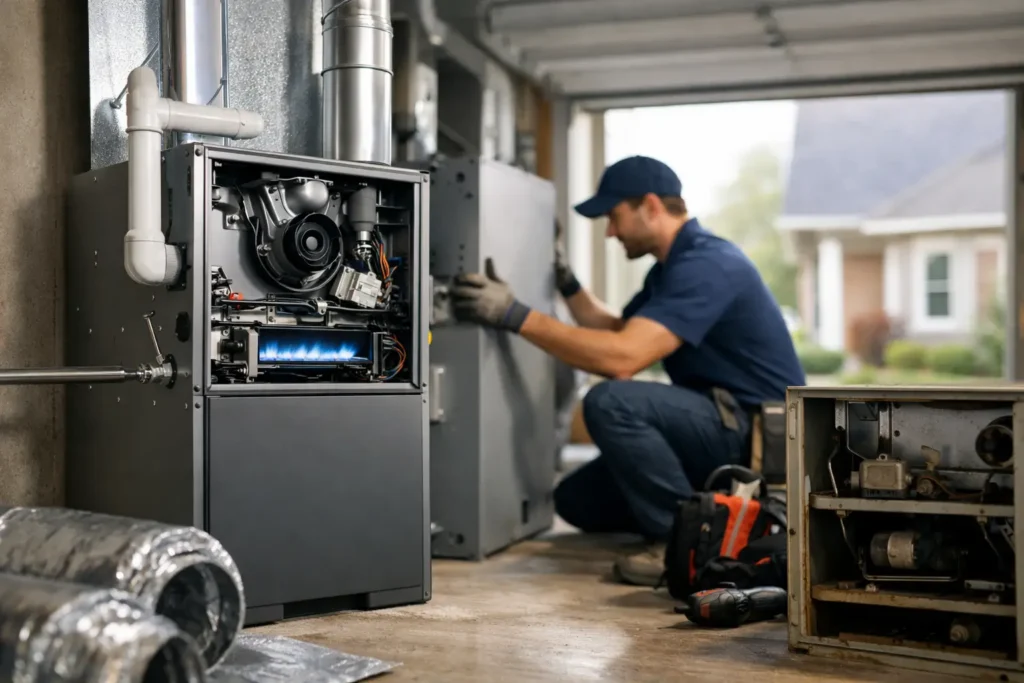
A furnace rarely fails on a convenient Tuesday afternoon. More often, it starts making unfamiliar noises during a cold Reston night, heats some rooms but not others, or needs another repair just when your household or facility needs dependable heat. This furnace replacement planning guide helps you make the decision before an emergency forces a rushed choice.
Replacing a furnace is not only about buying new equipment. It is about matching the right system to your building, budget, comfort expectations, and long-term operating costs. A qualified HVAC professional can help you sort through the technical details, but knowing what to plan for gives you more control from the first estimate through installation day.
Know When Replacement Makes More Sense Than Repair
A repair can be the right answer for a relatively new furnace with an isolated problem. A failed igniter, worn blower component, or thermostat issue does not automatically mean the system needs to be replaced. The decision changes when repairs become frequent, expensive, or tied to an aging unit that is no longer performing reliably.
Most furnaces operate for roughly 15 to 20 years, although maintenance history, usage, installation quality, and fuel type all affect actual lifespan. In Northern Virginia, a furnace that has worked through many winters may still run, but it can lose efficiency and become less predictable over time.
Replacement deserves serious consideration when your furnace is near the end of its expected service life, requires repeated repairs, produces uneven temperatures, or causes a noticeable rise in utility bills. Strange odors, soot, moisture around the unit, or a cracked heat exchanger require immediate professional attention. A cracked heat exchanger can create a safety concern and is often a major factor in replacement decisions.
It also helps to compare the repair cost with the value and condition of the existing system. There is no single dollar amount that makes replacement automatic. A modest repair on a well-maintained 10-year-old furnace may be reasonable. The same repair on an 18-year-old furnace with a history of breakdowns may simply delay a larger expense.
Start Your Furnace Replacement Planning Guide With the Right Questions
Before selecting a model, define what is not working for you now. Is the concern reliability, high energy costs, inconsistent temperatures, poor airflow, noise, or a lack of indoor comfort in certain rooms? The answer affects more than the furnace itself. It may point to ductwork issues, thermostat controls, insulation gaps, or equipment sizing problems that a new furnace alone will not solve.
For homeowners, think about how long you expect to stay in the home and whether other HVAC equipment may need attention soon. If your air conditioner is also aging, coordinated planning may prevent mismatched equipment and separate installation disruptions later.
Property managers and commercial decision-makers should consider occupancy schedules, tenant comfort, service access, and business continuity. A replacement planned during a lower-demand period can reduce disruption. For equipment serving a busy office, retail space, or multi-unit property, response time and dependable maintenance support may matter as much as the initial equipment price.
Ask each contractor to explain what is included in the estimate. A useful proposal should identify the equipment, efficiency rating, labor, permit needs, warranty terms, and any recommended duct or electrical work. Clear scope protects you from surprises and makes it easier to compare proposals fairly.
Choose the Right Size Before Choosing Features
A larger furnace is not automatically a better furnace. Oversized equipment can heat a building too quickly, resulting in short cycles, uneven comfort, extra wear, and less effective airflow. An undersized furnace may run constantly during colder weather and still struggle to maintain the set temperature.
Proper sizing should be based on more than square footage. A professional should evaluate insulation, window quality, ceiling height, duct design, building layout, air leakage, and how the space is used. In a commercial setting, occupancy levels, internal heat from equipment, and operating hours can also affect the load.
This evaluation is one reason a quick equipment swap is not always the best value. If the old furnace was incorrectly sized, installing the same capacity without reviewing the system could repeat the same comfort problems. Taking time to assess the entire heating system helps ensure the replacement supports steady, dependable performance.
Understand Efficiency Ratings
Gas furnace efficiency is commonly measured by Annual Fuel Utilization Efficiency, or AFUE. A higher AFUE rating means more of the fuel used becomes heat for the building rather than being lost through exhaust. Higher-efficiency furnaces can reduce fuel use, but they usually cost more upfront and may have different venting or installation requirements.
The best choice depends on your budget, the condition of your home or building, local fuel costs, and how long you plan to keep the equipment. A high-efficiency system can be a strong investment for a long-term owner, particularly when paired with proper ductwork and air sealing. In other situations, a dependable mid-efficiency unit may provide the better balance of upfront cost and performance.
Features such as variable-speed blowers and two-stage heating can improve comfort by delivering more controlled airflow and longer, quieter heating cycles. They are especially worth discussing if you have temperature swings between floors or rooms. Still, more features are not automatically necessary. The goal is a system that solves your real comfort needs without paying for capacity or technology you will not use.
Plan for Costs Beyond the Furnace
The equipment price is only one part of a furnace replacement project. Installation labor, permits, thermostat upgrades, gas line modifications, venting changes, electrical work, condensate drainage, and duct repairs can all affect the final investment. If an estimate is much lower than another, make sure it includes the same scope of work.
Ask about warranty coverage for both equipment and labor. Manufacturer warranties often have registration requirements and may cover parts for a stated period, while labor coverage varies by contractor. Keep copies of your proposal, warranty paperwork, maintenance records, and permit documentation in one place.
Financing can also make a replacement more manageable when a furnace fails unexpectedly. Review terms carefully, including monthly payment amounts, interest, promotional periods, and what happens after a special financing period ends. The lowest monthly payment is not always the lowest total cost.
Prepare Your Property for Installation Day
Once you schedule the work, clear a path to the furnace, electrical panel, and any relevant utility access points. Move stored items, pets, and fragile belongings away from the work area. If the furnace is in an attic, basement, utility closet, or mechanical room, safe access helps the installation move efficiently.
You should also plan for a temporary interruption in heat and, in some cases, electrical service. Installation length varies with the equipment and scope of work. A straightforward replacement may be completed in a day, while duct modifications, venting changes, or commercial coordination can take longer.
Before the crew leaves, ask for an overview of the new thermostat, filter size, maintenance needs, and warranty registration process. Confirm that the system starts, heats properly, and that you understand who to call if you have questions after installation.
Protect the Investment After Replacement
A new furnace should not become an out-of-sight, out-of-mind appliance. Replace or clean filters on schedule, keep supply and return vents unobstructed, and arrange professional seasonal maintenance. Maintenance helps identify worn components, verifies safe operation, and supports efficient performance before winter demand arrives.
Pay attention to changes in comfort after installation. If certain rooms remain cold, airflow is weak, or the system cycles unusually often, report it promptly. Those symptoms may be related to ductwork, controls, or other conditions that deserve attention while the installation is still fresh.
Planning ahead turns furnace replacement from a stressful emergency into a practical investment in comfort. When you are ready to compare options, a NATE-certified technician from AAA HVAC can assess your system, explain the trade-offs clearly, and help you choose dependable heat for the seasons ahead.