Best Furnace Brands for Reliability at Home
August 9, 2026
Smart Thermostat Setup for Better Home Comfort
August 11, 2026
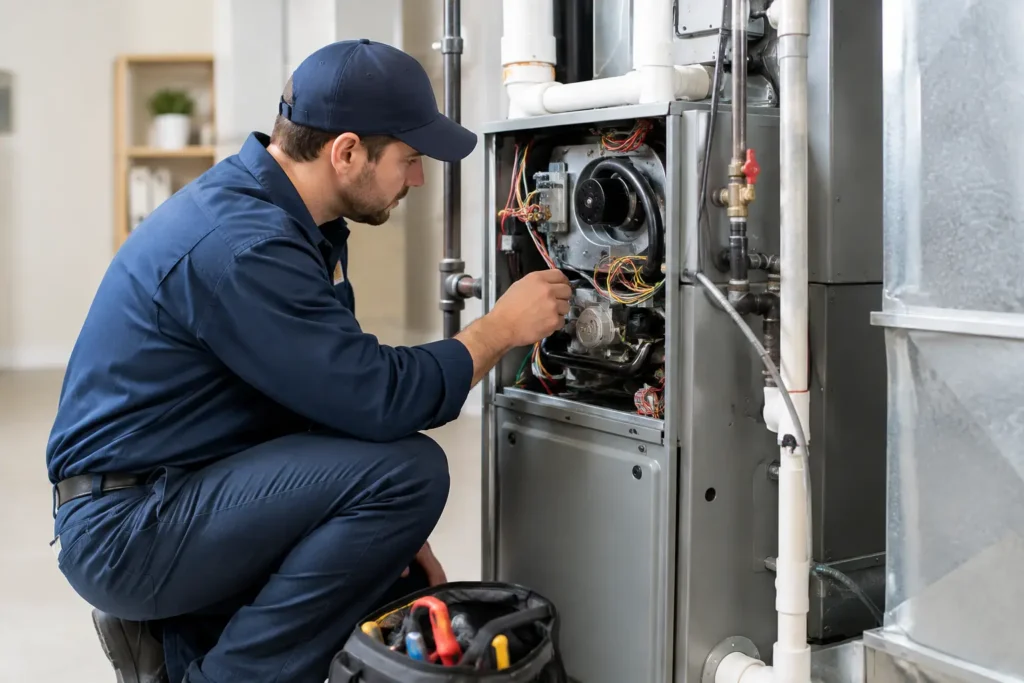
A cooling system rarely fails at a convenient time. It may run all afternoon without lowering the temperature, stop during a humid Northern Virginia evening, or begin making a sound that was not there yesterday. Prompt air conditioning repair can protect more than comfort. It can prevent a manageable issue from putting extra strain on the compressor, increasing energy use, or turning into a larger repair.
The best response is not to guess at the cause or keep lowering the thermostat. Start with a few safe checks, pay attention to the symptoms, and arrange professional service when the system is not operating normally. A qualified technician can identify the actual source of the problem and explain the repair before work begins.
Signs You Need Air Conditioning Repair
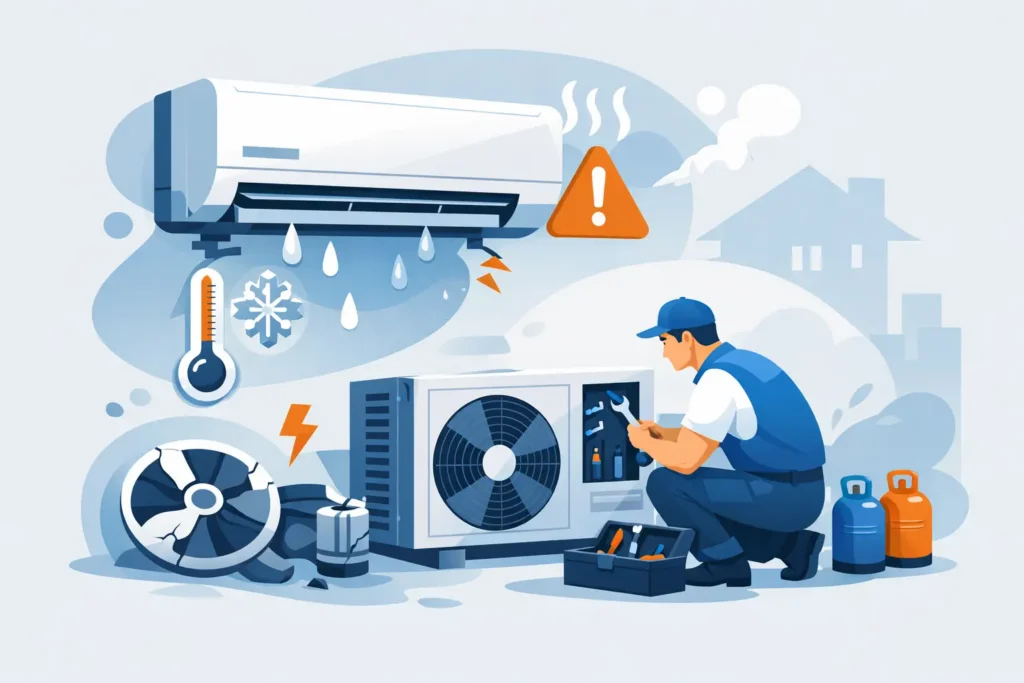
No two breakdowns look exactly alike, but certain warning signs deserve attention. A system that blows warm air is the clearest one. The issue could involve refrigerant, electrical components, the outdoor unit, or airflow problems. Since several faults can produce the same symptom, a diagnosis matters more than a quick assumption.
Weak airflow is another common concern. If air barely reaches the rooms farthest from the thermostat, the system may be struggling to circulate cooled air. A dirty air filter is one possibility and is safe for many homeowners to check and replace. If a new filter does not restore normal airflow, the unit needs further inspection.
Watch for changes in cycling as well. An air conditioner that turns on and off every few minutes may be short cycling. It could be reacting to a thermostat issue, an oversized system, a frozen component, or a mechanical concern. Short cycling wastes energy and can create unnecessary wear, so it is not a problem to ignore until the next maintenance visit.
Other reasons to schedule service include unusual grinding, banging, squealing, or persistent buzzing; water around the indoor equipment; ice on refrigerant lines; unpleasant odors when cooling starts; and electric bills that rise without a clear change in weather or household use. These signs do not always mean a replacement is necessary. They do mean the system should be checked before the problem grows.
What to Check Before Calling for Service
A few basic steps may restore operation or give the technician useful information. First, make sure the thermostat is set to cool and that the temperature setting is below the current indoor temperature. If the thermostat screen is blank, replace the batteries if applicable or check whether the unit has lost power.
Next, check the circuit breaker. A tripped breaker may occur for a simple reason, but a breaker that trips again after being reset should not be repeatedly turned back on. That can point to an electrical or equipment issue that requires a professional evaluation.
Then inspect the air filter. A heavily loaded filter can restrict airflow and make a system work harder than it should. Replace it with the correct size and type recommended for your equipment. Also confirm that supply vents are open and that furniture, rugs, or other items are not blocking them.
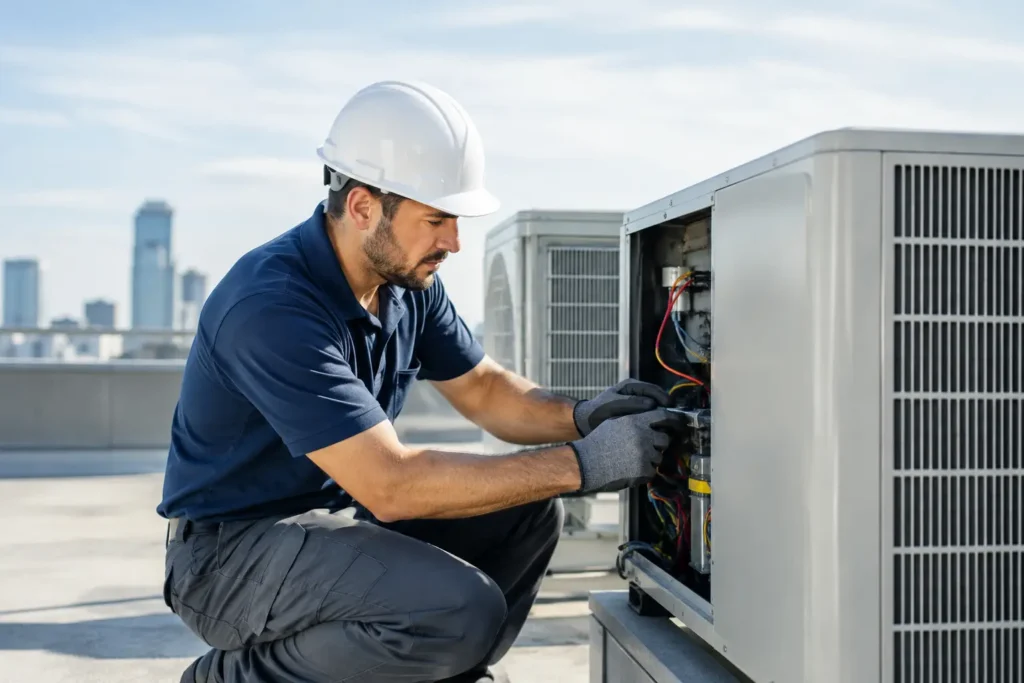
Finally, look at the outdoor unit from a safe distance. Clear leaves, grass clippings, and loose debris from around it, leaving room for air to move freely. Do not remove panels, touch wiring, or attempt to clean internal components yourself. If the unit is iced over, turn cooling off and contact a technician. Continuing to run an iced system can cause additional damage.
Why Fast Repairs Can Save Money
Waiting is tempting when an air conditioner is still producing some cool air. But partial performance often comes with higher operating costs. A struggling system may run longer cycles to reach the thermostat setting, using more electricity while delivering less comfort.
There is also a repair-cost consideration. A worn capacitor, failing contactor, blocked condensate drain, or small refrigerant issue can sometimes be addressed before it affects other parts of the system. When a failing component forces the system to operate under strain, related parts may be put at risk. The trade-off is straightforward: a service visit has a cost, but delaying a known problem can lead to lost cooling, property damage from water, or a more extensive repair.
For businesses and property managers, the value of fast response is even more immediate. Uncomfortable spaces can affect employees, customers, tenants, equipment, and daily operations. Scheduling service at the first sign of inconsistent cooling helps reduce the chance of an unexpected shutdown during the busiest part of the season.
Repair or Replacement: How to Make the Right Call
Not every air conditioning repair leads to a replacement recommendation. Many systems can provide years of dependable service when repairs are appropriate and maintenance has been consistent. The decision depends on the unit’s age, condition, repair history, efficiency, and the cost of the current repair compared with the value of the equipment.
A newer system with a single failed part is often a strong repair candidate. On the other hand, an older unit with repeated breakdowns, declining comfort, and an expensive major-component repair may justify a replacement conversation. A higher-efficiency system can reduce operating costs, but savings vary based on the home or building, insulation, cooling habits, and local utility rates. It should be evaluated as a practical long-term decision, not a one-size-fits-all answer.
Ask for a clear explanation of the diagnosis, the repair options, expected costs, and what may happen if you delay the work. A trustworthy contractor should help you understand the condition of your system without pressuring you into a decision that does not fit your needs or budget.
Questions Worth Asking Your Technician
When a technician arrives, it helps to share when the issue began, whether it is constant or intermittent, and any changes you noticed in sound, airflow, or humidity. You can also ask what failed, why it may have failed, and whether any maintenance steps could reduce the chance of a repeat problem.
For a major repair, ask how the repair affects the system’s expected service life and whether there are other components showing signs of wear. For commercial properties, ask about scheduling options that minimize disruption and whether the equipment needs a preventive maintenance plan based on its operating demands.
Preventing the Next Cooling Emergency
Preventive maintenance will not eliminate every unexpected failure, but it gives a trained technician the chance to find worn parts, performance concerns, and drainage issues before a summer heat wave exposes them. Seasonal service also helps confirm that the system is operating safely and efficiently under normal conditions.
Between visits, keep up with filter changes, maintain clear space around the outdoor unit, and avoid closing too many supply vents in an attempt to redirect cooling. Pay attention to small changes. A new sound or a room that suddenly stays warmer than the rest of the house is easier to address before it becomes a no-cool call.
AAA HVAC provides residential and commercial cooling support throughout Northern Virginia, with NATE-certified technicians, same-day availability, and 24/7 service access when comfort cannot wait. Whether the problem is a complete shutdown or a system that simply is not keeping up, getting a professional diagnosis early gives you a clearer path forward.
When your air conditioner starts sending warning signs, treat them as useful information rather than an inconvenience to work around. A timely service appointment can restore dependable cooling and help you make a confident decision before a small issue takes over your day.