Why Is My Thermostat Blank? Causes and Fixes
August 17, 2026
How to Pick HVAC Filters for Better Airflow
August 19, 2026
A July afternoon in Northern Virginia can turn a comfortable home into a stressful one quickly. If your current air conditioner is unreliable, loud, expensive to run, or unable to keep up, a new system may be the right answer. But AC installation is not simply a matter of replacing one outdoor unit with another. The equipment has to match your home, your comfort needs, and the way the entire cooling system performs.
A properly planned installation helps you avoid the two outcomes no homeowner wants: paying for a new system that still leaves rooms uncomfortable, or investing in more equipment than the home actually needs. Here is what to consider before making the decision.
Start With the Right Reason to Replace
An air conditioner does not need to fail completely before replacement becomes the practical choice. Systems that are 10 to 15 years old may still operate, but they can lose efficiency, require more frequent repairs, and struggle during periods of high heat and humidity. Older equipment may also use refrigerant that is more difficult or costly to service.
Replacement is often worth discussing when repair costs are rising, the system needs repeated service, energy bills have increased without another clear cause, or indoor temperatures vary significantly from room to room. A repair can make sense when the issue is isolated and the equipment is otherwise in good condition. It depends on the system’s age, repair history, efficiency, and the cost of the proposed repair.
For property managers and commercial decision-makers, the calculation also includes downtime. A system that fails during business hours can affect employees, customers, equipment, and operations. Planning a replacement before an emergency gives you more control over scheduling and equipment selection.
AC Installation Begins With Proper Sizing
Bigger is not automatically better. An oversized air conditioner may cool a home quickly, but it can shut off before removing enough humidity. That short cycling can leave the air feeling clammy, increase wear on components, and create uneven comfort. An undersized system may run almost constantly during peak heat while still falling behind.
The correct capacity should be based on more than square footage. A qualified technician considers insulation levels, window exposure, ceiling height, home layout, occupancy, heat-producing appliances, and how well conditioned air can move through the home. Additions, remodeled spaces, new windows, or attic improvements can all change what your home needs compared with the last time equipment was installed.
This is why a professional load calculation matters. It replaces guesswork with a recommendation based on the property itself. If an installer simply matches the size of the old unit without evaluating the home, ask why. The old system may have been incorrectly sized from the beginning.
Comfort Is More Than the Thermostat Setting
A thermostat can show 72 degrees while some bedrooms feel warm and the upstairs remains uncomfortable. Cooling performance depends on equipment capacity, airflow, humidity control, thermostat placement, and the condition of the existing system components.
During an installation evaluation, tell the technician where discomfort occurs and when it is most noticeable. Is the problem limited to late afternoon? Does one level of the home stay warmer? Are there rooms that never reach the selected temperature? Those details help identify whether a new air conditioner alone will solve the issue or whether other adjustments should be part of the project.
Choose Efficiency That Fits Your Priorities
New air conditioners are rated using SEER2, which measures seasonal cooling efficiency. Higher-efficiency equipment can reduce energy use, but the best choice is not always the highest rating available. The right system balances your budget, expected time in the property, comfort expectations, and long-term operating costs.
A homeowner planning to stay for many years may value lower utility costs and stronger humidity control. Someone preparing a property for sale may have different priorities. Commercial properties may need to weigh operating hours, tenant comfort, maintenance access, and the impact of a shutdown on daily business.
Variable-speed and two-stage systems can offer more even temperatures and quieter operation than standard single-stage equipment. They are often a strong fit for homeowners who notice humidity issues or temperature swings. They also typically cost more upfront. A straightforward system may be the better value when the property has simpler cooling needs and the existing setup is well suited to it.
Ask for a clear explanation of the recommended options, including the equipment efficiency, expected benefits, warranty coverage, and installation scope. Transparent choices make it easier to compare value instead of focusing only on the initial price.
What Professional AC Installation Should Include
Quality installation work affects performance as much as the equipment itself. Even an efficient new air conditioner can underperform when it is installed incorrectly. The job should begin with a site assessment and a clear plan, not a rushed equipment swap.
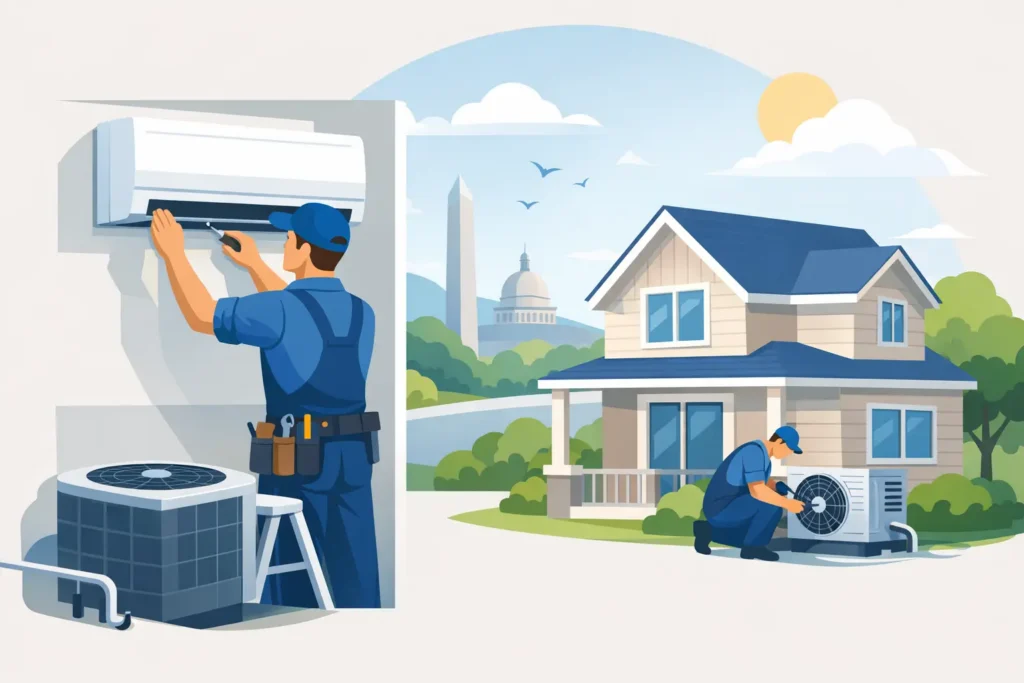
A professional installation commonly includes removal of the old equipment, placement of the new indoor and outdoor components, correct electrical connections, refrigerant line evaluation, condensate drainage setup, thermostat compatibility checks, and system testing. The technician should verify that the system starts, cools, drains, and cycles correctly before the job is complete.
Permits and code requirements may also apply, particularly for larger equipment replacements or projects involving electrical modifications. In Northern Virginia, local requirements can vary by jurisdiction. A qualified contractor should be able to explain what applies to your property and handle the process appropriately.
NATE-certified technicians bring verified HVAC knowledge to the work. That matters because details such as refrigerant charge, airflow settings, and equipment commissioning are not cosmetic. They directly influence efficiency, comfort, and equipment longevity.
Do Not Skip the Final Walk-Through
Before the installation team leaves, make sure you understand how to operate the thermostat, where to find the equipment information, and what maintenance is expected from you. Ask what sounds or conditions are normal during startup and which ones should prompt a service call.
You should also receive documentation for the equipment and warranty. Keep it in an accessible place along with service records. This helps with future maintenance, warranty questions, and eventual resale of the property.
Timing Can Affect Your Options
The best time to plan replacement is before the system fails in the middle of a heat wave. During peak cooling season, emergency replacement may still be available, but homeowners can have fewer scheduling options and less time to compare equipment choices.
That said, a failed air conditioner should not force you to accept a vague proposal. Even when fast service is needed, you deserve a clear recommendation, straightforward pricing, and an explanation of what the work includes. Same-day service can provide relief when comfort cannot wait, while professional evaluation protects you from making a rushed decision without the facts.
If your system is still running but showing warning signs, schedule an assessment now. You can learn the likely repair needs, evaluate replacement options, and make a plan on your schedule rather than reacting to an outage.
Protect the Investment After Installation
A new air conditioner needs routine attention to maintain reliable performance. Replace or clean filters as recommended, keep the outdoor unit clear of leaves and debris, and schedule preventive maintenance before heavy cooling demand begins. Small issues are easier to address before they become a no-cooling call on the hottest day of the year.
Maintenance also gives a technician the opportunity to inspect electrical components, drainage, refrigerant performance, and overall system operation. For commercial properties, planned maintenance helps reduce disruptions and supports more predictable operating costs.
AAA HVAC helps homeowners and businesses throughout Northern Virginia make informed cooling decisions with qualified installation service, responsive scheduling, and a comfort-first approach. The right system should not just turn on. It should keep the people in your home or building comfortable when they need it most.