Commercial HVAC: Protecting Business Uptime
August 6, 2026
Best Furnace Brands for Reliability at Home
August 9, 2026

Your air conditioner should run long enough to cool the space evenly, then rest until the temperature rises again. Your furnace should do the same when heating season arrives. If the system starts, runs briefly, shuts off, and repeats, you may be asking: what is short cycling HVAC? It is a warning sign that your equipment is not operating as intended, and waiting can turn a manageable repair into a more expensive breakdown.
What Is Short Cycling in HVAC?
Short cycling occurs when an air conditioner, heat pump, or furnace turns on and off in unusually short, frequent cycles without completing a normal heating or cooling run. A typical cycle varies with outdoor temperatures, thermostat settings, insulation, and system size. Still, a unit that runs for only a few minutes at a time and repeatedly restarts deserves attention.
Short cycling is not the same as a system cycling normally on a mild day. When the weather is moderate, a properly sized system may need less runtime to maintain the thermostat setting. The concern is a pattern of rapid starts and stops, uneven indoor temperatures, rising utility costs, or a system that never seems to settle into a steady run.
Every startup puts demand on HVAC components. When that happens over and over, the compressor in an AC system, the blower motor, ignition components, and other parts can experience added wear. For businesses, the result can also be uncomfortable work areas, unhappy customers, and unnecessary disruption.
Why Short Cycling Is a Problem
The biggest issue is that short cycling prevents your system from doing its full job. During cooling season, an air conditioner needs sufficient runtime to remove humidity as well as lower the temperature. A short-cycling unit may make a room feel briefly cool but leave it clammy and inconsistent.
In winter, a furnace that repeatedly shuts down may struggle to deliver dependable heat throughout the home or building. The repeated cycling can also raise energy use because starting equipment requires more effort than maintaining a stable operating cycle.
Over time, short cycling can shorten equipment life. The compressor is particularly costly to replace, so responding early can protect both comfort and your budget. It is also worth remembering that the cause may be minor, such as an airflow restriction, or more involved, such as incorrect equipment sizing. A professional inspection separates a simple correction from a repair that should not wait.
Common Causes of HVAC Short Cycling
A dirty or restrictive air filter
A clogged filter can limit airflow through the system. With too little air moving across the indoor coil or furnace heat exchanger, the equipment may overheat, freeze, or trip a safety control and shut down prematurely.
Check the filter first if it is accessible and you know the correct replacement size and type. A visibly loaded filter should be replaced. However, if a clean filter does not stop the problem, do not keep resetting the system and hoping it resolves itself. There may be another airflow or mechanical issue behind it.
A thermostat problem or poor thermostat location
Your thermostat tells the HVAC system when to start and stop. If it is near a sunny window, kitchen equipment, a supply register, or another heat source, it may sense a temperature that does not represent the rest of the space. The system can then shut off before nearby rooms are comfortable.
A loose wire, failing thermostat, weak batteries on certain models, or an incorrect temperature setting can also cause erratic operation. Thermostat issues are often straightforward to correct, but the thermostat should be tested before assuming it is the only problem.
An oversized heating or cooling system
Bigger is not always better in HVAC. An oversized air conditioner can cool the area too quickly, satisfy the thermostat, and shut off before it removes enough humidity. An oversized furnace can heat the thermostat area rapidly while leaving more distant rooms cooler.
This is often most noticeable after a replacement installation, an addition, or major insulation upgrades. Proper sizing requires more than matching the capacity of the old unit. A qualified technician considers the building size, layout, windows, insulation, occupancy, and local climate conditions. In Northern Virginia, systems must handle humid summers and cold winter stretches, so correct sizing matters in both seasons.
Refrigerant or coil problems in an air conditioner
Low refrigerant, a refrigerant leak, or a frozen indoor coil can lead to abnormal system operation. In some cases, the system may shut down on a pressure safety control. You might also notice weak cooling, ice on refrigerant lines, water around the indoor unit, or warm air from the vents.
Refrigerant is not a do-it-yourself repair. Adding refrigerant without identifying and correcting a leak does not solve the underlying problem. A technician should inspect the system, confirm the cause, and make the appropriate repair.
A furnace safety shutdown
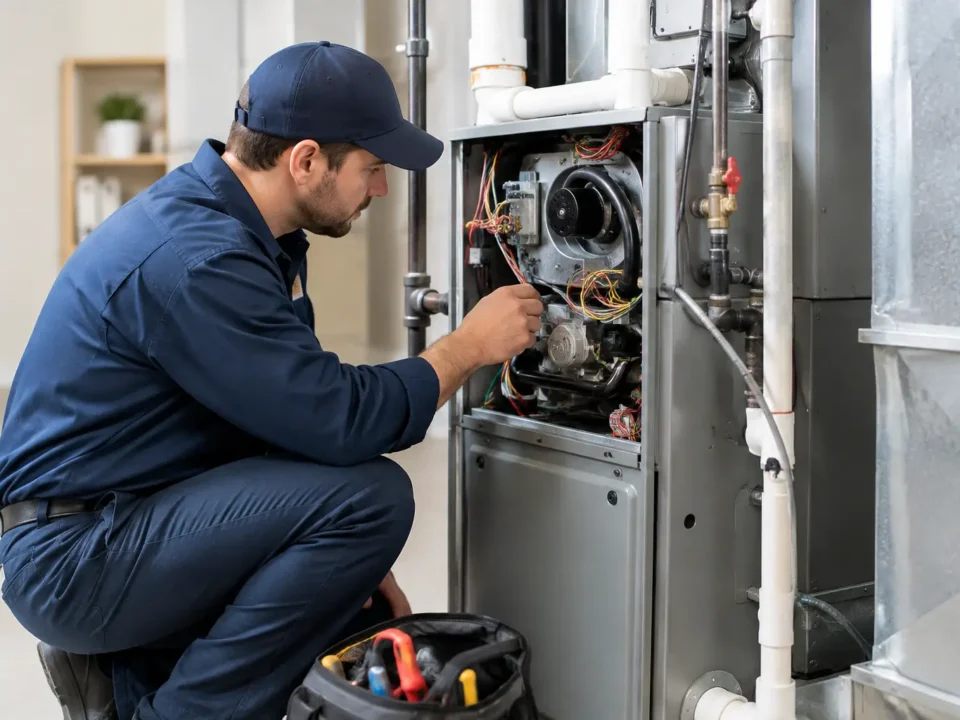
Furnaces have safety controls designed to stop operation when temperatures or operating conditions become unsafe. A dirty flame sensor, blocked airflow, a failing limit switch, venting concerns, or an ignition problem can cause the furnace to shut down shortly after it starts.
If your furnace starts and stops repeatedly, especially if it blows cool air or displays an error code, schedule service. Do not bypass safety controls or repeatedly cycle power to force the equipment to run.
A failing compressor, capacitor, or control board
As HVAC equipment ages, electrical and mechanical components can become unreliable. A weak capacitor may make it difficult for the AC compressor or fan motor to start correctly. A damaged control board can send inconsistent signals. Compressor problems can cause cycling, unusual sounds, reduced cooling, or complete failure.
These conditions require diagnosis, not guesswork. Replacing the wrong component wastes time and may leave the original issue unresolved.
What You Can Check Before Calling for Service
A few safe checks can help you provide useful information when you schedule an appointment. Confirm that the thermostat is set to the correct mode – Cool in summer or Heat in winter – and set several degrees beyond the current indoor temperature to see whether the system begins a normal cycle. Check the filter and replace it if needed. Make sure supply and return vents are not blocked by furniture, boxes, or closed registers.
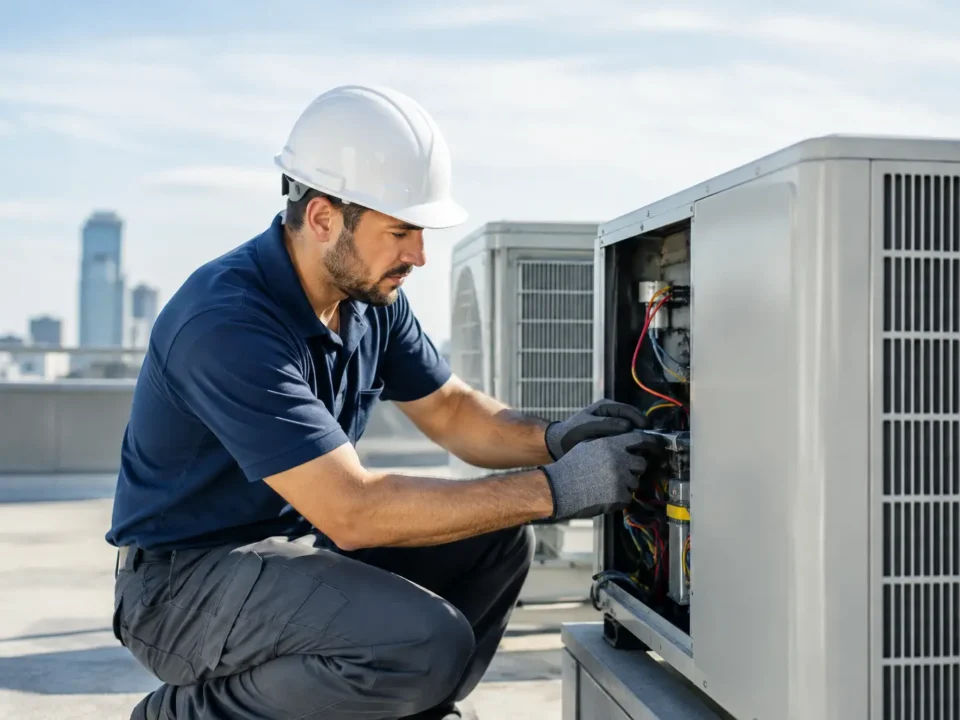
For an outdoor AC unit, remove leaves, grass clippings, and other loose debris from around the cabinet while the system is off. Keep a clear area around it so it can release heat properly. Do not remove panels, touch wiring, or attempt to clean internal components yourself.
It also helps to note what you observe: how long the system runs, how often it restarts, whether it makes clicking or grinding sounds, and whether any rooms feel unusually warm or cold. Those details can speed up diagnosis.
When Short Cycling Needs Immediate Attention
Call for HVAC service promptly if short cycling is accompanied by a burning smell, smoke, repeated breaker trips, loud banging or grinding, water leaking from the system, ice buildup, or no heating or cooling. Turn the system off if you smell gas near a furnace or suspect an immediate safety issue, leave the area, and contact the appropriate emergency service.
For a rental property or commercial space, prompt action protects occupants and reduces the risk of downtime. A system that is cycling constantly may still appear to be working, but continued operation can place more strain on expensive equipment.
How a Professional Diagnoses Short Cycling
A qualified HVAC technician does more than replace a part based on symptoms. The visit should begin with a review of the system’s cycle pattern and thermostat operation. From there, the technician may check airflow, filter condition, electrical connections, safety switches, refrigerant pressures, temperature rise or drop, and equipment capacity relative to the space.
The right repair depends on the cause. It might involve correcting thermostat placement, restoring airflow, repairing a refrigerant leak, replacing a failed component, or addressing an installation and sizing concern. The goal is not simply to make the system turn on. It is to restore stable, efficient operation that keeps the entire property comfortable.
AAA HVAC provides responsive heating and cooling service for homeowners and businesses in Reston and throughout Northern Virginia. NATE-certified technicians can identify the reason behind repeated cycling and explain the repair options clearly before work begins.
Preventing Short Cycling in the Future
Preventive maintenance gives technicians a chance to catch worn components, airflow restrictions, drainage issues, and performance changes before they trigger a no-comfort call. Regular filter changes matter, but they are only one part of caring for an HVAC system. Seasonal service is especially useful before summer cooling demand and winter heating demand place the system under its heaviest workload.
If your HVAC system is starting and stopping every few minutes, do not write it off as normal behavior. A timely service call can protect your comfort now and help preserve the equipment you depend on through every Northern Virginia season.