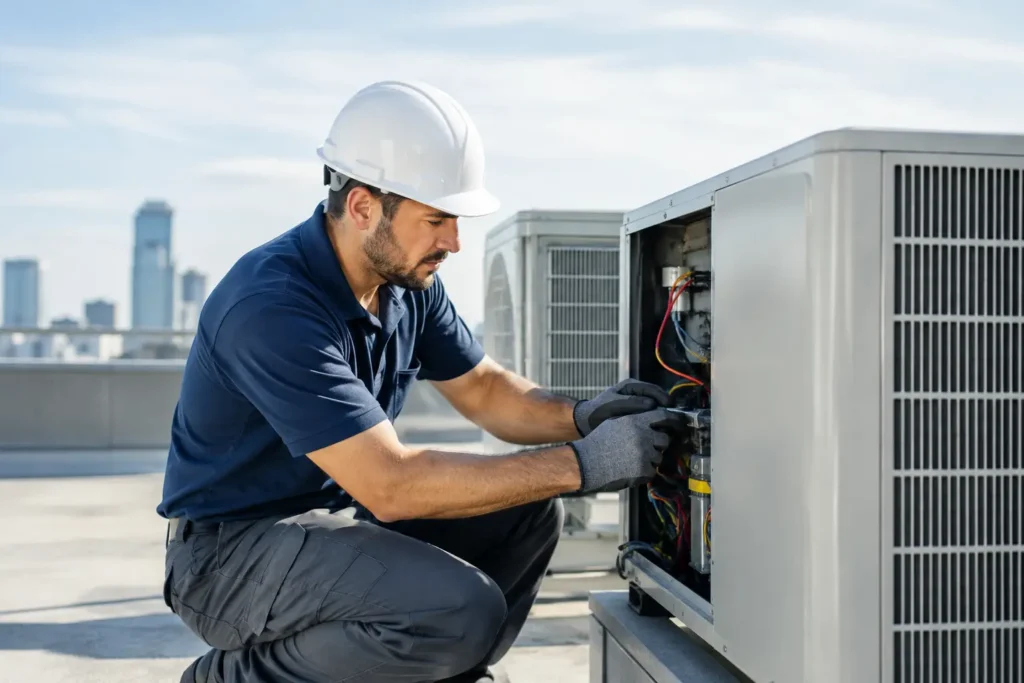
Emergency HVAC Service Guide for Fast Action
September 19, 2026
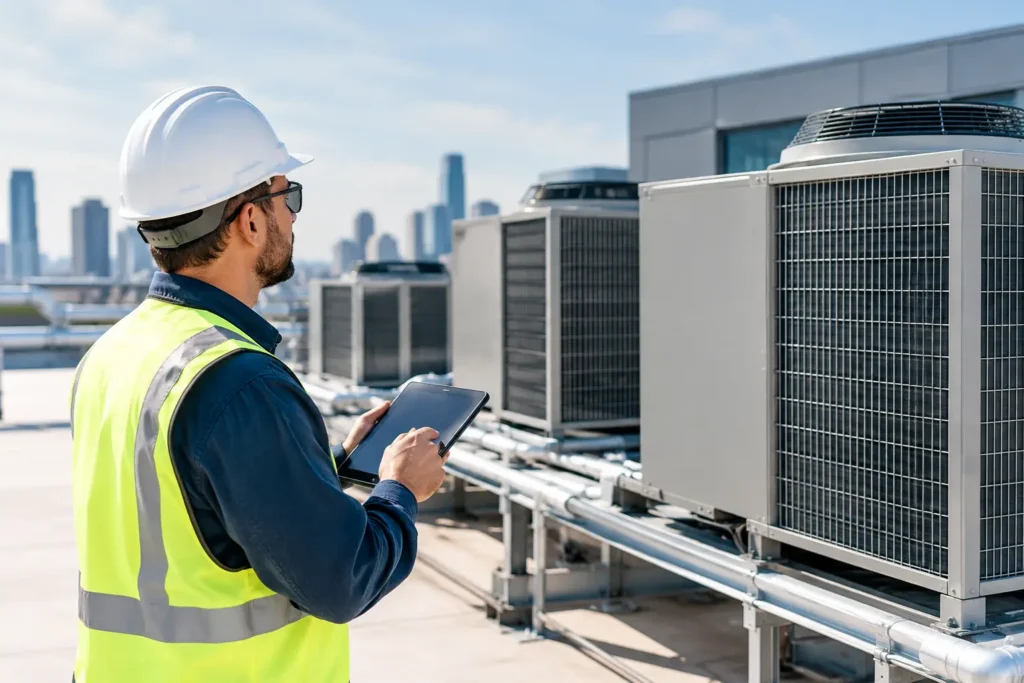
Are Heat Pumps Right for Northern Virginia Homes?
September 21, 2026

Your thermostat is set to cool, the indoor blower is running, and yet the house keeps getting warmer. In many cases, the top signs AC capacitor fails show up before the air conditioner stops altogether. Recognizing them early can help you avoid putting extra strain on expensive components, especially the compressor.
An AC capacitor is a small but essential electrical part. It stores and releases energy to help the outdoor fan motor and compressor start and keep running. Many central air conditioners use a dual-run capacitor, which supports both components in one part. When it weakens or fails, your system may struggle to start, run inconsistently, or stop cooling when you need it most.
Top Signs an AC Capacitor Fails
The outdoor unit hums but does not start
A humming sound from the outdoor condenser is one of the most recognizable warning signs. The system may receive the signal to start, but the capacitor may not have enough electrical strength to get the fan motor or compressor moving.
You may hear the hum for several seconds, followed by a click as the unit shuts itself off. Do not keep turning the thermostat on and off to test it. Repeated start attempts can overheat the motor or compressor and turn a relatively contained repair into a much larger one.
Your AC starts late or cycles on and off
An air conditioner with a weakening capacitor may take longer than usual to start after the thermostat calls for cooling. It might also start normally sometimes and struggle at other times. This intermittent behavior is common because a marginal capacitor can perform differently as outdoor temperatures rise.
Short cycling can have several causes, including thermostat issues, refrigerant concerns, airflow problems, or an oversized system. But when it occurs alongside hard starts or outdoor-unit humming, the capacitor deserves a professional check.
The outdoor fan runs slowly or will not spin
The condenser fan moves heat out of your home. If it is running noticeably slower than normal, stops unexpectedly, or fails to start while the system hums, a failing capacitor may be the cause. Without proper fan operation, heat builds up inside the outdoor unit quickly.
A fan problem is not always a capacitor problem. The motor itself, wiring, control components, or a damaged fan blade can also be responsible. A qualified technician can test the capacitor’s actual electrical rating and determine whether the part is weak or another component is at fault.
Warm air comes from the vents
When the compressor cannot start or stay running, your indoor blower may still push air through the vents. That air can feel room-temperature or warm rather than cool. Homeowners sometimes assume the thermostat is the issue because air is moving, but airflow and cooling are two separate functions.
If the outdoor unit is silent, humming, or repeatedly clicking while the indoor system is blowing warm air, turn the cooling system off and arrange service. Letting it continue to attempt a start can cause avoidable damage.
You hear clicking, humming, or strained operation
A single click at the beginning or end of a normal cooling cycle is not necessarily a concern. Repeated clicking, a persistent hum, or a sound that suggests the unit is laboring is different. These noises can occur when the electrical components are trying to start equipment without enough support from the capacitor.
Pay attention to timing. If the noise begins immediately after the thermostat calls for cooling and the outdoor unit does not fully start, report that detail when scheduling repair. It helps the technician narrow down the issue faster.
Cooling becomes unreliable during hot weather
Capacitors often reveal their weakness during the hottest Northern Virginia days, when the AC has to start and run more often. Your system may cool adequately in the morning but struggle in the afternoon. It may work one day and fail the next.
That does not automatically mean the system needs replacement. A failed capacitor can be a straightforward repair, particularly when handled before heat damages the compressor or fan motor. The condition of the rest of the system, its age, and its maintenance history all matter.
The breaker trips or the system shuts down
A failed capacitor can contribute to a motor drawing excessive electrical current during startup. In some cases, that can trip a breaker or trigger a safety shutdown. However, a tripped breaker may also point to a wiring fault, failing compressor, damaged motor, or another electrical issue.
Never repeatedly reset an AC breaker. If it trips again, leave it off and call for service. The goal is not simply to restore power, but to identify why the equipment could not operate safely.
Why Capacitors Fail
Heat is the leading enemy of AC capacitors. The component sits in the outdoor unit, where it is exposed to high temperatures, long cooling cycles, vibration, and electrical stress. Over time, its ability to hold the correct electrical charge declines.
Power fluctuations, age, poor connections, and an overworked fan or compressor can also shorten capacitor life. A capacitor may fail without much warning, but annual maintenance gives a technician a chance to measure its performance before it leaves your system unable to cool.
A visual inspection alone is not enough. Some failed capacitors bulge, leak oil, or show corrosion, while others look normal but test outside their required microfarad rating. Proper diagnosis requires a meter and the knowledge to interpret the reading against the manufacturer’s specifications.
What to Do When You Suspect a Bad Capacitor
First, set the thermostat to OFF so the system stops trying to start. If the air handler is still blowing and you need to limit warm airflow, turn the fan setting from ON to AUTO. Then check whether the outdoor disconnect or breaker has tripped, but do not keep resetting power if the equipment will not run.
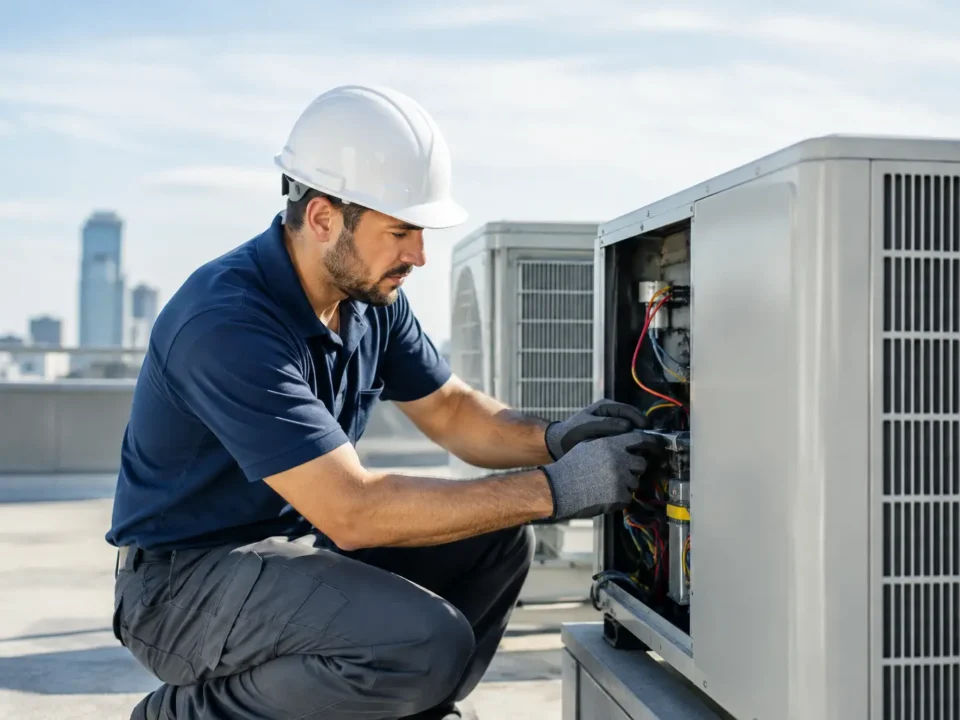
Do not open the outdoor unit or attempt a do-it-yourself capacitor replacement. Capacitors can retain a dangerous electrical charge even after power is shut off. They also need to be matched correctly to the system’s voltage and microfarad requirements. Installing the wrong part, reversing wiring, or overlooking the actual source of the problem can damage equipment and create a safety risk.
When you call for AC repair, share what you noticed: whether the unit hummed, whether the fan spun, whether the breaker tripped, and whether the home was receiving warm air. Clear details help speed up diagnosis and help protect your comfort during an urgent cooling problem.
Can You Prevent an AC Capacitor Failure?
No capacitor lasts forever, but regular AC maintenance can reduce surprises. During a preventive visit, a technician can test capacitor readings, inspect electrical connections, check the contactor, evaluate fan and compressor operation, and look for signs that the system is overheating or working harder than it should.
Keeping the outdoor unit clear of leaves, grass clippings, and stored items also helps it release heat properly. Leave adequate open space around the unit, and avoid running the system with a clogged air filter indoors. Restricted airflow can make the whole system work harder, even though it is not a direct cause of every capacitor failure.
For older systems, the right decision depends on the bigger picture. Replacing a failed capacitor is often sensible when the AC is otherwise dependable. If failures are recurring and the compressor, fan motor, or refrigerant system has additional problems, a technician can explain the repair options clearly so you can make a cost-conscious decision.
A failed capacitor can quickly turn a warm house into a no-cool emergency, but prompt diagnosis limits the risk. If your air conditioner is humming, struggling to start, or blowing warm air, schedule professional service before the next cooling cycle puts more stress on the system.