Water Heater Repair Service: When to Call
June 25, 2026
How Often Should HVAC Be Serviced?
June 27, 2026
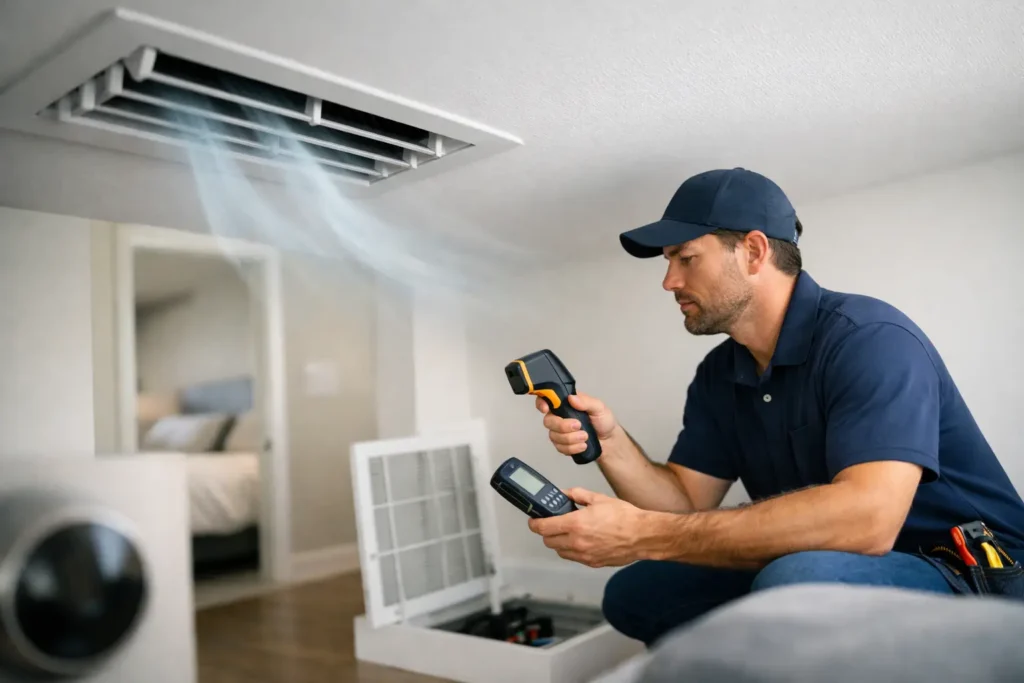
You notice it first in the rooms people use most. The bedroom stays warm at night, the upstairs office feels stuffy by noon, and the living room is cold enough to need a blanket. If you’re wondering how to troubleshoot uneven cooling, the good news is that the problem often leaves clear clues. The key is knowing which issues you can check safely and when uneven temperatures point to a larger HVAC problem that needs professional repair.
Uneven cooling is rarely random. In most homes and light commercial spaces, it comes down to airflow, insulation, duct performance, thermostat behavior, or the air conditioner itself. Sometimes the fix is simple. Sometimes it is a sign the system is struggling to move enough conditioned air where it needs to go.
How to troubleshoot uneven cooling room by room
Start with the rooms that feel the most different from the rest of the property. Compare a hot room and a comfortable room at the same time of day, with the thermostat set the same way it usually is. That quick comparison helps you tell whether the issue is isolated or system-wide.
Check the supply vents first. Make sure they are fully open and not blocked by furniture, rugs, curtains, or storage. It sounds basic, but partially closed registers are one of the most common reasons a room gets less cool air. In commercial settings, this can also happen when layout changes put desks, shelving, or partitions in front of vents.
Next, check the return air path. A room can receive cool air and still feel warm if air cannot circulate back to the system. Closed interior doors, blocked return grilles, or pressure imbalance can all reduce comfort. If one room gets noticeably warmer whenever the door is shut, airflow balance may be part of the problem.
Then look at sun exposure and heat gain. South- and west-facing rooms in Northern Virginia often heat up much faster in the afternoon. Large windows, older insulation, and attic-adjacent ceilings can make one zone harder to cool than the rest of the building. In that case, the HVAC system may be working, but the room itself is demanding more cooling than it can deliver.
Common causes of uneven cooling
Dirty air filters and restricted airflow
A clogged air filter reduces total airflow across the entire system. That can show up as weak air from certain vents, longer run times, and rooms at the far end of the duct system staying warmer than others. If the filter looks dirty, replace it with the correct size and type recommended for your system. Avoid using a filter that is more restrictive than your equipment can handle, especially if airflow has already been an issue.
This is one of those problems that seems small but creates bigger strain over time. Low airflow can affect comfort, energy use, and equipment performance all at once.
Duct leaks or poor duct design
If some rooms never cool properly, leaking or poorly balanced ductwork may be the reason. Conditioned air can escape into an attic, crawl space, ceiling cavity, or mechanical area before it reaches the rooms that need it. In other cases, the duct runs are simply too long, too narrow, or poorly configured for even delivery.
You may notice telltale signs like dusty vents, weak airflow in one area, or major temperature differences between floors. Duct issues are especially common in older homes, additions, and properties that have been renovated without updating the HVAC layout.
Thermostat placement problems
The thermostat controls the whole system based on the temperature where it is mounted. If it sits near a sunny window, a kitchen, a drafty hallway, or a supply vent, it may get a false reading. That can cause the system to shut off too early or run based on conditions in one area that do not reflect the rest of the building.
This matters most in multi-level homes and offices with uneven occupancy. If the thermostat is comfortable downstairs but the upstairs is still hot, the system may be responding exactly as told, just not in a useful way.
Low refrigerant or AC performance issues
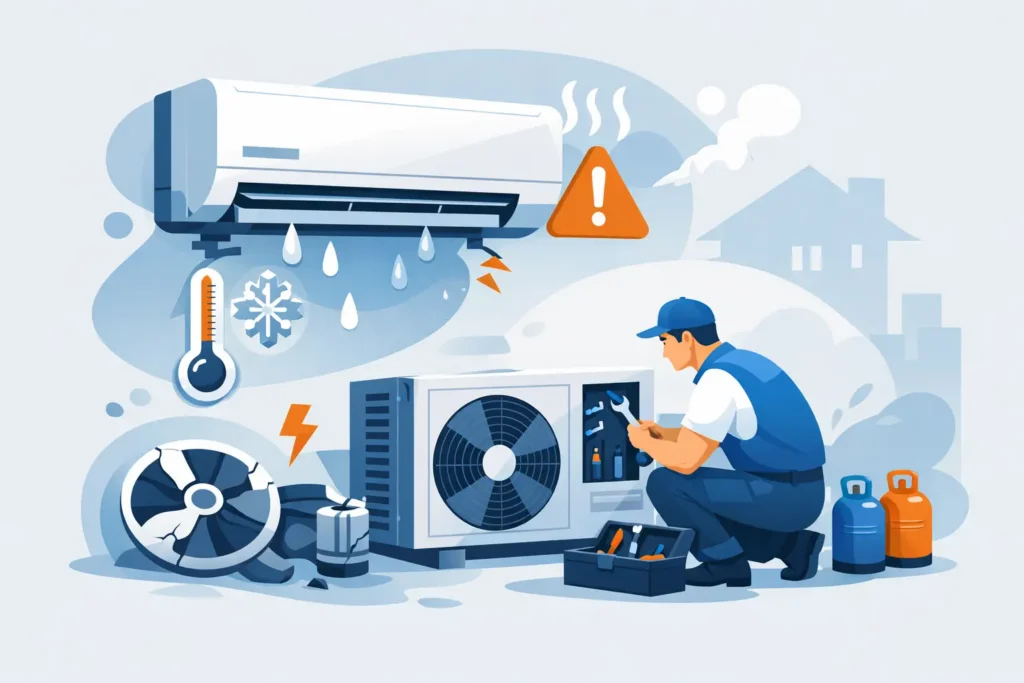
When an air conditioner is low on refrigerant or has a failing component, cooling can become uneven before the system stops working entirely. You might notice longer cooling cycles, warmer supply air, ice on refrigerant lines, or humidity that feels harder to control.
This is not a DIY issue. Refrigerant problems should be diagnosed by a licensed technician, because topping off refrigerant without fixing the leak only delays the real repair.
Insulation and building envelope issues
Sometimes the HVAC system gets blamed for a building problem. Poor attic insulation, air leaks around windows and doors, or inadequate sealing in one section of the property can make that area consistently warmer. If your AC seems to be running normally but one room still struggles every summer, the issue may be less about the equipment and more about heat getting in faster than the system can offset it.
That is why uneven cooling is not always solved at the thermostat. Comfort depends on both the HVAC system and the structure it serves.
What you can check safely before calling for service
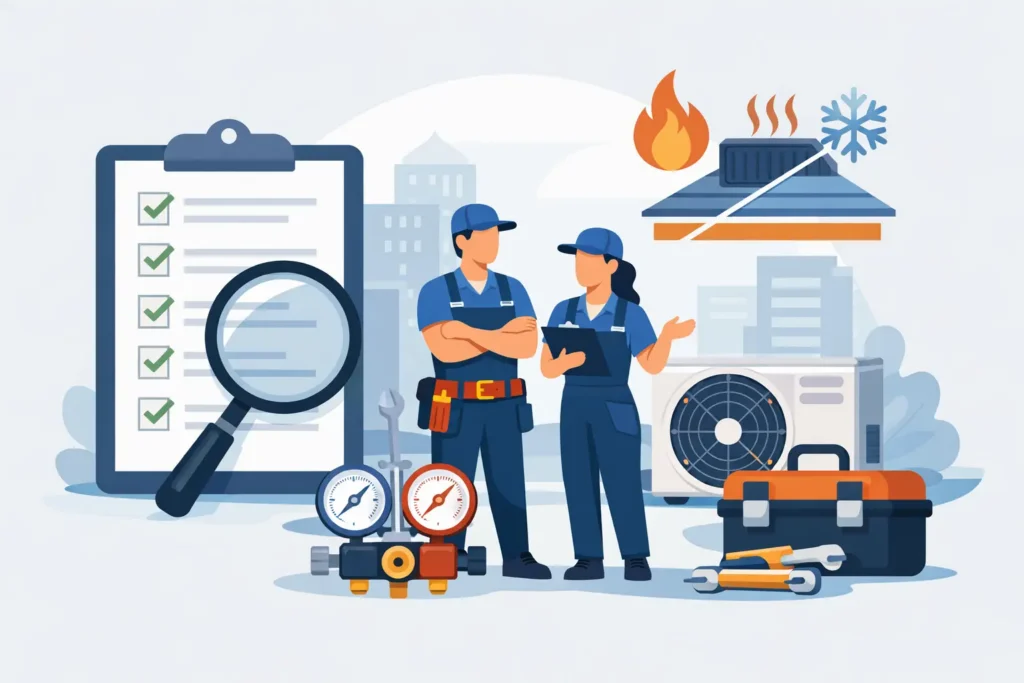
A practical way to approach this is to rule out the obvious before assuming the equipment has failed. Replace the air filter if needed, confirm the thermostat is set correctly, and make sure supply and return vents are open and unobstructed. Walk the property while the AC is running and feel the airflow at each register. You are not looking for perfection, just major differences.
Pay attention to timing as well. If the problem only appears during the hottest part of the day, heat gain or insulation may be contributing. If one floor is always warmer, duct balance or zoning may need attention. If airflow is weak everywhere, the issue may be at the air handler, blower, or filter.
You can also check the outdoor unit. Remove visible debris like leaves or grass clippings from around the condenser and make sure there is clear space around it. Do not open the equipment or attempt electrical repairs, but basic visibility matters. A system that cannot release heat effectively outdoors will struggle indoors.
If you have a zoned system, verify that each zone is calling properly and that dampers are responding. When one zone fails to open or close as intended, temperatures can drift quickly. Zoning problems can look like general uneven cooling when they are really control issues.
When uneven cooling points to a bigger problem
There is a difference between a room that runs a little warmer and a system that cannot maintain comfort. If your AC runs for long periods without reaching set temperature, if hot and cold spots are getting worse, or if utility bills have jumped without a clear reason, it is time for a professional diagnosis.
The same is true if you hear unusual noises, smell mustiness from vents, see water near indoor equipment, or notice ice buildup. Those symptoms suggest more than a simple airflow adjustment. They may indicate blower trouble, drainage issues, coil problems, duct leakage, or refrigerant loss.
System age also matters. Older equipment can lose performance gradually, and uneven cooling is often one of the first signs. That does not always mean replacement is necessary, but it does mean the system should be evaluated with the full picture in mind – equipment condition, ductwork, insulation, and load demands.
For commercial properties, the stakes are higher because comfort affects tenants, staff, customers, and equipment uptime. Uneven cooling in one office suite or work area can point to control issues, duct faults, or a system no longer matched to the way the space is being used.
How to prevent uneven cooling from coming back
Preventing uneven cooling usually comes down to maintenance and airflow management. Regular tune-ups help catch worn parts, dirty coils, low refrigerant, and blower issues before they disrupt comfort. Consistent filter changes matter just as much, especially during heavy cooling season.
It also helps to think beyond the air conditioner itself. Window coverings in high-sun rooms, attic insulation improvements, duct sealing, and airflow balancing can make a noticeable difference. In some homes, a zoning upgrade or thermostat relocation is the right long-term fix. In others, the issue is a single duct run that needs adjustment.
That is why there is no one-size-fits-all answer to how to troubleshoot uneven cooling. The same symptom can come from a simple blocked vent, an aging AC, or a house that has changed over time while the HVAC system stayed the same. A careful inspection saves time and helps avoid spending money on the wrong fix.
If the easy checks do not solve it, getting an experienced technician involved early can prevent bigger comfort problems during the hottest stretch of summer. For homeowners and property managers in Northern Virginia, that kind of fast, qualified support matters. AAA HVAC helps diagnose uneven cooling issues with the goal every customer wants – dependable comfort in every room, not just part of the building.
A comfortable property should not depend on which room you walk into next, and the right fix starts with finding the real cause.