Commercial HVAC Service Contracts Explained
July 8, 2026
The first 90-degree day has a way of finding every weak spot in an air conditioner. A system that seemed fine in April can suddenly run all afternoon, cool unevenly, or stop keeping up altogether once Northern Virginia humidity settles in. If you’re wondering how to prepare AC for summer, the goal is simple: reduce strain before the hottest stretch of the year starts.
A little preparation can improve comfort, lower the chance of a mid-season breakdown, and help your system run more efficiently. Some of the work is easy for a homeowner or property manager to handle. Some of it should be left to a licensed technician, especially if performance has already slipped or the system is older.
How to prepare AC for summer before the heat hits
Start with the basics inside the house. Your thermostat, filter, supply vents, and return vents all affect how hard the system has to work. If any one of those is off, your AC may cool longer than necessary and still leave rooms uncomfortable.
Set the thermostat to cooling mode and lower the temperature a few degrees below the current room temperature. Listen for the system to start and pay attention to how quickly cool air reaches the vents. If airflow feels weak, if some rooms stay warm, or if the system turns on and off too frequently, those are early signs that summer demand may expose a bigger issue.
The air filter is usually the first place to look. A clogged filter restricts airflow, increases wear on the system, and can contribute to frozen coils or poor cooling. If the filter looks gray, dusty, or packed with debris, replace it. During heavy-use months, many homes need filter checks every 30 to 60 days, though it depends on the filter type, pets, renovation dust, and overall indoor air quality.
Then walk through the home and make sure supply vents are open and unblocked by furniture, rugs, or curtains. Check return vents too. Closed or obstructed vents do not usually save money. More often, they disrupt airflow and make the equipment work harder.
Check the outdoor unit carefully
The condenser outside does a lot of the heavy lifting in summer, and it needs room to release heat. If the area around it is crowded with weeds, shrubs, fencing, or stored items, clear a buffer around the unit. Good airflow matters.
Look at the condenser fins and the cabinet. Dirt, cottonwood, grass clippings, and leaves can collect over time and reduce efficiency. You can gently remove loose debris from the exterior, but be careful not to bend the fins. If buildup is heavy or the coil needs deeper cleaning, that is a job worth handling professionally. Too much pressure or the wrong cleaning method can damage the coil.
Also pay attention to the pad the unit sits on. If the condenser is noticeably tilted or sinking, that can place stress on refrigerant lines and electrical connections. A slight shift may not mean immediate failure, but it is not something to ignore heading into peak season.
Watch for warning signs that preparation is not enough
Sometimes people search how to prepare AC for summer when the real issue is that the system is already struggling. In that case, cleaning up around the unit and changing the filter may help a little, but it will not solve the underlying problem.
Call for service if you notice warm air from vents, weak airflow throughout the building, grinding or buzzing sounds, ice on the indoor or outdoor components, frequent breaker trips, or a sudden jump in energy use without a clear reason. Water around the indoor unit can also point to a clogged condensate drain or another problem that should be addressed before it causes damage.
Age matters too. If your system is more than 10 to 15 years old, summer prep should include an honest look at performance and repair history. An older unit may still have life left in it, but recurring repairs, uneven cooling, and poor efficiency often mean the system is reaching the point where replacement becomes the more predictable choice.
What professional AC maintenance should include
There is a difference between a quick visual check and real preventive maintenance. A proper tune-up is designed to catch the small issues that turn into expensive calls in July.
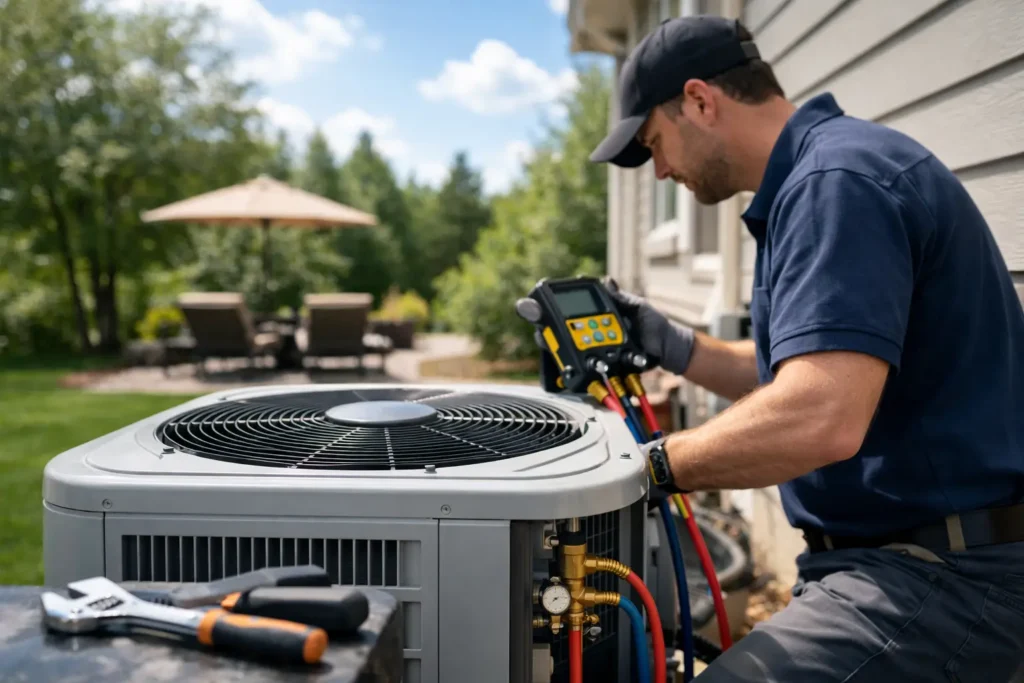
A technician should inspect electrical components, test system operation, check refrigerant performance, clean key components, evaluate airflow, and inspect the condensate drain. Capacitors, contactors, blower components, and coil condition all matter because even minor wear can affect startup, cooling capacity, and reliability.
Refrigerant is another area where guesswork causes trouble. Low refrigerant does not happen from normal use. It usually means there is a leak or an existing system issue. Simply topping it off without diagnosing the cause is not a long-term fix.
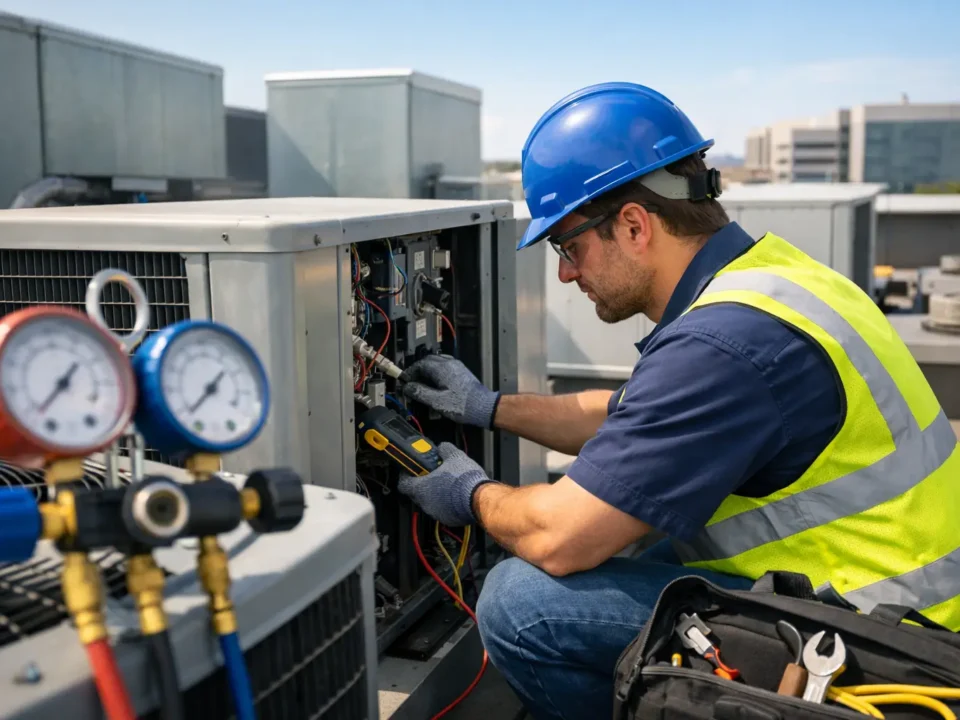
For commercial properties, the maintenance process may be broader depending on the equipment type and building layout. Rooftop units, multiple zones, occupied office spaces, and tenant comfort demands all raise the stakes. In those settings, pre-summer service is not just about comfort. It is about avoiding downtime and complaints when the building is under full load.
Efficiency starts with airflow and expectations
A lot of summer frustration comes from expecting the AC to do more than the home or building allows. If insulation is poor, windows take on heavy afternoon sun, or ductwork leaks in unconditioned spaces, the system may run long even when the equipment itself is in decent condition.
That does not mean the AC is failing. It means comfort depends on the full system, not just the condenser outside. Sealing obvious air leaks, using blinds during peak sun, and making sure ducts are intact can all support better cooling performance.
Thermostat settings matter here as well. Dropping the thermostat dramatically does not cool the space faster. It simply tells the system to run longer. A steady, realistic setting is usually the better approach. If the home is empty during the day, a programmable or smart thermostat can help reduce unnecessary runtime without sacrificing comfort when people return.
Don’t forget the drain line and indoor moisture
Summer AC systems remove humidity as well as heat, and that moisture has to go somewhere. The condensate drain line is easy to overlook until it clogs and causes a backup. If your system has had drain issues before, pre-season service should include checking and clearing that line.
Excess indoor humidity, musty smells, or visible water near the air handler should not be brushed off. High humidity can make a home feel uncomfortable even when the temperature setting looks right. In commercial spaces, it can affect occupants, finishes, and indoor air quality.
If your AC cools but still leaves the space damp, the issue may involve airflow, sizing, drainage, or system performance. This is where a proper diagnosis matters more than a temporary workaround.
Should you repair, maintain, or replace?
It depends on the age of the unit, the cost of the repair, and how dependable you need the system to be this summer. If the equipment is relatively new and the issue is isolated, repair and maintenance are usually the practical path. If the system is older, inefficient, and already showing repeat problems, continuing to patch it may cost more in the long run.
For homeowners, the decision often comes down to risk tolerance. Some people are comfortable nursing an aging unit through one more season. Others would rather avoid the chance of an emergency breakdown during peak heat. For property managers and commercial operators, uptime tends to matter even more. A system that fails during business hours or in a tenant-occupied property creates a bigger operational problem than the repair bill alone.
This is why many customers schedule maintenance before the rush. It gives you time to make a measured decision instead of reacting when the system fails during a heat wave. Companies like AAA HVAC see the same pattern every year: units that were making small warnings in spring often become urgent service calls in summer.
The smartest time to act is before you need emergency service
If your AC is cooling normally, summer preparation may be as simple as replacing the filter, clearing the outdoor unit, testing the thermostat, and scheduling preventive maintenance. If performance already feels off, don’t wait for a hotter day to confirm it.
Air conditioning problems rarely improve once the season gets demanding. They become more expensive, more disruptive, and harder to schedule around when everyone else needs service too. A little attention now gives your system a better chance to handle the months ahead and gives you more control over what happens next.