Air Filter Replacement Benefits for Your HVAC
July 27, 2026
Home AC Installation Guide for Northern Virginia
July 29, 2026
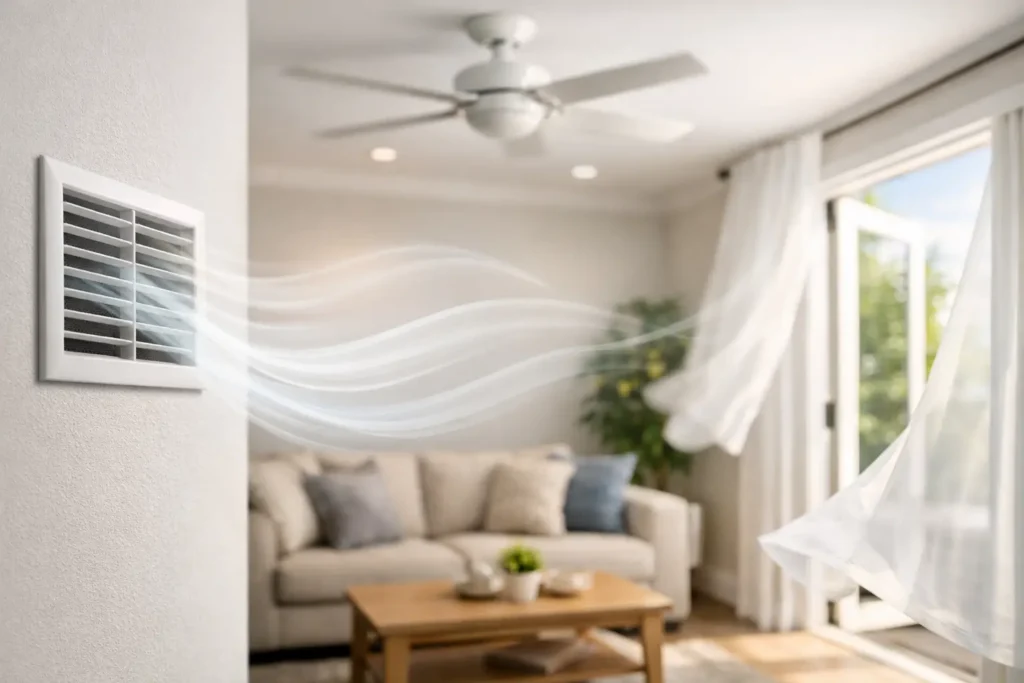
A bedroom that stays stuffy while the rest of the house feels fine is not just frustrating. It is often a sign that air is not moving where it needs to go. Knowing how to improve indoor airflow can make rooms feel more comfortable, help your HVAC system operate more efficiently, and reduce the lingering odors and uneven temperatures that make a home feel closed in.
For Northern Virginia homes, the answer is rarely as simple as opening a window. Humid summers, cold winters, outdoor pollen, and tightly sealed construction all affect the best approach. Start with the easy checks, then bring in an HVAC professional when airflow problems point to the system itself.
Start With the Air You Already Have
Your heating and cooling system can only circulate air if supply vents can deliver it and return vents can pull it back. Many airflow issues come down to blocked pathways rather than a major equipment failure.
Walk through the home while the system is running. Check that supply registers are open and not covered by rugs, furniture, curtains, or storage bins. A sofa pushed against a wall vent can restrict an entire room. In bedrooms, make sure doors are not creating a pressure barrier. If a room feels warmer or cooler whenever its door is closed, leaving the door slightly open may improve circulation until a longer-term solution is in place.
Return grilles need even more clearance. These larger vents draw air back to the HVAC system for conditioning. Keep furniture, wall décor, and clutter at least several inches away from them. Closing too many supply vents is also not a reliable way to force more air into another room. It can raise pressure in the duct system, reduce efficiency, and put unnecessary strain on equipment.
Replace the Air Filter on Schedule
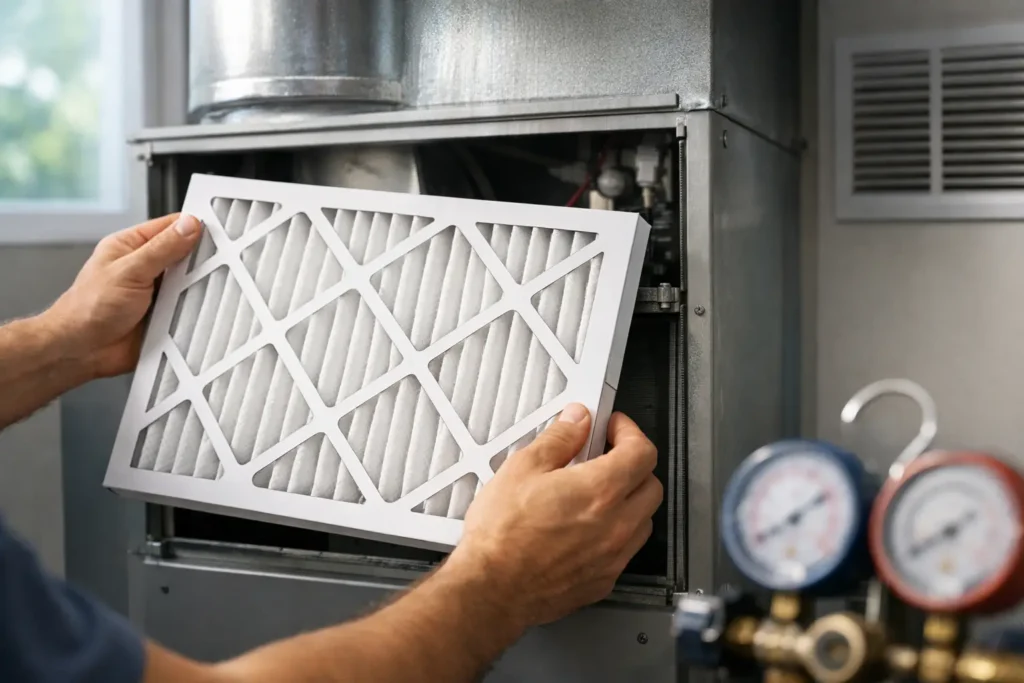
A loaded air filter is one of the most common and easiest-to-fix causes of weak airflow. As dust, pet hair, and other particles build up, the blower has to work harder to move air through the system. You may notice reduced air from vents, longer run times, more dust indoors, or hot and cold spots.
Check the filter monthly and replace it when it looks dirty. Many homes need a new filter every one to three months, but the right interval depends on the filter type, pets, occupancy, construction activity, and allergies. A home with multiple shedding pets may need more frequent changes.
Higher-rated filters can capture smaller particles, but they can also restrict airflow if the system was not designed for them. Do not assume the highest filtration rating is automatically the best choice. Use the filter size and rating recommended for your equipment, or ask a qualified technician what your system can handle without reducing performance.
Use Fans to Improve Indoor Airflow Strategically
Ceiling fans do not cool the air, but they make people feel cooler by moving air across the skin. In summer, set the blades to rotate counterclockwise when viewed from below. This pushes air downward and creates a cooling breeze. In winter, use a low clockwise setting to gently circulate warm air that has collected near the ceiling without creating a noticeable draft.
Portable fans can help move conditioned air into a stagnant area, especially in a room at the end of a long hallway. Position a fan to support the path of airflow rather than simply aiming it at the person in the room. For example, a fan near a doorway can help exchange air between a stuffy bedroom and the conditioned space outside it.
Bathroom and kitchen exhaust fans matter, too. Run the bathroom fan during showers and for about 20 minutes afterward to remove moisture. Use the range hood when cooking, particularly when boiling water or using gas appliances. These fans remove moisture, heat, odors, and indoor pollutants at their source.
Bring in Fresh Air Without Creating New Problems
Opening windows can quickly refresh a home on mild, low-pollen days. Cross-ventilation works best: open windows on opposite sides of the home or use one window with a fan blowing outward to pull fresh air in through another opening.
Still, outdoor air is not always helpful. On high-pollen days, during wildfire smoke events, or in peak summer humidity, open windows can worsen indoor air quality and make your air conditioner work harder. In winter, extended window ventilation can waste heat and create cold drafts.
If your home feels persistently stale even with a properly operating HVAC system, ask about mechanical ventilation. An energy recovery ventilator, or ERV, can bring in filtered outdoor air while transferring some heat and moisture between incoming and outgoing air. This is especially useful in newer, tightly built homes. The right solution depends on your home’s layout, existing ductwork, humidity levels, and household needs.
Address Humidity Before It Becomes a Comfort Problem
Airflow and humidity are closely connected. High indoor humidity makes rooms feel warmer and more stagnant, even when the thermostat is set correctly. It can also encourage musty odors, condensation, and mold growth.
Your air conditioner removes some humidity as it cools, but it may not be enough during a Northern Virginia summer. Short cooling cycles, an oversized system, poor drainage, or a neglected evaporator coil can reduce the system’s ability to dehumidify. A whole-home dehumidifier may be worth considering for homes that regularly stay above about 50 percent relative humidity.
In colder months, overly dry air can make a home uncomfortable, but adding humidity should be done carefully. Too much indoor moisture during winter can condense on windows and exterior surfaces. A balanced humidity plan protects both comfort and the building itself.
Look for HVAC Issues That Restrict Airflow
When basic adjustments do not solve the problem, the issue may be inside the HVAC system. Duct leaks, crushed flex ducts, disconnected duct runs, dirty blower components, an undersized return, or poorly balanced ducts can all leave certain rooms under-conditioned.
Pay attention to patterns. Weak airflow from every vent may suggest a dirty filter, blower issue, or duct restriction. One problem room may point to a branch duct, closed damper, return-air limitation, or insulation issue. Air that is strong but not properly heated or cooled may indicate a different equipment problem.
A professional airflow assessment can identify what is actually happening rather than relying on guesswork. Technicians can inspect ductwork, measure airflow, check static pressure, evaluate the blower, and determine whether the system is correctly sized for the space. In some homes, adding or resizing a return grille makes a meaningful difference. In others, duct repair, balancing dampers, zoning, or equipment maintenance is the better answer.
Keep Up With Preventive HVAC Maintenance
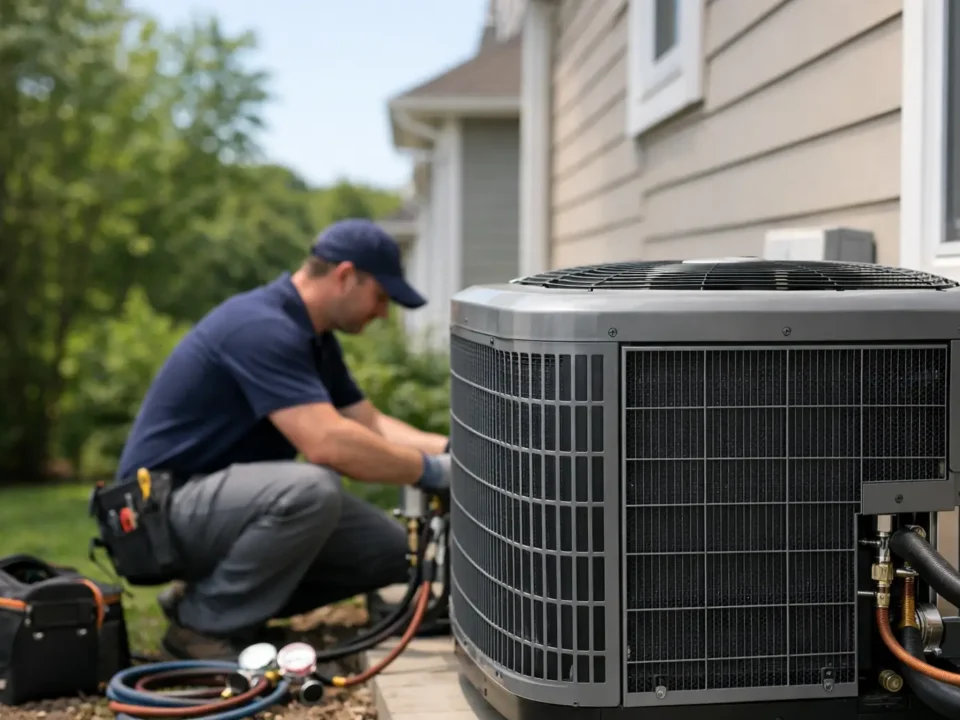
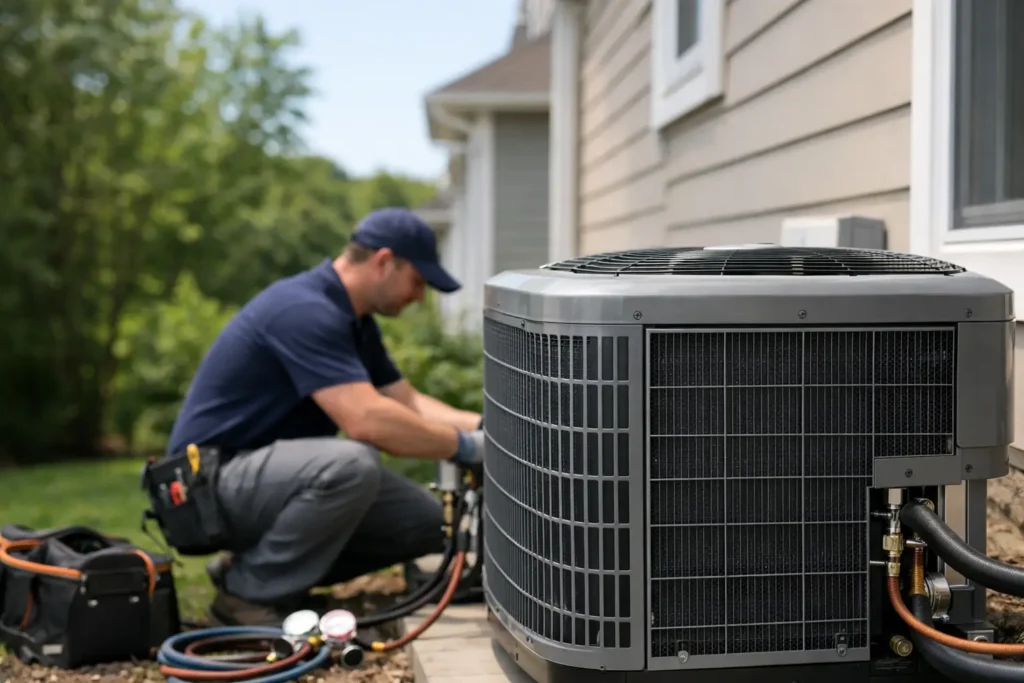
Routine maintenance protects more than the equipment. It helps preserve the airflow, efficiency, and indoor comfort you depend on through every season. During a service visit, a technician can inspect filters, blower parts, coils, drain lines, electrical connections, refrigerant performance, and overall system operation.
For commercial properties, airflow deserves the same attention. Uneven temperatures can affect employee comfort, customer experience, inventory conditions, and operating costs. Property managers should address recurring hot and cold zones early, especially in spaces with changed layouts, added offices, or new equipment that creates extra heat.
If airflow has dropped suddenly, you hear unusual noises, smell burning or musty odors, see water around indoor equipment, or have a gas furnace concern, schedule service promptly. Do not block vents or keep adjusting the thermostat to compensate for a system problem.
Better airflow is usually built through small, practical corrections: a clean filter, open pathways, controlled humidity, and a system that is maintained and balanced for the building. When a room still will not feel right, AAA HVAC can help identify the cause and provide a clear path back to reliable comfort.