How to Reset a Furnace Limit Switch Safely
September 2, 2026
Plumbing Emergencies in the First 10 Minutes
September 4, 2026

A rooftop unit rarely fails at a convenient time. It fails during a crowded lunch rush, before a tenant walkthrough, or on the hottest afternoon of the year. The top commercial HVAC maintenance tasks are designed to prevent that kind of disruption by catching small performance issues before they become expensive emergency repairs.
For property managers, business owners, and facility teams, maintenance is not just about making equipment last longer. It is about protecting comfort, reducing avoidable energy waste, supporting indoor air quality, and keeping operations moving. The right plan should reflect your equipment, building use, occupancy, and the demands of Northern Virginia’s hot summers and cold winters.
Top Commercial HVAC Maintenance Tasks for Reliable Uptime
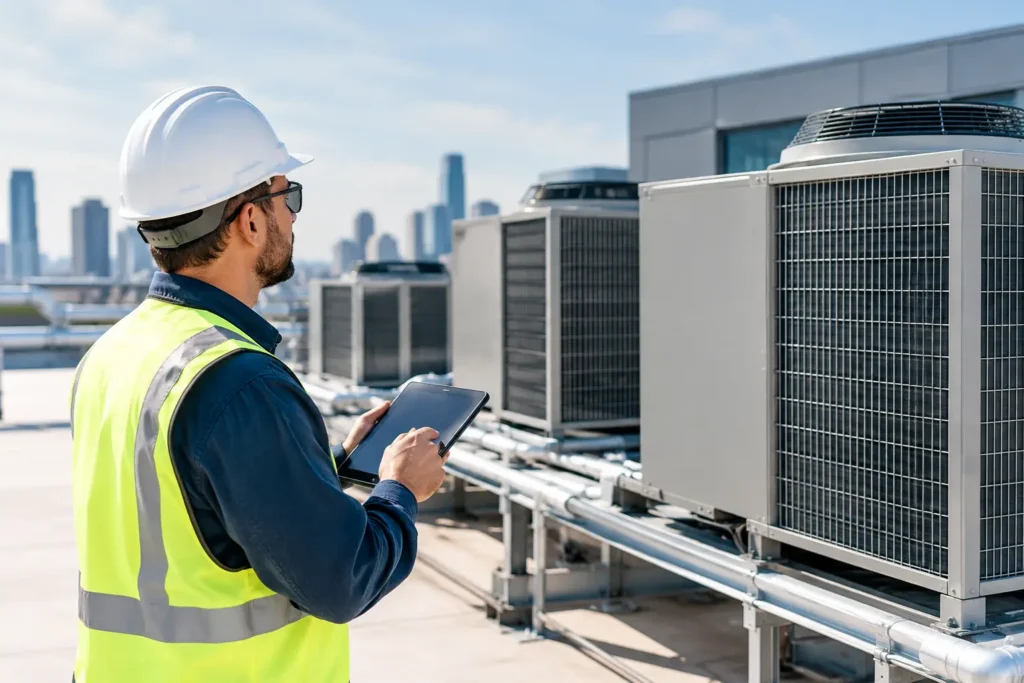
A dependable maintenance visit is more than a quick visual inspection. Qualified technicians should review the equipment’s condition, operating performance, safety controls, and the components most likely to wear between service visits.
Replace filters and inspect airflow
Dirty filters are one of the most common causes of commercial HVAC strain. When filters restrict airflow, the system has to work harder to move conditioned air. That can raise utility costs, reduce heating and cooling capacity, and put unnecessary stress on blower motors and other components.
How often filters need replacement depends on the building. A lightly occupied office may have different needs than a restaurant, retail space, medical office, or facility with extended operating hours. During maintenance, a technician should also look for signs of airflow problems, such as weak airflow at registers, unusual system noise, dirty coils, or imbalanced temperatures between rooms.
Clean and inspect evaporator and condenser coils
Coils transfer heat, so even a modest buildup of dirt can affect system efficiency. Indoor evaporator coils can collect dust and moisture-related buildup, while outdoor condenser coils are exposed to pollen, leaves, debris, and weather. Restricted coils make equipment run longer to achieve the same indoor temperature.
Coil cleaning is especially valuable before periods of heavy cooling demand. The goal is not simply to make the equipment look better. It is to help the system reject and absorb heat as designed, reducing the chance of high-pressure shutdowns and preventable wear.
Check refrigerant performance and look for leaks
Commercial cooling equipment depends on the correct refrigerant charge. Low refrigerant can reduce cooling, increase run times, and contribute to compressor damage. A technician should check operating pressures, temperature readings, and overall cooling performance rather than adding refrigerant without identifying why the level is low.
If a leak is suspected, the proper next step is diagnosis and repair. Repeatedly topping off refrigerant may seem like a short-term fix, but it does not address the underlying problem or protect the equipment over time.
Inspect belts, motors, bearings, and electrical connections
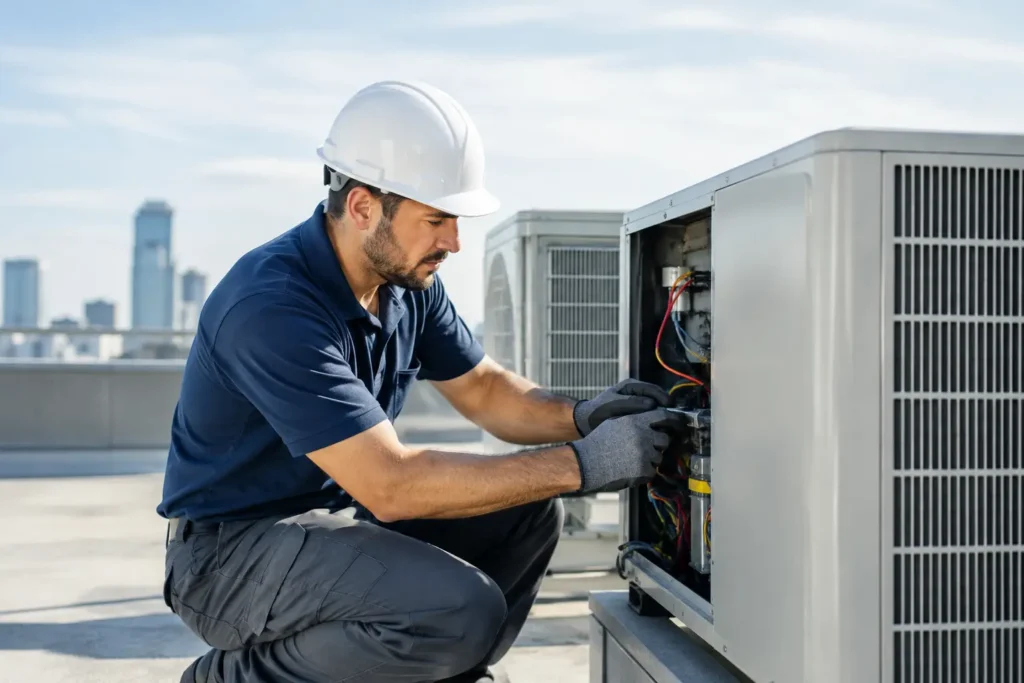
Moving and electrical parts deserve close attention because small defects can quickly turn into downtime. Worn belts may slip or break. Motor bearings can become noisy or overheat. Loose electrical connections may create resistance, damage components, or cause intermittent operation that is difficult to diagnose after the fact.
Maintenance should include checking belt condition and tension, listening for unusual motor noise, inspecting contactors and relays, and tightening connections where appropriate. Technicians should also measure electrical readings to identify components operating outside their normal range. Replacing a worn belt or failing capacitor during a planned visit is far less disruptive than losing cooling during business hours.
Test thermostats, sensors, and control sequences
Comfort complaints are not always caused by a failed piece of equipment. A thermostat that reads the wrong temperature, a damaged sensor, or a poorly programmed schedule can cause a system to run too much, too little, or at the wrong time.
Technicians should verify thermostat accuracy, review scheduling settings, and confirm that heating and cooling stages respond correctly. For larger buildings with multiple zones, this work helps prevent the familiar problem of one area being too warm while another is too cold. Controls may need to be adjusted as occupancy patterns, tenant needs, or operating hours change.
Clear condensate drains and inspect moisture controls
Air conditioning systems remove moisture from the air, and that water must drain correctly. A clogged condensate line or pan can lead to water damage, unpleasant odors, system shutdowns, and avoidable calls for service. This task becomes particularly relevant during humid weather, when cooling systems produce more condensation.
A maintenance technician should inspect the drain pan, clear the condensate path, and verify that safety switches are functioning. If there are signs of recurring drainage problems, address the cause rather than treating the symptoms each season.
Inspect heating components before cold weather
Commercial heating maintenance should happen before the first sustained cold spell, not after occupants report cold offices or frozen fingers at the front desk. For gas-fired equipment, technicians should inspect burners, ignition components, heat exchangers, venting, and safety controls. They should also test the system through a normal heating cycle.
This work protects comfort and supports safe operation. A cracked heat exchanger, failed ignition component, or venting concern requires prompt professional attention. Heating equipment may sit idle for months, which is exactly why preseason testing matters.
Verify safety devices and system shutdown functions
Commercial HVAC equipment includes safeguards that protect the system, building, and occupants. These may include high- and low-pressure switches, flame safeguards, float switches, disconnects, and emergency shutoffs. A maintenance visit should confirm that these controls are present, accessible, and functioning as intended.
Skipping safety checks can create unnecessary risk. A unit that continues operating under unsafe conditions may suffer more serious damage, while a safety control that trips repeatedly can point to a problem that needs diagnosis. The right response is not to bypass a safety device. It is to determine why it is activating.
How Often Should Commercial HVAC Maintenance Be Scheduled?
Most commercial properties benefit from at least two planned HVAC visits each year: one before cooling season and one before heating season. This schedule gives technicians an opportunity to prepare equipment for the conditions that place the highest demand on it.
However, twice-yearly service is not the right answer for every facility. Restaurants, medical spaces, fitness centers, retail locations with frequent door traffic, and buildings with older equipment may need more frequent inspections. Equipment that serves critical operations may also justify quarterly service. A facility with newer equipment and consistent operating conditions may be well served by a customized seasonal plan.
The best schedule is based on risk, not guesswork. Consider the cost of an unexpected shutdown, the age and condition of the equipment, the number of people affected, and whether the building has backup capacity. A good contractor can document findings over time, making it easier to plan repairs and replacements before a failure forces a rushed decision.
What Facility Teams Can Watch Between Service Visits
Routine professional service does the technical work, but on-site teams are often first to notice changes. A new rattling sound, longer cooling cycles, uneven temperatures, water near equipment, unusual odors, or a sudden increase in energy use should be reported early.
Keep outdoor units clear of leaves, stored materials, and other obstructions that limit airflow. Make sure mechanical rooms remain accessible and that staff know who to call if a unit alarms or stops operating. Avoid asking untrained personnel to reset breakers repeatedly or adjust internal components. Those actions can hide a developing issue and make diagnosis harder.
Keeping a simple record of comfort complaints, repairs, filter changes, and service recommendations also helps. Patterns are useful. If the same zone has recurring temperature issues or one unit requires repeated repairs, that information supports a more informed maintenance or replacement decision.
Choose Maintenance That Produces Clear Answers
A commercial maintenance visit should leave you with more than a sticker on the equipment. You should know what was inspected, what was adjusted, what needs monitoring, and which repairs are urgent versus optional. Clear documentation supports budgeting and helps property managers communicate confidently with owners and tenants.
For businesses that need responsive support, AAA HVAC provides commercial heating and cooling service backed by trained technicians and a customer-first approach. Whether the concern is a recurring comfort complaint or preparation for peak season, addressing it early gives your equipment its best chance to perform when your building needs it most.
The practical goal is simple: schedule maintenance before the weather puts your system to the test, and act on small warnings while they are still small.