Plumbing Emergencies in the First 10 Minutes
September 4, 2026
AC Systems: Repair, Replacement, and Care
September 6, 2026

A low monthly price can look attractive until your air conditioner stops cooling on a 95-degree Northern Virginia afternoon and you learn the plan does not cover the repair you expected. A useful HVAC service contracts comparison starts with that moment: not the advertised discount, but what happens when comfort, equipment uptime, and a fast response actually matter.
For homeowners, a service contract can reduce surprise and help an aging system run more reliably. For property managers and commercial decision-makers, it can create a clearer maintenance schedule and a better path to service when equipment problems disrupt tenants, employees, or customers. The right option depends on your equipment, your risk tolerance, and how much value you place on priority support.
What an HVAC Service Contract Should Do
Most HVAC service contracts are preventive maintenance agreements, not warranties and not full repair insurance. They typically include scheduled system inspections and tune-ups, along with benefits such as repair discounts, priority scheduling, or reduced service-call fees.
That distinction matters. A maintenance agreement is designed to find common problems early, improve operating efficiency, and document regular care. It may help prevent some breakdowns, but it cannot guarantee that a compressor, blower motor, control board, or other part will never fail.
A manufacturer warranty generally addresses certain defective parts for a defined period, subject to registration and other requirements. A labor warranty addresses the work completed during a repair or installation. A service contract is the ongoing relationship that helps keep the system checked, maintained, and easier to service when an issue arises.
HVAC Service Contracts Comparison: The Details That Matter
When comparing plans, put the benefits into plain language. Ask what is included during a routine visit, what receives a discount, what carries an added charge, and what happens after normal business hours. A contract with a slightly higher annual cost may offer better value if it includes the response access and maintenance scope you are likely to need.
Visit frequency and seasonal timing
For a home with central air conditioning and a furnace or heat pump, two maintenance visits per year are often the practical standard: one before cooling season and one before heating season. Each visit should be scheduled around the equipment you rely on, not treated as a quick visual check.
For commercial properties, frequency may need to increase based on operating hours, occupancy, equipment age, and the number of systems. A small office with lightly used equipment has different needs than a restaurant, medical office, server room, or multi-tenant building where temperature problems create immediate business consequences.
Ask whether the agreement covers every system on the property or only one indoor-outdoor equipment pair. This is especially important for homes with separate upstairs and downstairs systems, additions, rental units, or zoned equipment.
What the maintenance visit includes
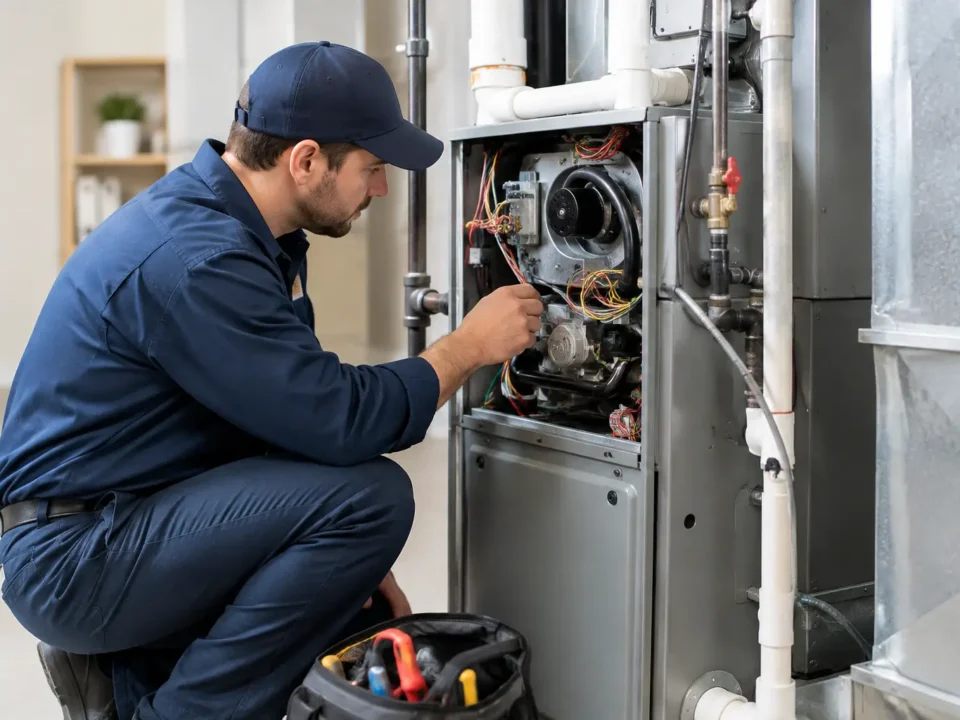
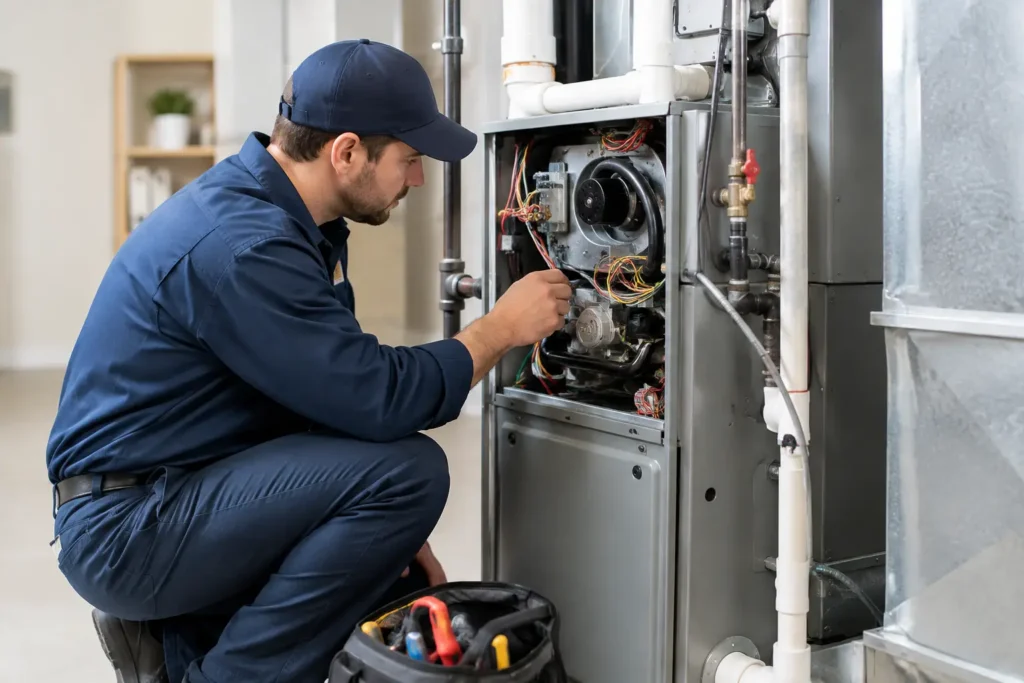
A worthwhile visit should involve more than changing a filter. A qualified technician should inspect system operation, test key safety and performance controls, check electrical connections, assess refrigerant-related performance where appropriate, examine condensate drainage, and look for wear that could lead to a repair.
The exact checklist will vary by equipment type and season. What matters is whether the contractor can explain the work clearly and tell you what they found. If a recommendation is made, you should know whether it is urgent, preventive, or simply something to monitor.
Also ask whether filters, refrigerant, replacement parts, and additional cleaning are included. They are often not included in the base agreement, and that is not automatically a concern. Clear exclusions are better than vague promises.
Priority scheduling and emergency access
Priority scheduling is one of the most valuable contract benefits, particularly during the first major heat wave or cold snap of the year. It does not always mean immediate arrival, but it should mean contract customers receive a preferred place in the service queue.
Read the wording closely. Does priority service apply only during regular business hours? Is 24/7 emergency access available? Is there an after-hours fee? For a business, ask how the provider handles no-cooling calls that threaten operations. For a homeowner, ask what to expect when a furnace fails overnight.
A plan is only as useful as the company behind it. Look for a provider with qualified technicians, dependable dispatch communication, and the capacity to respond when demand is high.
Repair discounts and service fees
Many contracts offer a percentage discount on qualifying repairs. This can be meaningful, but compare it carefully. A 15% discount sounds straightforward until you need to know whether it applies to labor, parts, diagnostic fees, major components, or replacement equipment.
Ask for examples. If a capacitor fails, what would a member pay compared with a nonmember? If a major repair is recommended, are there any limits on the discount? If replacement becomes the sensible option, does the plan provide a credit or preferred pricing toward a new system?
Do not choose a contract based on a repair discount alone. A well-maintained newer system may need few repairs, while an older system can develop problems that no discount makes economical to fix. In that situation, honest guidance about repair versus replacement is more valuable than pressure to keep repairing equipment near the end of its service life.
Compare the Contract, Not Just the Price
The simplest way to compare plans is to request the written terms and place them side by side. Focus on the total annual cost, the number of included visits, covered equipment, priority level, diagnostic charges, repair discounts, cancellation terms, and renewal process.
Watch for automatic renewal language and understand how to cancel if your needs change. Confirm whether missed appointments can be rescheduled and whether the agreement transfers if you sell a home or change commercial locations. For landlords and property managers, clarify who is authorized to approve repairs and how repair estimates are communicated.
It is also reasonable to ask about technician qualifications. HVAC equipment is complex, and preventive maintenance has more value when it is performed by trained professionals who can recognize a developing issue before it becomes a no-heat or no-cooling call. NATE-certified technicians provide an additional level of technical credibility for many customers.
When a Service Contract Is Worth It
A contract is often a smart choice when you own equipment that is no longer new, tend to postpone maintenance, or want a more predictable relationship with a service provider. It can also be valuable for busy households that do not want to remember seasonal appointments.
For commercial customers, the value often comes from accountability. Scheduled maintenance records, priority response, and a provider familiar with the site can reduce disruption when a system needs attention. That does not eliminate every equipment failure, but it can shorten the time between a problem being reported and a qualified technician evaluating it.
A contract may be less valuable if your system is very new, covered by comprehensive labor protections, and you reliably schedule maintenance without an agreement. Even then, compare the cost of standalone tune-ups with the agreement price and any service benefits. The answer is not the same for every property.
Questions to Ask Before You Sign
Before agreeing to a plan, get direct answers to these questions:
- How many maintenance visits are included each year, and which systems do they cover?
- What specific work is performed at each visit?
- What fees, parts, or services are excluded from the agreement?
- How does priority scheduling work during peak demand and after hours?
- What discounts apply to diagnostics, repairs, and equipment replacement?
- Can I review the cancellation, renewal, and transfer terms before enrollment?
A reputable provider should answer without making you chase fine print. The goal is not to find a contract that promises to cover everything. It is to choose one that sets clear expectations, supports regular care, and gives you a dependable option when comfort cannot wait.
For Northern Virginia homes and businesses, AAA HVAC can help evaluate whether a preventive maintenance agreement fits your equipment and service priorities. Choose the plan whose details you understand and whose service team you trust to answer when the system needs attention.