How to Reduce AC Humidity for Better Home Comfort
September 15, 2026
Air Conditioner SEER Ratings Guide for Buyers
September 17, 2026
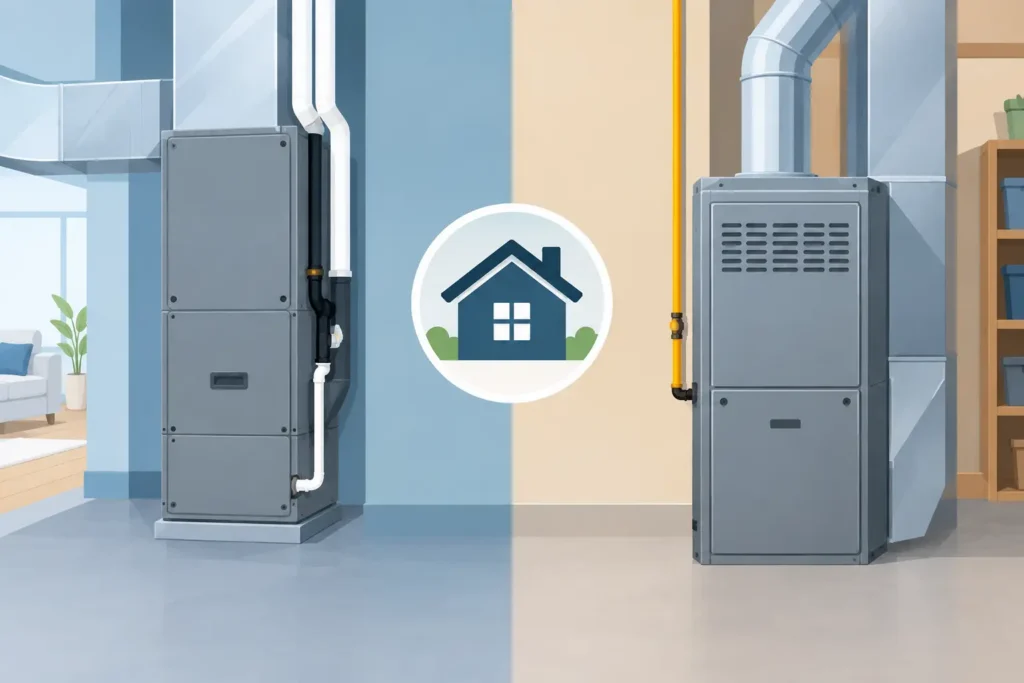
A loud indoor unit, uneven rooms, or a system that is nearing replacement can make the air handler versus furnace question feel more urgent than technical. The right choice affects how your home heats, cools, manages humidity, and responds during a Northern Virginia winter. While both pieces of equipment move air through your home, they create heat in very different ways.
The simplest answer is this: a furnace burns fuel or uses electricity to produce heat, while an air handler circulates air and is usually paired with a heat pump or air conditioner. But the best setup depends on your existing equipment, utility costs, ductwork, comfort priorities, and how long you plan to stay in the property.
Air Handler Versus Furnace: The Core Difference
A furnace is a heating appliance. In most local homes, it runs on natural gas. When your thermostat calls for heat, the furnace creates heat in a combustion chamber, transfers it through a heat exchanger, and uses a blower to distribute warm air through the ducts. The same blower can also circulate cool air from a central air conditioner during summer.
An air handler is the indoor cabinet that contains a blower, an evaporator coil, and other components that move and condition air. It does not normally create heat by burning fuel. Instead, it works with a heat pump, which transfers heat rather than generating it through combustion. During cooling season, the air handler moves indoor air across a cold coil. During heating season, it moves air across a warm coil supplied by the heat pump.
Many air handlers also contain electric heat strips. These can provide supplemental heat when outdoor temperatures are low or serve as backup heat if the heat pump needs help. Heat strips are effective, but they generally cost more to operate than a high-efficiency gas furnace or a heat pump running under moderate outdoor conditions.
The confusion is understandable because a furnace also has a blower. Both systems can look similar from the outside, and both connect to your ductwork. The difference is what happens inside the cabinet and what equipment it supports.
When an Air Handler Makes Sense
An air handler is most often the right indoor partner for an all-electric heat pump system. This arrangement can be a practical choice for homeowners who want one system to handle heating and cooling without relying on gas service.
Modern heat pumps can deliver dependable heat through much of a typical Northern Virginia winter. They are especially efficient during milder weather, which is common in spring and fall. Because a heat pump transfers existing heat instead of creating it through combustion, it can use less energy than traditional electric resistance heat.
An air handler and heat pump may be a good fit if your home already has a heat pump, you prefer an all-electric system, or you are replacing an aging matched system. A properly matched indoor and outdoor unit matters. The air handler’s blower capacity, coil size, and controls need to work with the outdoor heat pump to deliver the efficiency and comfort the equipment is rated to provide.
What to Expect From Heat Pump Heating
Heat pump heat feels different from furnace heat. A furnace typically delivers hotter air from the supply vents and raises indoor temperature quickly. A heat pump delivers gentler, steady heat for longer periods. That does not mean it is failing. In many cases, longer run times help maintain more even temperatures throughout the home.
When temperatures fall well below freezing, a standard heat pump may need supplemental heat strips. The thermostat may display “auxiliary heat” or “emergency heat.” Auxiliary heat can be normal during extreme weather, but frequent operation can raise energy use. A technician can determine whether the system is operating as designed or whether airflow, refrigerant, thermostat settings, or equipment sizing need attention.
When a Furnace Makes Sense
A furnace is often the preferred choice for homeowners who want fast, powerful heat during the coldest days of the year. Gas furnaces produce high supply-air temperatures and can maintain comfort efficiently when outdoor temperatures drop.
A furnace is commonly paired with a central air conditioner. The furnace provides heat in winter, while the outdoor AC unit handles cooling in summer. The furnace blower serves both systems. This is a familiar, reliable configuration in many homes across Northern Virginia.
If your home already has gas service and a furnace in good condition, replacing only the outdoor AC unit may make sense. However, compatibility still matters. Newer AC equipment may require changes to the indoor coil, refrigerant lines, controls, or blower settings. Replacing equipment one piece at a time can reduce the upfront price, but it is not always the best long-term value.
Furnace Types and Efficiency
Gas furnaces are rated by Annual Fuel Utilization Efficiency, or AFUE. A higher AFUE percentage means more of the fuel becomes usable heat. High-efficiency furnaces can lower fuel waste, though the best choice also depends on installation requirements, venting, budget, and the condition of your existing system.
A furnace needs regular professional care because it uses combustion. During maintenance, the technician should inspect safety controls, burners, the heat exchanger, venting, ignition components, and airflow. If you smell gas, notice soot, hear booming or banging at startup, or have a carbon monoxide alarm, turn the system off if it is safe to do so and seek immediate professional help.
The Cost Question Is More Than Equipment Price
It is tempting to compare an air handler and furnace by the price on an estimate. That number matters, but it is only part of the decision. Installation costs can change based on equipment size, ductwork condition, indoor space, venting, thermostat upgrades, refrigerant requirements, and whether the project involves a full matched system.
Operating costs also vary. A gas furnace may be economical where natural gas rates are favorable. A heat pump with an air handler can be highly efficient in mild weather, but electric backup heat can add expense during cold snaps. The most cost-effective option for one home may not be the best for the house next door.
For some properties, a dual-fuel system offers a middle path. This setup pairs a heat pump with a gas furnace. The heat pump handles heating during milder conditions, and the furnace takes over when outdoor temperatures become cold enough that gas heat is the more practical option. It can provide excellent comfort, although the initial investment and controls are more involved.
Do Not Replace Equipment Based on Age Alone
A system that is 12 to 15 years old may be approaching replacement, but age is not the only factor. Frequent repairs, uneven comfort, rising utility bills, excessive noise, humidity issues, and outdated refrigerant can all change the calculation. So can a recent major repair that gives the equipment more useful life.
Before choosing between an air handler and a furnace, request a complete evaluation. A qualified technician should look beyond the existing unit’s label. Proper recommendations account for your home’s heating and cooling load, insulation, window exposure, duct capacity, return-air design, and the performance of the equipment as a complete system.
Oversizing is a common mistake. An oversized system may heat or cool quickly but cycle off before it has distributed air evenly or managed humidity well. An undersized system may run constantly and struggle on the hottest or coldest days. Accurate sizing protects comfort and helps prevent premature wear.
Questions to Ask Before You Choose
Ask whether your current system is a heat pump or a traditional AC-and-furnace setup, and whether the new equipment will be properly matched. Find out what heat source will serve your home during freezing weather, what maintenance is required, and how the proposed system will affect your monthly energy costs.
For a rental property or commercial space, also consider uptime and repair access. Equipment that is technically efficient but difficult to service can create avoidable disruption. Clear warranty terms, available parts, and qualified installation matter just as much as the brand name on the cabinet.
AAA HVAC can assess your current equipment, explain the trade-offs in plain language, and provide recommendations from NATE-certified technicians. Whether you need a repair, maintenance visit, or replacement estimate, the goal should be dependable comfort rather than a one-size-fits-all answer.
Your next step is not to pick the equipment with the most impressive specification sheet. It is to choose the system that fits your home, your fuel options, and the way you expect comfort to feel on the coldest and hottest days of the year.