Best Furnace Brands for Homes Worth Buying
September 18, 2026
A failed furnace during a Northern Virginia cold snap or an air conditioner that quits on a humid afternoon can move from inconvenient to urgent quickly. This emergency HVAC service guide explains what you can safely do in the first few minutes, which warning signs require immediate action, and when it is time to call for 24/7 professional help.
What Counts as an HVAC Emergency?
Not every heating or cooling problem needs a middle-of-the-night service call. A system that is running but not keeping up may be uncomfortable, but it can sometimes wait until regular service hours if the building remains safe. An HVAC emergency is a failure or condition that creates a safety concern, threatens property damage, or leaves people without reasonable heat or cooling during extreme weather.
For homeowners, the urgency often depends on who is in the house. Infants, older adults, people with medical conditions, and pets can be more vulnerable to indoor temperature extremes. For property managers and business owners, the decision also involves occupants, sensitive equipment, inventory, lease obligations, and the risk of an extended shutdown.
The right response is not to guess at a complicated repair. It is to make the space safe, prevent additional damage where possible, and get qualified help on the way.
Call for Emergency HVAC Service Right Away When
Some symptoms should never be treated as a do-it-yourself troubleshooting project. Leave the building or affected area and seek appropriate emergency help if you smell gas, notice signs of carbon monoxide exposure, see smoke, or suspect a fire. Symptoms of carbon monoxide exposure may include headache, dizziness, nausea, confusion, or unusual fatigue. If a carbon monoxide alarm sounds, get everyone outside immediately and call emergency services.
You should also request urgent HVAC service when a heating system will not operate during dangerously cold weather, when an air conditioner fails during severe heat, or when water is actively leaking around indoor equipment. Water can damage ceilings, flooring, walls, and stored belongings, especially if the issue continues while no one is home.
Other signs that deserve prompt attention include loud banging or grinding, burning odors that do not quickly disappear, repeated system shutdowns, ice buildup on equipment, or a thermostat that cannot maintain a safe indoor temperature. Commercial facilities should treat loss of conditioning in occupied spaces, server rooms, medical-use areas, or spaces with temperature-sensitive goods as a priority.
What to Do Before the Technician Arrives
A few calm, safe steps can protect your property and help the technician diagnose the problem faster. Start by setting the thermostat to off if the system is making unusual noises, producing a burning smell, leaking, or cycling repeatedly. Turning it off can prevent a struggling component from suffering further damage.
If you have a standard disposable air filter and can safely access it, check whether it is heavily clogged. A severely blocked filter can restrict airflow and contribute to overheating, frozen cooling components, and poor performance. Replace it only if you have the correct size available and the system is off. Do not force an ill-fitting filter into place.
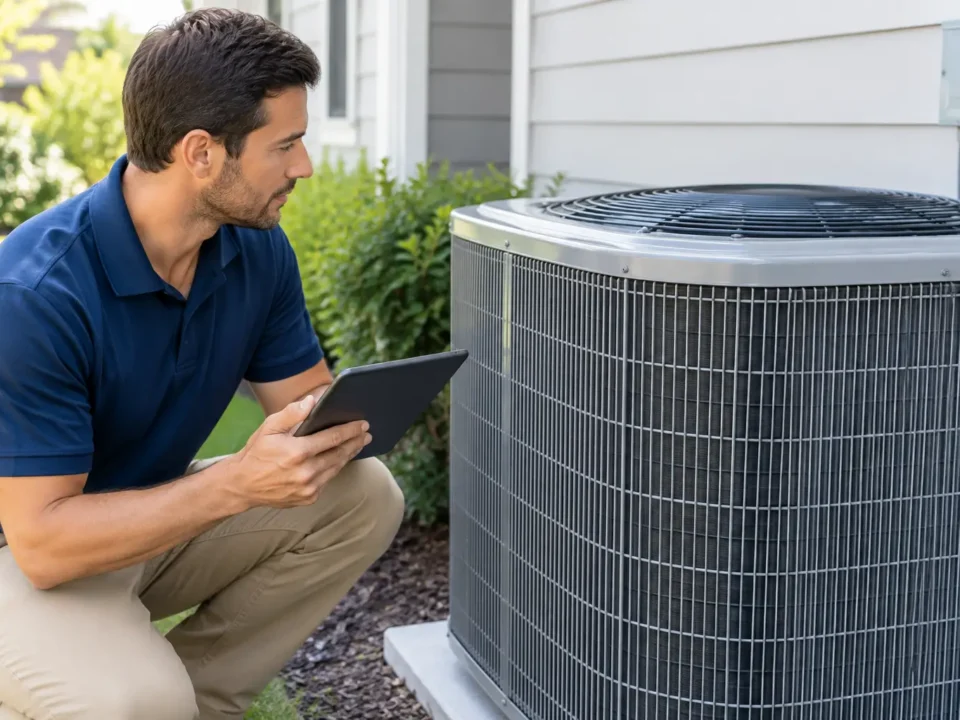
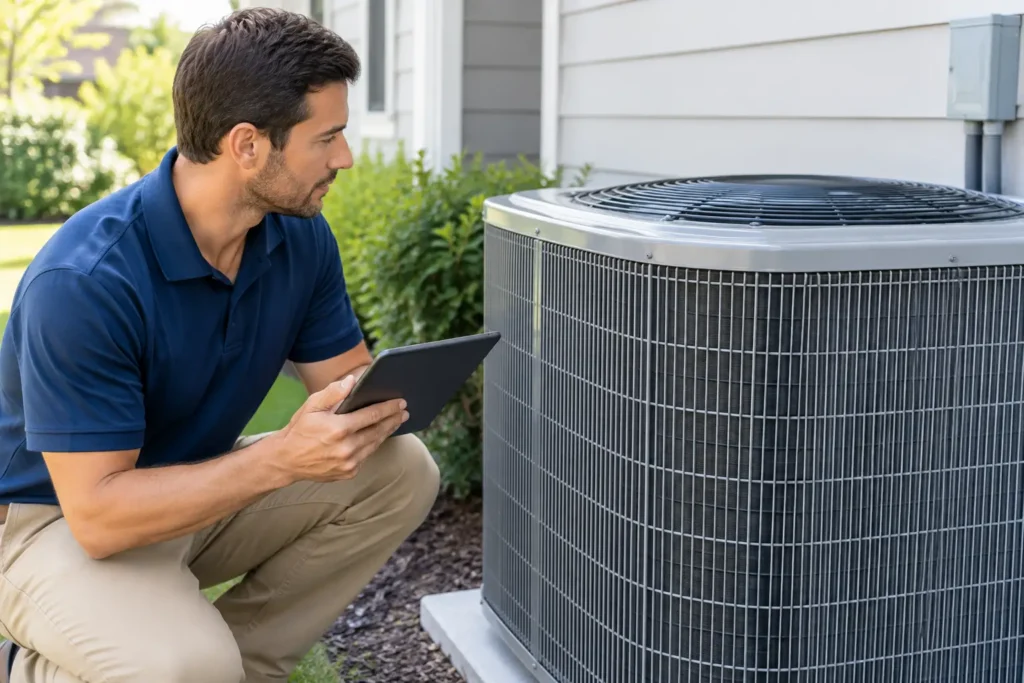
For a cooling issue, look at the outdoor unit from a safe distance. Remove loose leaves, branches, or objects that are blocking airflow around it, but do not take off panels or attempt to clean internal parts during an emergency. If the unit is covered in ice, turn cooling off and leave it off. Running a frozen system can cause more damage.
When water is leaking, move valuables away from the area and place towels or a shallow container beneath a minor drip if it can be done safely. If water is spreading quickly, reaching finished areas, or coming through a ceiling, the priority is limiting exposure and calling for service. Take a photo of the leak or any visible ice if you can do so safely. Those details can be useful when you call.
For commercial sites, notify the appropriate facilities contact, document the affected areas, and make a short record of alarm messages, temperature readings, and when the problem started. That information helps reduce delays when a technician arrives.
Safe Checks You Can Make
Most emergency HVAC calls do not require customers to diagnose the exact failed part. Still, there are a few basic checks worth making before you call or while service is being dispatched.
First, confirm that the thermostat is set to the correct mode. For heat, set it to Heat and raise the temperature setting several degrees above the current room temperature. For cooling, set it to Cool and lower the setting several degrees. If the thermostat display is blank, replace the batteries if your model uses them.
Next, check that indoor supply vents are open and not blocked by furniture, rugs, or boxes. Closed vents and restricted airflow can make rooms feel unevenly heated or cooled. Listen for whether the indoor equipment starts, whether air is moving from vents, and whether the outdoor cooling unit attempts to run. These observations are more useful than trying to repair the equipment yourself.
Avoid repeatedly turning the system on and off to see if it will restart. Frequent cycling can stress components and may turn a manageable repair into a larger one. Also avoid using portable space heaters unattended or placing them close to curtains, furniture, bedding, or high-traffic areas.
How to Protect Comfort Until Help Arrives
When heat is out, concentrate people in one or two interior rooms and close doors to unused spaces. Add layers of clothing and blankets, and keep exterior doors closed as much as possible. If temperatures inside are falling toward unsafe levels, make alternate arrangements rather than waiting for the situation to worsen.
When cooling is out, close blinds and curtains on sunny windows, limit heat-producing activities such as cooking, and use fans only when they improve comfort. Drink water regularly and check on vulnerable family members or employees. During a heat emergency, moving people to a cooler location may be safer than trying to wait out a prolonged outage.
In either situation, do not use ovens, grills, or other fuel-burning appliances as a heat source. They are not designed for space heating and can create serious fire or carbon monoxide risks.
What to Tell an Emergency HVAC Dispatcher
A clear service call helps the dispatcher send the right support and helps the technician arrive prepared. Be ready to provide the property address, whether the issue involves heating or cooling, and whether the system is completely off or still running without delivering comfortable air.
Describe any safety-related symptoms first, such as a gas odor, water leak, smoke, alarming noise, or a carbon monoxide alarm. Then share when the problem began, whether it has happened before, and any error code displayed on the thermostat or equipment. If you know the system type, approximate age, or equipment brand, that can help, but it is not required.
For a commercial building, explain which areas are affected, how many occupants are involved, and whether the outage affects operations, equipment, or inventory. Ask about the expected service window and whether there are any safe steps to take before the technician arrives.
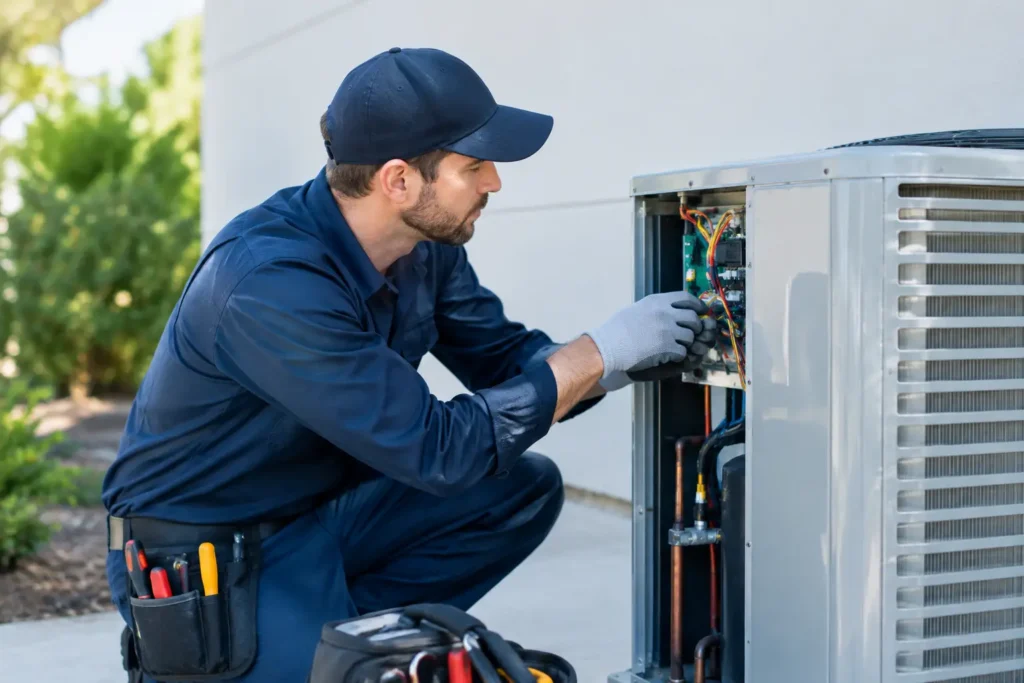
AAA HVAC provides same-day availability and 24/7 service access for urgent heating and cooling problems, with NATE-certified technicians prepared to assess the issue and explain the repair options clearly.
Emergency Repairs Versus Replacement
A system failure does not automatically mean replacement is the right answer. Many emergency calls result in a repair that restores safe, dependable operation. The decision changes when the equipment is near the end of its expected service life, has a history of frequent breakdowns, uses obsolete components, or needs a major repair that approaches the value of replacing it.
The best decision depends on the repair cost, the system’s condition, energy performance, and how long you plan to own or operate the property. A qualified technician should explain the immediate repair, the likely outlook, and any replacement option without pressuring you to make a rushed choice during a stressful moment.
Reduce the Chances of the Next Emergency
Emergency failures often have warning signs: longer run times, uneven temperatures, rising utility bills, unusual sounds, weak airflow, or repairs that keep returning. Seasonal maintenance gives a technician the chance to identify worn parts, airflow problems, and performance concerns before extreme weather puts the system under its highest demand.
For homes and businesses alike, keep filters changed on schedule, leave adequate clearance around equipment, and address small performance changes early. Preventive care cannot eliminate every surprise failure, but it can make an emergency far less likely.
When comfort or safety is on the line, act early. A quick call, a clear description of the problem, and a qualified technician can protect your property and help restore a safe indoor environment without unnecessary delay.