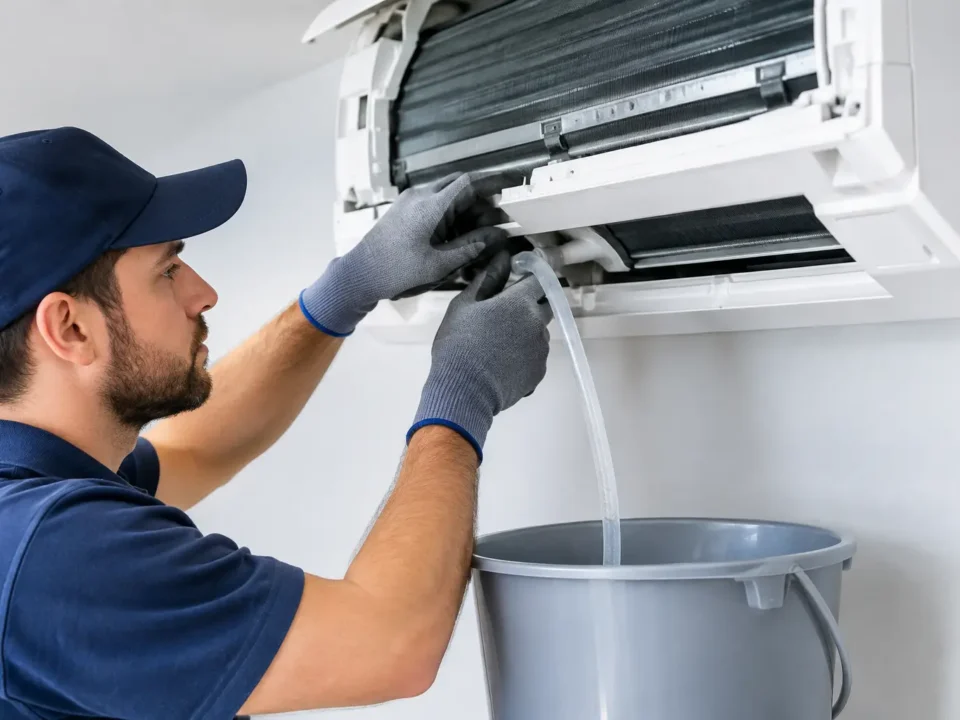
Water Heater Leaks: Stop Damage Before It Spreads
October 5, 2026
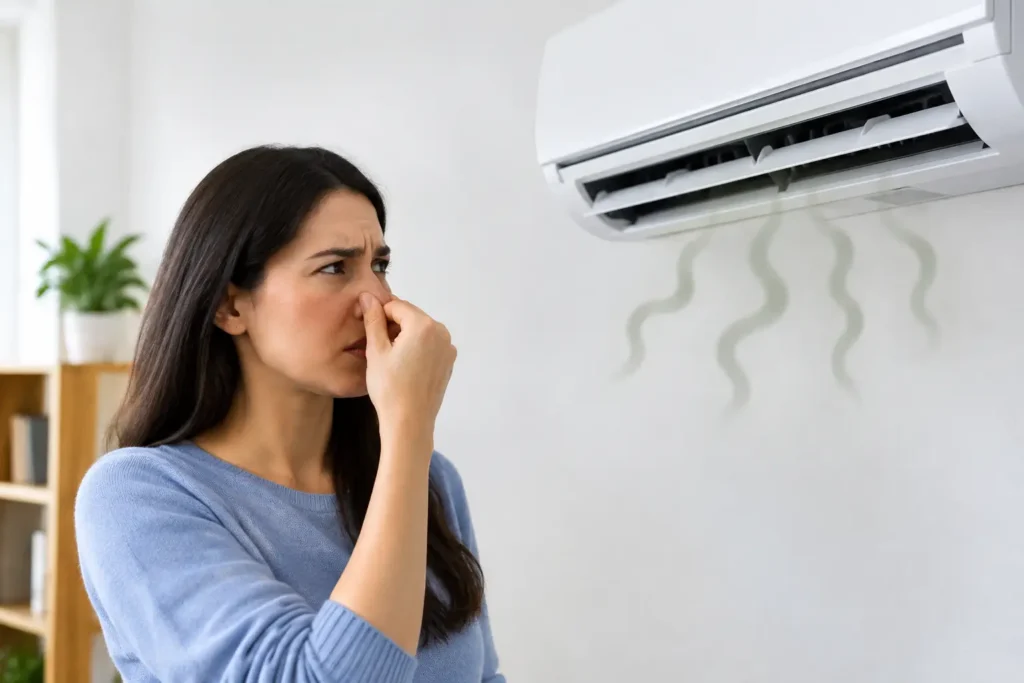
That damp, stale smell when the air conditioner starts is more than an annoyance. If you are asking, “why does AC smell musty,” your system may be holding moisture where it should not, allowing mildew or bacteria to grow. The good news is that many causes are repairable, especially when they are addressed before the odor turns into a cooling, drainage, or indoor-air-quality problem.
A musty AC smell is common during Northern Virginia’s humid summers, when cooling systems remove large amounts of moisture from indoor air. Some causes are simple, such as a neglected filter. Others involve the indoor coil, condensate drain, or equipment settings and should be checked by a qualified HVAC technician.
Why Does AC Smell Musty When It Turns On?
Your air conditioner cools air by passing it over a cold indoor evaporator coil. As warm, humid air meets that cold surface, moisture condenses and drains away through the condensate system. When water does not drain properly, or when dust and organic material collect on damp components, odor-causing growth can develop.
The smell may be strongest for the first few minutes after the system starts. That does not necessarily mean the odor will disappear on its own. Air moving across a damp coil or drain pan can carry the smell into every conditioned room, and repeated operation can make the issue more noticeable over time.
A musty odor is different from an electrical burning smell, a sulfur-like odor, or a sharp chemical smell. Those odors can point to other issues and deserve prompt professional attention. If anyone in the building experiences headaches, breathing irritation, or worsening allergy symptoms when the system runs, do not dismiss the change in air quality.
The Most Common Causes of a Musty AC Smell
A dirty or overdue air filter
A clogged filter does not usually create the musty odor by itself, but it can contribute to the conditions that do. Dust, pet dander, and other particles can build up inside the air handler when airflow is restricted. That material gives moisture and microbial growth more places to collect.
Check the filter first, particularly if it has been more than one to three months since replacement. The right schedule depends on the filter type, household pets, allergies, occupancy, and how often the system runs. A visibly gray, matted, or bowed filter should be replaced with the correct size and rating recommended for your equipment.
Moisture on the evaporator coil
The evaporator coil is designed to get wet during cooling. The problem begins when the coil stays dirty, airflow is poor, or moisture lingers long enough for mildew and bacteria to grow on the surface. The odor can be especially noticeable after the AC has been off for several hours and then restarts.
Coil cleaning is not a job to handle with harsh household cleaners or improvised tools. Coils have delicate fins, and damage can reduce airflow and efficiency. A technician can inspect the coil, clean it correctly when needed, and look for the underlying reason moisture is remaining in the system.
A blocked condensate drain or standing water
Every air conditioner produces condensate. That water should flow from the drain pan through a line and out of the system. If the line is partially blocked by buildup, water may drain slowly or back up. A full drain pan, recurring clogs, or a drain issue can create a musty smell and eventually lead to water damage.
Warning signs include water around the indoor unit, a system that shuts off unexpectedly, visible staining near the equipment, or a drain safety switch that repeatedly trips. Turn the system off if you see active leaking, then arrange service. Continuing to run it may allow more water to overflow.
An oversized system or short cooling cycles
Air conditioning does more than lower temperature. It also removes humidity. If a system is oversized for the space, it may cool the building very quickly and shut off before it removes enough moisture. Frequent short cycles can leave the indoor environment damp, making musty odors more likely around the system and throughout the building.
This is not always an equipment-sizing problem. A malfunctioning thermostat, poor airflow, or controls that cycle the system too frequently can create similar symptoms. A professional evaluation helps separate a maintenance issue from a design or equipment issue.
High indoor humidity
Sometimes the air conditioner is working, but the home or commercial space still has more humidity than the system can manage. Open windows during humid weather, high occupancy, unvented moisture sources, or an AC system that is not operating efficiently can all raise indoor humidity.
As a general comfort target, many buildings do well around 40% to 60% relative humidity. Consistently higher humidity can encourage odors, condensation, and mold growth on surfaces beyond the HVAC equipment. A technician can measure humidity and determine whether maintenance, repairs, system adjustments, or dedicated humidity control is appropriate.
A system that has been idle
It is common to notice a stale odor during the first few cooling cycles of the season. Dust can settle while the system is off, and moisture from previous operation may remain in areas that do not dry fully. If the smell is faint and disappears after a short time, replacing the filter and monitoring the system may be reasonable.
If the odor returns every day, gets stronger, or comes with poor cooling or water near the unit, schedule an inspection. Seasonal odors should not become a permanent part of running your AC.
What You Can Safely Check Before Calling for Service
Start with the thermostat setting. Make sure the system is set to cool and that the fan setting is on Auto rather than On. When the fan is set to On, it continues moving air even when cooling is not running, which can circulate odor from damp components after a cycle ends.
Next, inspect and replace the air filter if it is dirty. Confirm that supply and return vents are open and not blocked by furniture, rugs, or storage. Restricted airflow can contribute to coil moisture and uneven cooling.
You can also look around the indoor unit for obvious water, staining, or a full auxiliary drain pan. Do not remove electrical panels, pour chemicals into equipment, or attempt to disassemble the air handler. If you see water, hear unusual noises, or notice ice on refrigerant lines or equipment components, turn the system off and call for professional help.
When a Musty AC Smell Needs Professional Attention
A qualified HVAC technician should inspect a persistent musty odor, particularly when it is paired with weak airflow, short cycling, leaking water, rising utility costs, or rooms that feel cool but clammy. These symptoms can overlap, and the right repair depends on what is happening inside the system.
During service, the technician may inspect the filter, blower, evaporator coil, drain pan, condensate line, refrigerant performance, and overall airflow. For commercial properties, the inspection may also include operational patterns, occupancy demands, and whether humidity is being controlled consistently across the space.
Fast action is often less expensive than waiting. A drain blockage may be straightforward now but can become a ceiling, wall, or equipment damage issue if water backs up. Likewise, correcting poor airflow early can help avoid strain on major AC components.
AAA HVAC provides same-day HVAC service across Northern Virginia for homeowners and businesses dealing with cooling problems, water concerns, and unexplained AC odors. NATE-certified technicians can identify the source of the problem and explain the repair options clearly before work begins.
Preventing Musty Odors From Returning
The best prevention is regular maintenance before cooling season gets busy. A professional tune-up can catch drainage problems, dirty coils, airflow restrictions, and worn components before they affect comfort. It also gives the technician a chance to verify that the system is removing moisture as intended.
Between visits, change filters on schedule, keep the area around indoor equipment clear, and pay attention to early changes in odor or humidity. If the AC begins smelling musty again after a repair, report that detail. Whether the odor appears only at startup, after rain, or throughout the cooling cycle can help narrow down the cause.
Your AC should make your space feel cooler, drier, and more comfortable – not leave it smelling damp. Addressing the source early helps protect your comfort and gives you a clearer path to a reliable repair.