Central AC Installation Guide for Northern Virginia
October 30, 2026
Commercial HVAC Diagnostics for Fewer Failures
November 3, 2026
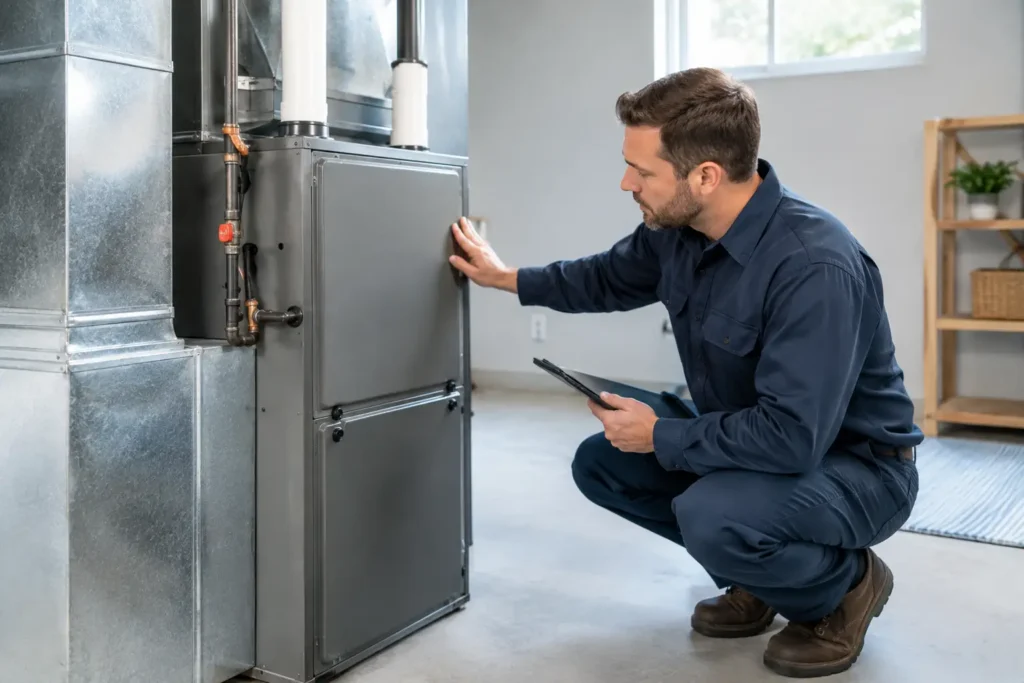
A furnace that runs constantly but leaves some rooms chilly is doing more than testing your patience. It may be using more fuel than necessary to deliver less comfort. Furnace efficiency is about how effectively your system turns fuel into usable heat – and how well that heat reaches and stays in the spaces you use.
For Northern Virginia homeowners and property managers, efficiency matters most when temperatures drop and the heating system starts carrying the load every day. The right maintenance and operating habits can reduce waste, protect equipment, and help you spot a growing problem before it turns into a no-heat emergency.
What Furnace Efficiency Actually Means
A furnace’s efficiency rating is commonly expressed as AFUE, or Annual Fuel Utilization Efficiency. This percentage estimates how much of the fuel your furnace consumes becomes heat for your building over a typical year.
For example, an 80% AFUE furnace converts about 80 cents of every fuel dollar into heat. The remaining portion is lost through the combustion and venting process. A 95% AFUE model loses less fuel, which can make a meaningful difference in operating costs for a home or commercial space that relies heavily on heat.
That rating is useful, but it does not tell the whole story. A high-efficiency furnace can still perform poorly if it is overdue for service, incorrectly sized, or struggling with airflow problems. Conversely, an older furnace may not match the efficiency of new equipment but can still provide dependable heat when it is clean, properly adjusted, and repaired promptly.
Where Furnace Efficiency Is Commonly Lost
Many heating complaints start with a simple issue that has been allowed to build over time. Restricted airflow, worn components, and inconsistent thermostat settings all force a furnace to work harder than it should.
A dirty air filter is one of the most common culprits. When the filter becomes clogged, the blower has to push against added resistance. Heat may take longer to circulate, some rooms can feel uneven, and the system may run longer cycles. Check the filter monthly during the heating season and replace it as needed based on the filter type, household conditions, and manufacturer guidance.
Thermostat settings also affect real-world efficiency. Raising the temperature several degrees at once does not heat the building faster. It only tells the furnace to run longer until it reaches that setting. A consistent schedule is usually more economical than frequent large adjustments, especially in occupied spaces with predictable hours.
Wear inside the furnace matters, too. A malfunctioning igniter, weak blower motor, dirty flame sensor, or improperly adjusted burner can reduce reliability and increase fuel use. These are not issues to ignore until the unit stops. A furnace may continue producing heat while operating inefficiently or unsafely.
Practical Ways to Improve Furnace Efficiency
Start with the actions that protect airflow and make the biggest difference without requiring a major equipment decision. Keep supply and return vents open and clear of furniture, rugs, boxes, and curtains. Closing vents in unused rooms may seem like a way to save money, but it can create pressure imbalances and may not reduce operating costs as expected.
Use your thermostat with a plan. For many households, lowering the temperature modestly while everyone is away or asleep can reduce heating demand. The best setback depends on the building, insulation, occupancy, and how quickly the space recovers. If a large temperature setback leaves the home uncomfortable for hours each morning, a smaller adjustment may be more practical.
Pay attention to the building around the furnace. Air leaks around windows, exterior doors, attic openings, and other gaps can make even an efficient system work overtime. Sealing obvious drafts and maintaining adequate insulation helps retain the heat you are already paying for.
For commercial properties, scheduling should match the building’s actual use. Heating an empty office, retail space, or common area at full occupancy temperatures all night can add unnecessary operating cost. Programmable or smart controls can help, but the schedule needs occasional review when business hours or occupancy patterns change.
Why Annual Maintenance Protects Efficiency
Preventive furnace maintenance is not just a tune-up before winter. It is an opportunity for a trained technician to inspect the system’s operation, identify worn parts, verify safe combustion, and address issues that can waste energy or lead to a breakdown.
During a professional visit, the technician may inspect electrical connections, safety controls, burners, ignition components, the blower assembly, condensate drainage on high-efficiency equipment, and thermostat operation. The exact work depends on the furnace type and condition. The goal is not to replace parts unnecessarily. It is to catch developing concerns while a repair is usually simpler and less disruptive.
For property managers, regular service also supports planning. A technician can document the unit’s condition, identify equipment nearing the end of its useful life, and help you avoid being forced into a replacement decision during the coldest week of the year.
Repair or Replace? The Furnace Efficiency Decision
Repair is often the right choice when the furnace is relatively young, the issue is isolated, and the unit has otherwise been reliable. A failed igniter or control component does not automatically mean you need new equipment. A qualified diagnosis should come before a replacement recommendation.
Replacement becomes more worth considering when repairs are recurring, heating bills have risen without another clear cause, comfort is inconsistent, or the furnace is approaching the later part of its expected service life. Older systems can also lack the efficiency, safety features, and control options available on current equipment.
The highest AFUE rating is not automatically the best fit for every property. High-efficiency furnaces typically cost more upfront and have specific installation requirements. The appropriate choice depends on your current equipment, fuel type, home or building layout, budget, anticipated length of ownership, and local installation conditions.
Sizing is equally important. An oversized furnace can heat the space too quickly, leading to short cycling and uneven temperatures. An undersized unit may struggle during cold weather and run for extended periods. Proper replacement should be based on a professional load calculation, not simply matching the size of the old furnace.
Signs Your Furnace May Be Wasting Energy
Watch for changes in how your system sounds, runs, and heats. Longer-than-usual cycles, frequent cycling, new noises, uneven room temperatures, and a sudden increase in energy costs all deserve attention. So do repeated thermostat adjustments because the space never feels consistently comfortable.
Some warning signs require faster action. If you smell gas, notice a burning odor that does not quickly fade after seasonal startup, see soot around the unit, or have a carbon monoxide alarm activate, leave the area if necessary and follow emergency safety guidance. Do not continue operating a furnace you believe may be unsafe.
A yellow burner flame rather than a steady blue flame can also point to a combustion issue. Do not attempt to adjust burners yourself. Furnaces involve fuel, electricity, high temperatures, and combustion gases, so diagnosis and repair should be handled by trained professionals.
Get Better Performance Before Winter Stress Builds
Efficient heating is rarely the result of one dramatic change. It comes from a clean filter, clear airflow, sensible thermostat settings, a well-maintained furnace, and timely attention when performance changes. Those basics protect comfort whether you manage one home, several rental properties, or a busy commercial space.
If your furnace is running longer, heating unevenly, or becoming unreliable, schedule an inspection before a minor issue becomes an after-hours emergency. AAA HVAC provides qualified heating service across Northern Virginia, with responsive support when dependable heat cannot wait. A clear diagnosis can help you decide whether a repair, maintenance visit, or planned replacement is the most sensible next step.