

How to Choose an Air Conditioner for Your Space
September 8, 2026
Furnace Replacement Examples for Northern Virginia Homes
September 9, 2026

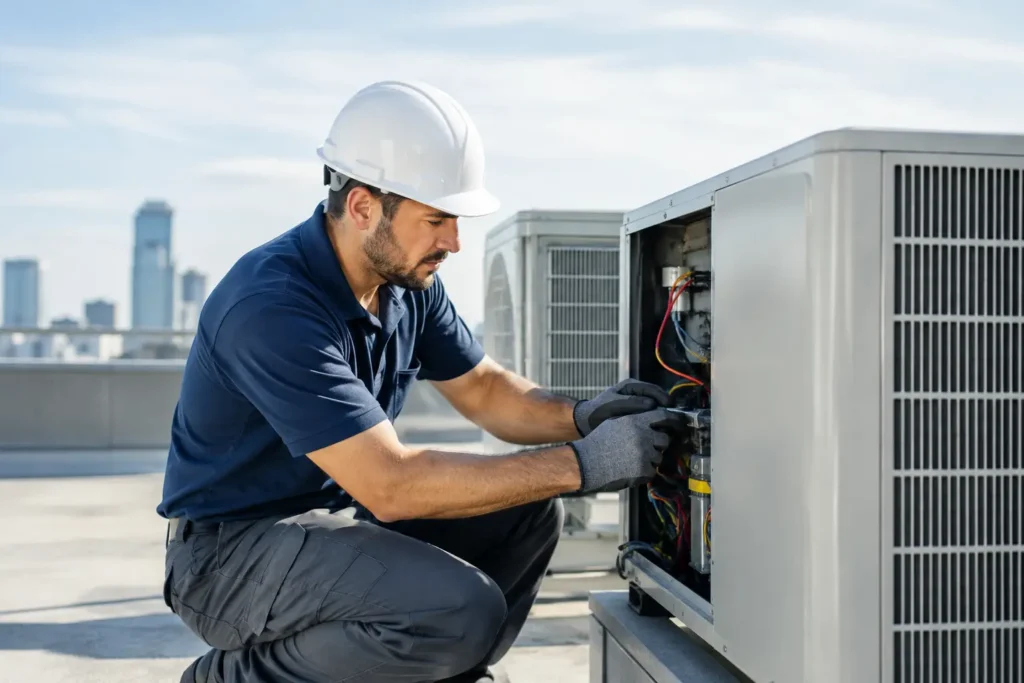
A furnace can seem fine right up until the first cold night exposes a problem: bedrooms that will not warm up, a system that runs constantly, or a repair that costs more than expected. These furnace replacement examples show how homeowners and property managers can assess the real condition of an aging system and make a practical decision before a no-heat emergency forces one.
When Furnace Replacement Makes More Sense Than Repair
A repair is often the right answer when the furnace is relatively new and the issue is isolated. A failed igniter, pressure switch, thermostat problem, or worn blower component does not automatically mean the entire system is finished. A qualified technician should identify the cause, explain the repair, and help you understand what comes next.
Replacement becomes more likely when repairs are recurring, the equipment is near or beyond its expected service life, or performance has become unreliable. Many gas furnaces last roughly 15 to 20 years with proper maintenance, although operating conditions and upkeep matter. A furnace that needs a major repair at 17 years old deserves a different conversation than one that needs the same repair at 7 years old.
The goal is not to replace equipment simply because it is old. It is to avoid putting significant money into a system that can no longer provide dependable, safe, and efficient heat.
Furnace Replacement Examples Homeowners Commonly Face
Example 1: The 18-year-old furnace with a cracked heat exchanger
A homeowner notices a faint odor when the heat starts and hears unusual rattling from the furnace cabinet. During service, the technician finds a cracked heat exchanger. Because the heat exchanger separates combustion gases from the air moving through the home, a crack is a serious safety concern that requires immediate attention.
In this case, replacement is generally the responsible option. Replacing a heat exchanger on an older furnace can be expensive, and other aged components may fail soon afterward. Installing a properly sized new furnace gives the homeowner a safer system, a new equipment warranty, and a chance to improve efficiency.
Example 2: The furnace that has needed three repairs in two winters
A 14-year-old furnace has received a new igniter, a control board repair, and a blower motor replacement over the past two heating seasons. Each repair solved an immediate issue, but the homeowner is now spending money repeatedly while still worrying whether the system will start during the next cold snap.
There is no universal number of repairs that demands replacement. Still, a pattern of breakdowns is meaningful. If the next repair is costly, comparing that expense with the remaining life expectancy and efficiency of a new unit is usually wise. This is especially true for households that need reliable heat for children, older adults, or anyone working from home.
Example 3: The oversized furnace in a renovated home
A homeowner finishes a basement, replaces older windows, and adds insulation in the attic. The existing furnace was already oversized for the original home, and now it heats the space too quickly. The system turns on and off in short cycles, rooms have uneven temperatures, and the air feels dry.
The answer is not automatically a larger furnace. In fact, oversizing is a common replacement mistake. A professional load calculation considers the home’s square footage, insulation, windows, ceiling height, layout, and local climate conditions. The right size runs long enough to distribute heat consistently without excessive cycling.
Example 4: The furnace with rising utility bills and weak comfort
A homeowner in Northern Virginia sees higher winter gas bills even though the thermostat setting has not changed. The furnace still produces heat, but the second floor stays cold, the system runs longer than it used to, and some rooms are uncomfortable.
Higher bills alone do not prove that a furnace must be replaced. Thermostat settings, insulation gaps, air leaks, and mechanical issues can also affect costs. But if an older, lower-efficiency furnace is struggling to maintain temperature after it has been serviced, replacement may reduce operating costs and restore comfort. The best recommendation should address the full situation, not just sell the highest-efficiency model available.
Example 5: The property manager facing repeated no-heat calls
A small office building or rental property has an aging furnace that fails intermittently. Tenants report cold rooms, staff lose time waiting for service, and every breakdown becomes an urgent scheduling problem. The equipment may still be repairable, but its unreliability is disrupting the property.
For commercial and rental decisions, downtime has a cost beyond the repair invoice. Replacement can be justified when it protects occupancy, tenant satisfaction, and business operations. Property managers should also consider access for installation, equipment lead times, maintenance requirements, and whether replacement can be scheduled before the heating season.
What a Furnace Replacement Should Include
A proper furnace replacement is more than removing one cabinet and setting another in its place. The installation should begin with an evaluation of the home or building, the existing equipment, and the comfort concerns that prompted the call.
The technician should verify fuel type, venting requirements, available space, electrical connections, condensate drainage for high-efficiency units, and thermostat compatibility. They should also determine the correct capacity rather than relying only on the size of the old furnace. If the previous furnace was installed decades ago, it may not be sized appropriately for the building as it stands today.
Installation quality affects performance just as much as equipment selection. Proper airflow, safe gas connections, venting, startup testing, and thermostat setup are essential. A new furnace should be commissioned carefully, not simply switched on and left for the homeowner to figure out.
Choosing Efficiency Without Overspending
Furnace efficiency is commonly expressed as AFUE, or Annual Fuel Utilization Efficiency. A higher AFUE rating means more of the fuel used is converted into usable heat. High-efficiency furnaces can lower fuel use, but the right choice depends on the home, budget, expected length of ownership, and installation requirements.
For example, a homeowner planning to remain in the house for many years may see value in a higher-efficiency model with comfort features such as variable-speed airflow. Someone preparing a property for sale may need dependable, code-compliant equipment without paying for features they may not fully benefit from.
High-efficiency equipment can also require changes to venting and drainage. Those added installation needs are not a reason to avoid it, but they should be clearly explained in the estimate. A trustworthy recommendation includes the trade-offs upfront.
Questions to Ask Before Approving a Replacement
Before choosing a system, ask why replacement is being recommended now, what repair options are still available, and how long those repairs are reasonably expected to last. Ask whether a load calculation will be used to size the new equipment and whether the estimate includes installation, permits when required, startup testing, and removal of the existing unit.
It also helps to ask what warranty coverage applies to parts and labor, what maintenance is recommended, and whether financing is available for qualifying projects. Clear answers make it easier to compare proposals based on long-term value instead of the lowest initial number.
AAA HVAC can evaluate an aging furnace, explain the repair-versus-replacement decision in plain language, and install equipment selected for the comfort needs of your home or property. NATE-certified technicians and responsive service help reduce the uncertainty when dependable heat matters most.
If your furnace is showing its age, schedule an evaluation before the next breakdown chooses the timing for you. A planned replacement gives you time to weigh options, protect your budget, and head into cold weather with confidence.

Related posts

Furnace Replacement Examples for Northern Virginia Homes
September 9, 2026
Water Heater Replacement Guide for Homeowners
September 10, 2026

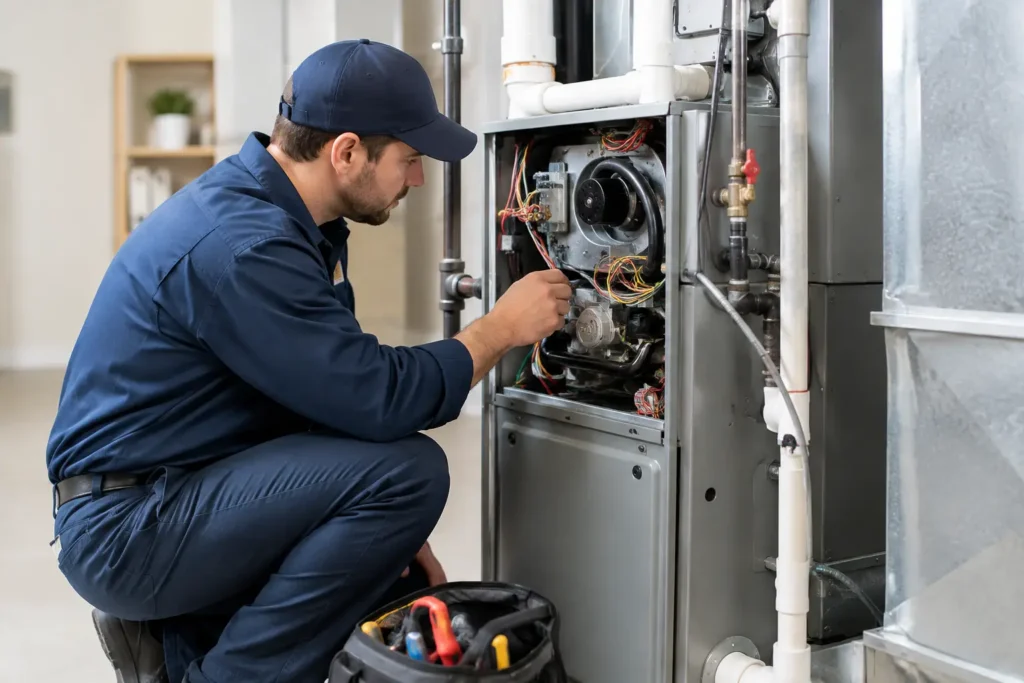
A furnace can seem fine right up until the first cold night exposes a problem: bedrooms that will not warm up, a system that runs constantly, or a repair that costs more than expected. These furnace replacement examples show how homeowners and property managers can assess the real condition of an aging system and make a practical decision before a no-heat emergency forces one.
When Furnace Replacement Makes More Sense Than Repair
A repair is often the right answer when the furnace is relatively new and the issue is isolated. A failed igniter, pressure switch, thermostat problem, or worn blower component does not automatically mean the entire system is finished. A qualified technician should identify the cause, explain the repair, and help you understand what comes next.
Replacement becomes more likely when repairs are recurring, the equipment is near or beyond its expected service life, or performance has become unreliable. Many gas furnaces last roughly 15 to 20 years with proper maintenance, although operating conditions and upkeep matter. A furnace that needs a major repair at 17 years old deserves a different conversation than one that needs the same repair at 7 years old.
The goal is not to replace equipment simply because it is old. It is to avoid putting significant money into a system that can no longer provide dependable, safe, and efficient heat.
Furnace Replacement Examples Homeowners Commonly Face
Example 1: The 18-year-old furnace with a cracked heat exchanger
A homeowner notices a faint odor when the heat starts and hears unusual rattling from the furnace cabinet. During service, the technician finds a cracked heat exchanger. Because the heat exchanger separates combustion gases from the air moving through the home, a crack is a serious safety concern that requires immediate attention.
In this case, replacement is generally the responsible option. Replacing a heat exchanger on an older furnace can be expensive, and other aged components may fail soon afterward. Installing a properly sized new furnace gives the homeowner a safer system, a new equipment warranty, and a chance to improve efficiency.
Example 2: The furnace that has needed three repairs in two winters
A 14-year-old furnace has received a new igniter, a control board repair, and a blower motor replacement over the past two heating seasons. Each repair solved an immediate issue, but the homeowner is now spending money repeatedly while still worrying whether the system will start during the next cold snap.
There is no universal number of repairs that demands replacement. Still, a pattern of breakdowns is meaningful. If the next repair is costly, comparing that expense with the remaining life expectancy and efficiency of a new unit is usually wise. This is especially true for households that need reliable heat for children, older adults, or anyone working from home.
Example 3: The oversized furnace in a renovated home
A homeowner finishes a basement, replaces older windows, and adds insulation in the attic. The existing furnace was already oversized for the original home, and now it heats the space too quickly. The system turns on and off in short cycles, rooms have uneven temperatures, and the air feels dry.
The answer is not automatically a larger furnace. In fact, oversizing is a common replacement mistake. A professional load calculation considers the home’s square footage, insulation, windows, ceiling height, layout, and local climate conditions. The right size runs long enough to distribute heat consistently without excessive cycling.
Example 4: The furnace with rising utility bills and weak comfort
A homeowner in Northern Virginia sees higher winter gas bills even though the thermostat setting has not changed. The furnace still produces heat, but the second floor stays cold, the system runs longer than it used to, and some rooms are uncomfortable.
Higher bills alone do not prove that a furnace must be replaced. Thermostat settings, insulation gaps, air leaks, and mechanical issues can also affect costs. But if an older, lower-efficiency furnace is struggling to maintain temperature after it has been serviced, replacement may reduce operating costs and restore comfort. The best recommendation should address the full situation, not just sell the highest-efficiency model available.
Example 5: The property manager facing repeated no-heat calls
A small office building or rental property has an aging furnace that fails intermittently. Tenants report cold rooms, staff lose time waiting for service, and every breakdown becomes an urgent scheduling problem. The equipment may still be repairable, but its unreliability is disrupting the property.
For commercial and rental decisions, downtime has a cost beyond the repair invoice. Replacement can be justified when it protects occupancy, tenant satisfaction, and business operations. Property managers should also consider access for installation, equipment lead times, maintenance requirements, and whether replacement can be scheduled before the heating season.
What a Furnace Replacement Should Include
A proper furnace replacement is more than removing one cabinet and setting another in its place. The installation should begin with an evaluation of the home or building, the existing equipment, and the comfort concerns that prompted the call.
The technician should verify fuel type, venting requirements, available space, electrical connections, condensate drainage for high-efficiency units, and thermostat compatibility. They should also determine the correct capacity rather than relying only on the size of the old furnace. If the previous furnace was installed decades ago, it may not be sized appropriately for the building as it stands today.
Installation quality affects performance just as much as equipment selection. Proper airflow, safe gas connections, venting, startup testing, and thermostat setup are essential. A new furnace should be commissioned carefully, not simply switched on and left for the homeowner to figure out.
Choosing Efficiency Without Overspending
Furnace efficiency is commonly expressed as AFUE, or Annual Fuel Utilization Efficiency. A higher AFUE rating means more of the fuel used is converted into usable heat. High-efficiency furnaces can lower fuel use, but the right choice depends on the home, budget, expected length of ownership, and installation requirements.
For example, a homeowner planning to remain in the house for many years may see value in a higher-efficiency model with comfort features such as variable-speed airflow. Someone preparing a property for sale may need dependable, code-compliant equipment without paying for features they may not fully benefit from.
High-efficiency equipment can also require changes to venting and drainage. Those added installation needs are not a reason to avoid it, but they should be clearly explained in the estimate. A trustworthy recommendation includes the trade-offs upfront.
Questions to Ask Before Approving a Replacement
Before choosing a system, ask why replacement is being recommended now, what repair options are still available, and how long those repairs are reasonably expected to last. Ask whether a load calculation will be used to size the new equipment and whether the estimate includes installation, permits when required, startup testing, and removal of the existing unit.
It also helps to ask what warranty coverage applies to parts and labor, what maintenance is recommended, and whether financing is available for qualifying projects. Clear answers make it easier to compare proposals based on long-term value instead of the lowest initial number.
AAA HVAC can evaluate an aging furnace, explain the repair-versus-replacement decision in plain language, and install equipment selected for the comfort needs of your home or property. NATE-certified technicians and responsive service help reduce the uncertainty when dependable heat matters most.
If your furnace is showing its age, schedule an evaluation before the next breakdown chooses the timing for you. A planned replacement gives you time to weigh options, protect your budget, and head into cold weather with confidence.