Water Heater Noises: What Each Sound Means
September 25, 2026
Furnace Installation Financing Guide for Homeowners
September 27, 2026

A blower motor problem rarely starts with a complete shutdown. More often, you notice weak airflow at the vents, rooms that never quite catch up to the thermostat, or a new squealing sound when the system starts. Knowing when to replace a failing blower motor can prevent a small mechanical issue from becoming a no-heat or no-cooling emergency.
The blower motor is the part of your furnace or air handler that moves conditioned air through the system. When it cannot run at the correct speed, your equipment may still produce heated or cooled air, but that comfort never reaches the rooms that need it. For homeowners and property managers, prompt diagnosis protects both comfort and the larger HVAC system.
Signs You May Need to Replace a Failing Blower Motor
Reduced airflow is one of the most common warning signs. If several vents have noticeably less air coming from them, do not assume the system simply needs to work harder. A weak motor, failing capacitor, damaged blower wheel, or control issue can all affect circulation.
Unusual sounds deserve attention, especially if they occur every time the system turns on. Screeching, grinding, rattling, or persistent humming can point to worn bearings, a motor struggling to start, or a loose component. A brief change in sound during a normal startup is not always alarming. Loud or worsening noise is different and should be checked.
You may also see symptoms at the thermostat. The system may run longer than usual without reaching the set temperature, cycle on and off unpredictably, or shut down after overheating. In a furnace, restricted airflow can cause safety controls to stop the heating cycle. In an air conditioning system, poor airflow can contribute to frozen coils and reduced cooling performance.
Other signs include a burning odor, frequent tripped breakers, an HVAC cabinet that feels unusually hot, or a blower that runs only intermittently. Turn the system off and request service if you smell electrical burning, see smoke, or hear a loud electrical hum without the blower starting. Continuing to operate the equipment can damage additional parts.
Why Blower Motor Problems Should Not Wait
A blower motor does more than make a room feel comfortable. It helps manage heat inside the equipment. When airflow drops, the system can operate under added strain, and critical components may run hotter or longer than intended.
For a homeowner, that can mean higher utility bills and a sudden breakdown during a Northern Virginia heat wave or cold spell. For a commercial property, inconsistent airflow can affect tenants, employees, customers, and temperature-sensitive spaces. Waiting may seem practical if the system is still running, but intermittent operation tends to become less reliable, not more reliable.
There is a cost consideration, too. Replacing a motor before it fails completely may allow for a scheduled repair instead of an after-hours emergency. The right decision still depends on the diagnosis, the age and condition of the equipment, and whether the motor is the only issue.
Motor Replacement vs. a Smaller Repair
Not every blower issue requires a new motor. A qualified technician should test the electrical supply, motor capacitor where applicable, relay or control board, wiring connections, and blower wheel before recommending replacement. A failed capacitor can mimic a failing motor, while a dirty or obstructed blower assembly can reduce airflow without a motor failure.
If testing confirms that the motor windings are failing, the bearings are worn, or the motor cannot maintain its required speed, replacement is usually the dependable repair. The technician will also verify the correct motor type, horsepower, voltage, speed settings, rotation, and mounting configuration. These details matter. Installing a motor that is not properly matched to the equipment can lead to poor airflow, excess noise, shortened component life, or safety issues.
In some systems, particularly newer variable-speed equipment, the blower motor and its electronic module work as a matched assembly. These repairs can cost more than a standard single-speed motor replacement, but they can also provide better airflow control and efficiency when operating correctly. Your technician should explain what failed, what part is needed, and what the repair includes before work begins.
What Happens During Blower Motor Replacement
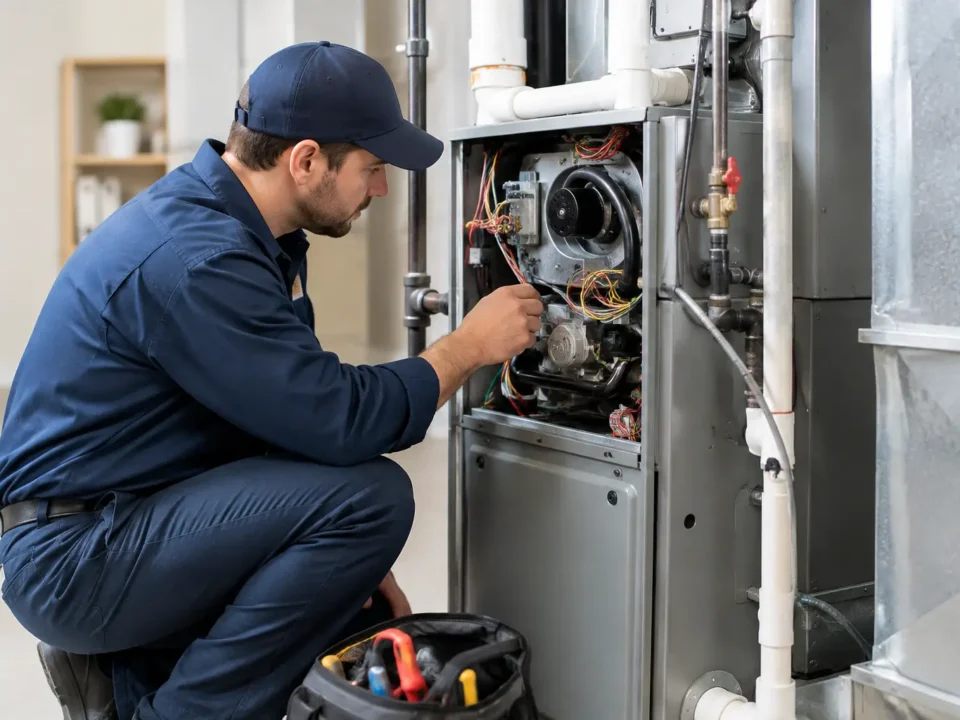
A professional blower motor replacement starts with confirming the diagnosis, not simply swapping parts. The technician shuts off power to the unit, inspects the blower compartment, and checks for contributing issues such as heat damage, loose wiring, debris, or a damaged wheel.
After removing the blower assembly, the technician replaces the failed motor and any related components that testing shows are no longer reliable. Depending on the system, that may include a capacitor, mounting hardware, or wiring connectors. The blower wheel is inspected for balance and secure attachment before the assembly is returned to the unit.
The job is not complete when the motor turns on. Proper service includes testing the startup sequence, verifying airflow, checking amp draw, confirming the correct speed setting, and ensuring the system cycles normally in heating or cooling mode. This final testing is what helps prevent a return visit for the same comfort problem.
Is It Safe to Replace a Blower Motor Yourself?
For most property owners, this is not a recommended do-it-yourself repair. HVAC equipment contains high-voltage electrical connections, stored electrical charge in capacitors, sharp metal panels, and components that must be matched precisely. A motor may look straightforward to replace, but one incorrect wire connection or incorrect speed setting can create a larger repair.
There is also the diagnostic question. Replacing a motor without testing the controls and electrical components can leave the actual cause unresolved. If a failing control board or voltage issue damaged the original motor, a new motor could be put at risk.
Changing a clean, correctly sized air filter is a practical step homeowners can take to support airflow. Beyond that, unusual sounds, weak airflow, or intermittent blower operation are best handled by a trained HVAC technician.
When Replacement May Lead to a Bigger Equipment Decision
A blower motor repair can be the right choice for a system that is otherwise in good condition. If the equipment is relatively new, has been maintained, and has no major performance issues, replacing the motor is often a sensible way to restore dependable operation.
The calculation changes when the system is older and has a history of costly repairs, uneven heating or cooling, refrigerant concerns, or declining efficiency. In that situation, ask for clear repair and replacement options rather than making a rushed decision. A trustworthy contractor should explain the expected repair, the condition of the overall system, and whether investing in replacement would better serve your long-term comfort and budget.
For businesses and multi-unit properties, it is also worth considering operational risk. Scheduling a repair before peak demand may be preferable to waiting for an unexpected failure that disrupts occupants or business hours.
Protect the New Motor With Routine Service
A new blower motor performs best when the rest of the system supports it. Regular maintenance gives a technician the chance to inspect electrical connections, measure motor performance, verify airflow, and spot developing problems before they interrupt service.
Filter changes also matter. A clogged filter restricts airflow and can force the blower to work harder. Follow the filter schedule recommended for your household, occupancy level, pets, and system type. If filters seem to load up unusually fast or airflow stays weak after a filter change, schedule an inspection instead of repeatedly replacing filters without answers.
AAA HVAC provides prompt HVAC diagnostics and repairs for homeowners and commercial properties across Northern Virginia. When a blower starts making noise, loses speed, or stops moving air altogether, a NATE-certified technician can identify the cause and recommend a clear path forward. Acting while the system is still showing early warning signs gives you more options and a better chance of restoring comfort on your schedule.