Heat Pump Versus Air Conditioner
July 10, 2026
Commercial HVAC Refrigerant Changes: What to Do
July 12, 2026
A service visit should do more than replace a filter and leave you with a receipt. When homeowners and facility managers ask, “what does HVAC maintenance include,” the useful answer is a thorough check of the equipment’s safety, cleanliness, performance, and condition – before a small issue becomes a no-heat or no-cooling call.
For homes and businesses in Northern Virginia, preventive maintenance is especially valuable. Summer humidity puts air conditioners under real strain, while winter temperatures demand dependable furnace performance. A qualified technician helps protect comfort, reduce avoidable breakdowns, and identify concerns while there is still time to plan a repair.
What Does HVAC Maintenance Include?
The exact checklist depends on whether the system is a furnace, heat pump, central air conditioner, boiler, rooftop unit, or another type of equipment. System age, manufacturer requirements, and whether it serves a home or commercial space also matter. Still, a proper maintenance appointment generally includes inspection, cleaning, testing, and adjustments where appropriate.
A technician should inspect the equipment and its major components for visible wear, loose connections, damaged wiring, corrosion, water leaks, unusual noise, and signs that a repair may be needed. They should also evaluate whether the system is operating as it should, rather than simply assuming that a unit that turns on is in good condition.
Maintenance is not the same as a repair visit. If a technician finds a failed part, refrigerant leak, unsafe condition, or a component outside normal operating limits, that work may require approval and additional service. The advantage is that you get clear information before the problem has a chance to interrupt your day.
Air Conditioning Maintenance Tasks
Cooling maintenance focuses on airflow, electrical performance, drainage, and heat transfer. Dirt, restricted airflow, and overlooked drainage problems are common reasons an air conditioner loses efficiency or stops cooling when temperatures climb.
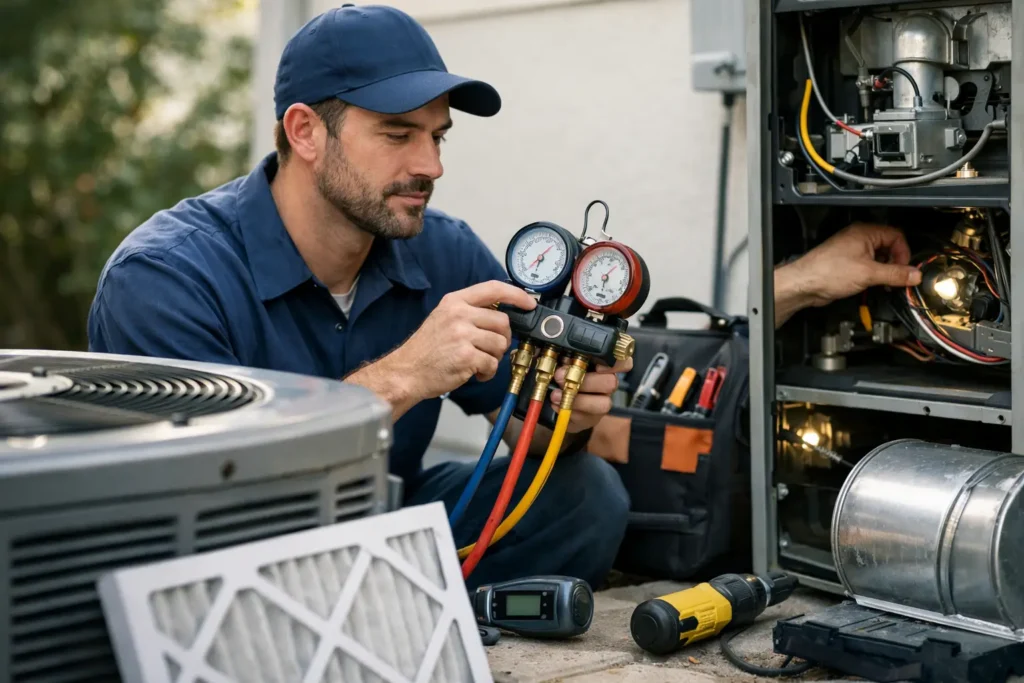
During a typical air conditioning tune-up, a technician may:
- Inspect and clean the outdoor condenser coil when needed
- Check the indoor evaporator area and accessible components for dirt or ice buildup
- Inspect the condensate drain line and pan for clogs, leaks, or standing water
- Check refrigerant-related performance readings and look for signs of a leak
- Test capacitors, contactors, wiring, disconnects, and other electrical components
- Inspect the blower, motor, and fan operation
- Confirm the thermostat is communicating and cycling the system correctly
The outdoor unit deserves special attention. Leaves, grass clippings, mulch, and other debris can restrict airflow around the condenser. A technician can identify whether the coil needs cleaning and whether landscaping or stored items are crowding the equipment. Homeowners can help by keeping the area around the outdoor unit clear, but should avoid trying to straighten fins or work inside electrical panels themselves.
Drainage is another important part of cooling maintenance. In the Reston area, air conditioners remove a significant amount of moisture from indoor air during humid weather. If the condensate line clogs, it can cause water damage, shut the system down, or create conditions that need immediate attention.
Furnace and Heating Maintenance Tasks
Heating maintenance centers on safe combustion, airflow, ignition, and dependable operation. A furnace can appear to work normally while developing issues that affect efficiency, reliability, or safety. That is why an annual professional inspection is a sensible step before heating season.
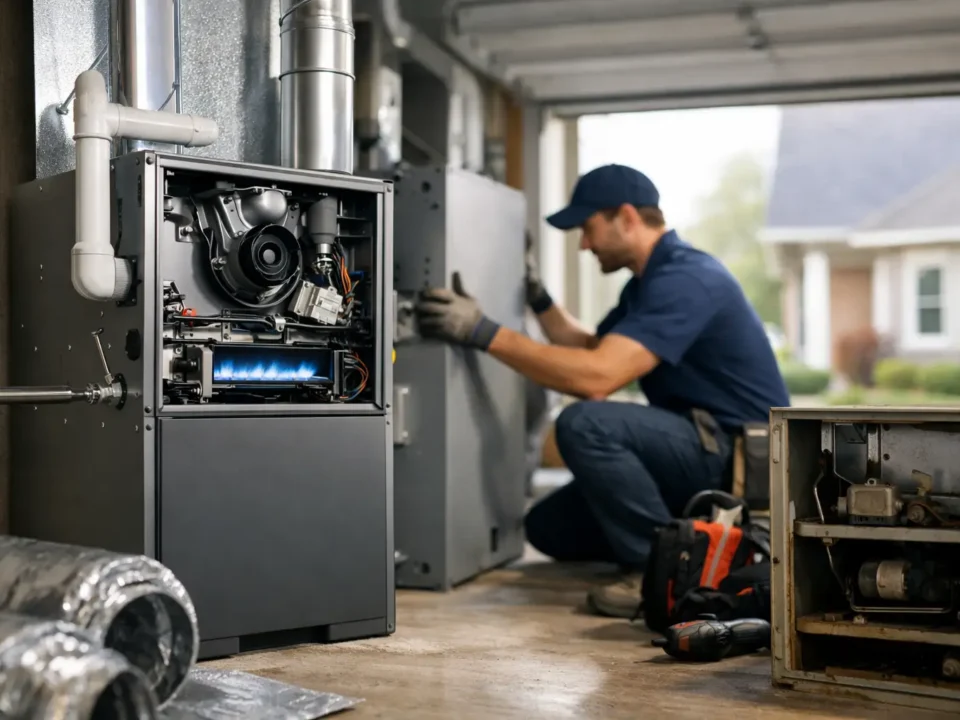
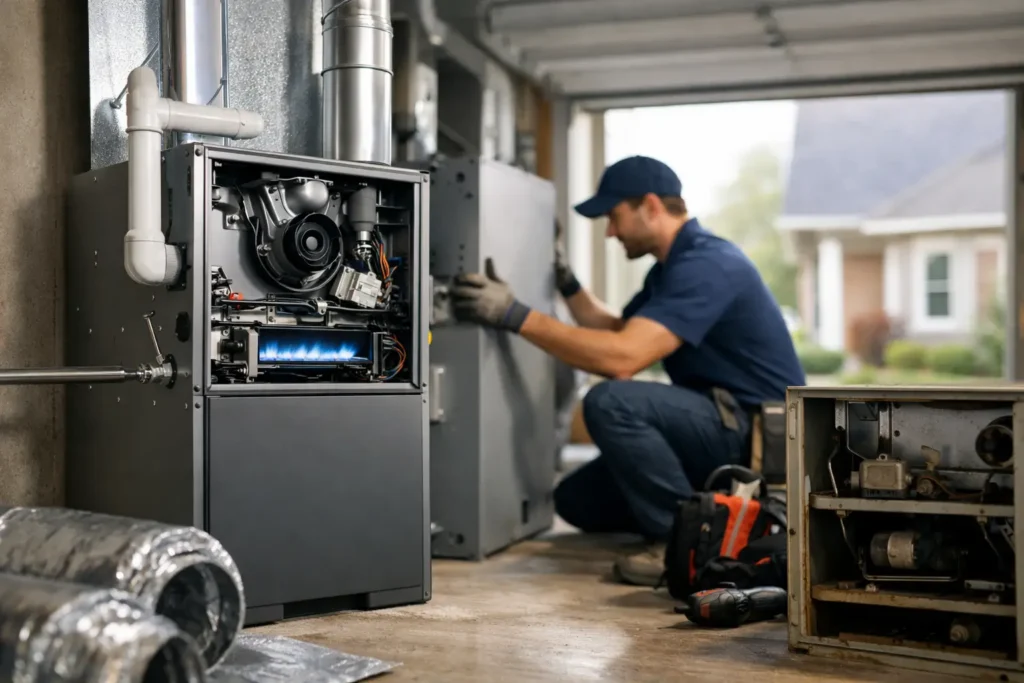
For a gas furnace, maintenance commonly includes inspecting the burner assembly, ignition system, flame sensor, heat exchanger area, venting, gas connections, and safety controls. The technician may clean components that collect dust or residue and test the furnace through a heating cycle.
The heat exchanger is particularly important. It separates combustion gases from the air circulating through your home or business. A technician looks for warning signs such as corrosion, cracks, improper flame behavior, or abnormal carbon monoxide readings. If an unsafe condition is found, the unit may need to be shut down until repairs or replacement can be addressed.
For heat pumps, heating maintenance overlaps with air conditioning service because the same system provides both functions. The technician checks the reversing valve operation, defrost cycle, airflow, electrical components, and overall heating performance. Because a heat pump runs year-round, it often benefits from two maintenance visits each year.
Airflow, Filters, and Thermostats Matter More Than Many People Think
Many comfort complaints begin with airflow. A clogged filter can make the blower work harder, reduce heating and cooling capacity, increase energy use, and contribute to frozen coils or overheating. Maintenance includes checking the filter condition and confirming that the filter type and size are appropriate for the system.
Filter replacement may be included in a maintenance plan if the correct filter is available, or it may be billed separately. It depends on the service agreement and filter type. Standard one-inch filters are straightforward, while media filters, high-efficiency filters, and commercial applications can have different requirements.
A technician should also inspect accessible duct connections, supply and return airflow, and blower performance. This does not necessarily mean full duct cleaning is part of every tune-up. Duct cleaning is a separate service in many cases and should be recommended only when there is a clear reason, such as heavy contamination, construction dust, or evidence of a specific problem.
Thermostat testing is equally practical. The technician checks that the thermostat starts and stops the system properly, reflects a reasonable temperature, and switches between heating and cooling modes as expected. For smart thermostats, the review may include settings that affect comfort, schedules, or equipment operation.
Electrical and Safety Checks Protect the Equipment
HVAC systems rely on electrical components that experience repeated starts, stops, heat, and vibration. Loose wiring, worn contactors, weak capacitors, and failing motors can lead to sudden breakdowns. Maintenance allows a technician to inspect these components and flag concerns before a minor electrical issue leaves the system unable to start.
Safety checks vary by equipment type. On a furnace, this can include verifying safety switches, checking venting, and evaluating combustion-related operation. On an air conditioner or heat pump, it can include inspecting disconnects, electrical connections, and drainage protections. Commercial equipment may require additional checks because of larger loads, rooftop exposure, multiple zones, or more complex controls.
No maintenance visit can guarantee that a part will never fail. Components can wear out without much warning, especially in older equipment. But regular testing makes surprises less likely and gives you a better basis for deciding whether to repair, monitor, or replace a system.
How Often Should HVAC Maintenance Be Scheduled?
Most homes should schedule professional HVAC maintenance at least once a year. Systems with separate air conditioning and furnace equipment are often best served by two visits: cooling maintenance in spring and heating maintenance in fall. This timing gives technicians a chance to identify issues before the busiest weather arrives.
Heat pumps typically benefit from twice-yearly service because they operate during both cooling and heating seasons. Commercial properties may need more frequent maintenance depending on operating hours, occupancy, equipment type, indoor air quality needs, and the cost of an unexpected shutdown. A restaurant, office building, retail space, or multi-unit property can have much more at stake than a single missed comfort cycle.
Older systems may also need closer attention. Maintenance will not make an aging unit new again, but it can help you track declining performance, recurring repairs, and replacement timing without making a rushed decision during an emergency.
What You Can Do Between Professional Visits
There are a few practical steps that help maintain performance between appointments. Check filters regularly and replace them on the schedule recommended for your system and household conditions. Keep supply vents and return grilles open and unobstructed. Outside, remove leaves and debris near the condenser and make sure water drains away from the unit.
Pay attention to changes in operation. New rattling sounds, weak airflow, warm air during cooling, frequent cycling, water near indoor equipment, rising utility bills, or uneven temperatures are reasons to call for service. Waiting for the system to fail completely can turn a manageable repair into an urgent situation.
For homeowners, property managers, and business owners, maintenance is a practical way to protect a significant investment and keep comfort predictable. AAA HVAC technicians can help you understand your equipment’s condition, explain any findings clearly, and address concerns before the next weather extreme puts your system to the test.