Are Heat Pumps Right for Northern Virginia Homes?
September 21, 2026
A furnace that starts its blower but never produces heat can turn into an urgent problem quickly, especially during a Northern Virginia cold snap. Before you try to troubleshoot furnace ignition failure, focus on safety: do not remove sealed gas components, bypass safety switches, or repeatedly reset the furnace if you smell gas. A few basic checks can identify a simple issue, but a failed ignition system often needs a qualified HVAC technician.
Start With the Safe, Simple Checks
Your furnace has to complete a sequence before it can heat your home or building. The thermostat calls for heat, the unit verifies safe operating conditions, the inducer motor starts, the igniter heats or sparks, the gas valve opens, and a flame sensor confirms that burners are lit. If any step fails, the furnace will stop the process to prevent unsafe operation.
Start at the thermostat. Make sure it is set to Heat rather than Cool or Off, and set the temperature at least 3 to 5 degrees above the current room temperature. Replace weak batteries if your thermostat uses them. A thermostat with a blank display, loose wire connection, or incorrect schedule can appear to be a furnace problem when it is not.
Next, check the furnace power switch, which often looks like a standard wall switch near the equipment. Confirm that the furnace circuit breaker has not tripped. If it has tripped more than once, leave it off and arrange service. Repeated breaker trips can point to an electrical or mechanical fault that should not be ignored.
Then inspect the air filter. A heavily clogged filter restricts airflow and can cause overheating, limit-switch shutdowns, and erratic furnace operation. Replace a dirty filter with the correct size and type. This may not repair a damaged igniter, but it can eliminate an airflow problem that is preventing normal heating cycles.
What the Furnace Is Telling You
Many modern furnaces have a small diagnostic light visible through an access panel. The light may flash a pattern that corresponds to a fault code printed on the furnace cabinet or in the owner’s manual. Count the flashes before turning power off. A code can help distinguish between an ignition issue, pressure-switch problem, rollout safety concern, or limit-switch fault.
Do not assume that every code identifies the failed part. A furnace may report “ignition lockout,” for example, because it attempted to light several times and did not sense a stable flame. The underlying cause could be a worn igniter, dirty flame sensor, restricted intake or exhaust pipe, gas supply issue, or control-board problem.
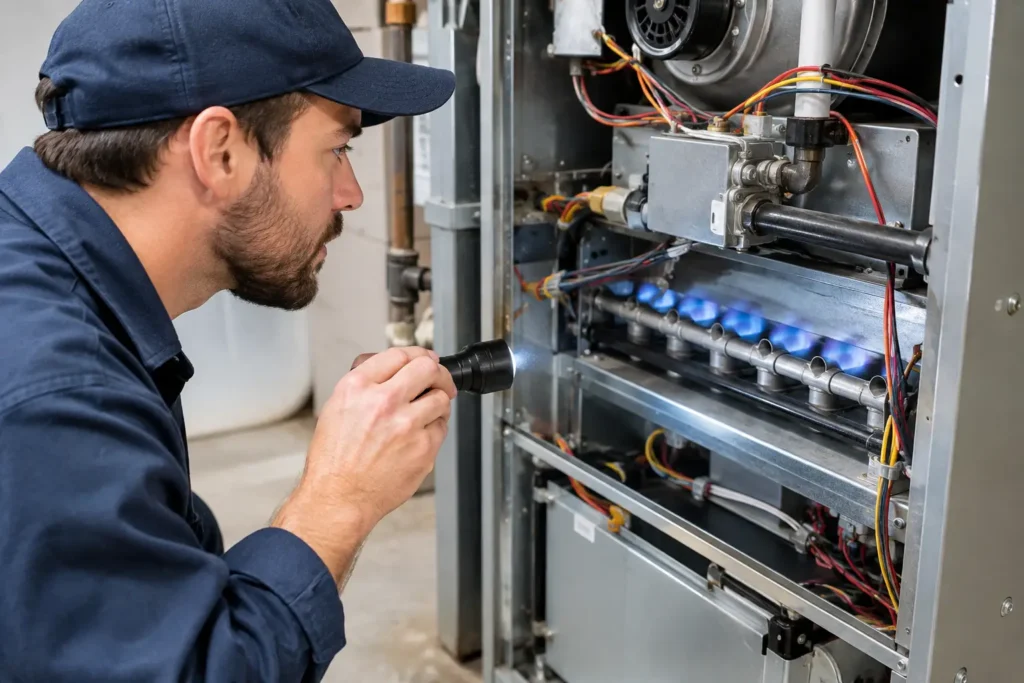
Pay attention to where the sequence stops. If nothing happens when the thermostat calls for heat, the issue may be power, thermostat, transformer, or control related. If the inducer motor starts but the igniter never glows or sparks, the igniter, pressure switch circuit, safety switch, or control board may be involved. If the burners light briefly and then go out, a dirty or failing flame sensor is a common possibility.
These observations are useful for a service technician and can make the repair visit more efficient. They are not a reason to defeat a safety control or keep cycling the unit until it finally runs.
Common Causes of Furnace Ignition Failure
A failed hot-surface igniter
Many gas furnaces use a hot-surface igniter, a small component that glows bright orange or white-hot just before the burners light. These igniters are fragile and wear out over time. If the furnace reaches the ignition stage but the igniter does not glow, it may be cracked, burned out, or not receiving the correct voltage.
This is a common repair, but it is not always a simple part swap. The correct replacement must match the furnace model, and improper handling can damage a new igniter. The furnace must also be tested afterward to confirm that the ignition sequence and safety controls operate correctly.
A dirty flame sensor
The flame sensor does a different job than the igniter. Once the burners light, it proves that a flame is present. A sensor coated with oxidation or residue may fail to detect the flame, causing the gas valve to shut off within seconds. You may hear the furnace start, see flames briefly, and then watch the unit shut down and try again.
A trained technician can clean and test the flame sensor while checking burner condition, grounding, gas pressure, and combustion performance. Replacing parts without testing can mask the real cause and lead to another no-heat call later.
A blocked vent or pressure-switch issue
High-efficiency furnaces use intake and exhaust pipes, often routed outside through a side wall. Leaves, snow, ice, insect nests, or debris near the outdoor terminations can interfere with airflow. When the furnace cannot verify proper venting, it may not allow ignition.
From outside, visually check whether the pipe openings are visibly blocked. Do not insert tools deep into the pipes or disconnect venting indoors. If the obstruction is not obvious, or if the furnace continues to show a pressure-related fault, schedule a professional inspection. Venting problems involve combustion gases and require careful diagnosis.
Gas supply or gas-valve problems
If other gas appliances are not operating, there may be a supply issue. Check that the furnace gas shutoff valve is in the open position, with the handle parallel to the gas line. If you are not certain, stop there and call for help rather than forcing or adjusting the valve.
If you smell gas, hear hissing, or suspect a leak, leave the building immediately. Do not operate switches, use a phone inside, light a flame, or attempt a repair. Call the gas utility or emergency services from a safe location, then arrange HVAC service once the area has been cleared.
Condensate drainage problems
A high-efficiency furnace creates condensate during normal operation. A clogged drain line, blocked trap, or failed condensate pump can trigger a safety switch and stop the ignition cycle. This problem is especially likely when the furnace has been off for months or when debris has accumulated in the drain system.
Because condensate systems connect closely to pressure-switch operation and venting, a technician should inspect the complete setup instead of simply clearing a tube and hoping for the best.
A Safe Reset Can Help Once
After completing the basic checks, you can try one controlled reset. Turn the furnace power switch off, wait about 30 seconds, then turn it back on. This may clear a temporary control-board lockout after a brief power interruption or unsuccessful cycle.
Watch the next startup from a safe distance. If the furnace lights and stays on, continue to monitor it through a full heating cycle. If it fails again, shuts off after a few seconds, makes unusual booming or scraping sounds, or displays the same code, stop resetting it. Multiple restart attempts can worsen wear on ignition components and delay a needed repair.
Never reset a furnace that has a gas odor, visible soot, scorched wiring, water around electrical components, or a carbon monoxide alarm event. Those conditions require immediate professional attention.
When to Call for Furnace Ignition Repair
A no-heat situation calls for service when the basic checks do not restore normal operation, but some signs make the decision especially clear. Call a qualified technician if the furnace repeatedly enters lockout, the burners will not ignite, flames appear briefly and disappear, the unit trips its breaker, or the diagnostic code points to a safety or venting issue.
Property managers and commercial operators should act promptly as well. An intermittent furnace may still leave occupants uncomfortable, expose pipes or equipment to cold conditions, and create avoidable downtime. Document the fault code, note when the issue began, and let the technician know whether the building has experienced power interruptions, construction dust, recent filter changes, or unusual weather conditions.
A NATE-certified technician can test ignition voltage, flame-sensor signal, pressure-switch operation, gas pressure, control-board outputs, and combustion safety. That process identifies whether the issue is a replaceable wear part or a larger system problem. It also avoids the common mistake of replacing an igniter when the furnace is actually shutting down because of airflow, venting, or control failure.
Prevent the Next Ignition Problem
Most ignition failures are not completely predictable, but annual heating maintenance lowers the chance of a no-heat surprise. A professional tune-up can catch a weakening igniter, dirty flame sensor, blocked condensate drain, loose electrical connection, or burner issue before the first severe cold night.
Between visits, replace filters on schedule, keep the furnace area clear, and check outdoor intake and exhaust terminations after heavy snow or storms. Keep carbon monoxide alarms installed and tested according to their manufacturer instructions. These small habits protect both equipment reliability and the people who depend on it.
When heat is not coming on, the goal is not to guess at parts. It is to restore safe, dependable operation quickly. AAA HVAC provides responsive furnace repair for homeowners and businesses that need a clear diagnosis and a repair they can trust.