Commercial HVAC Downtime: How to Prevent It
October 20, 2026
How to Choose AC Installation Financing Plans
October 24, 2026
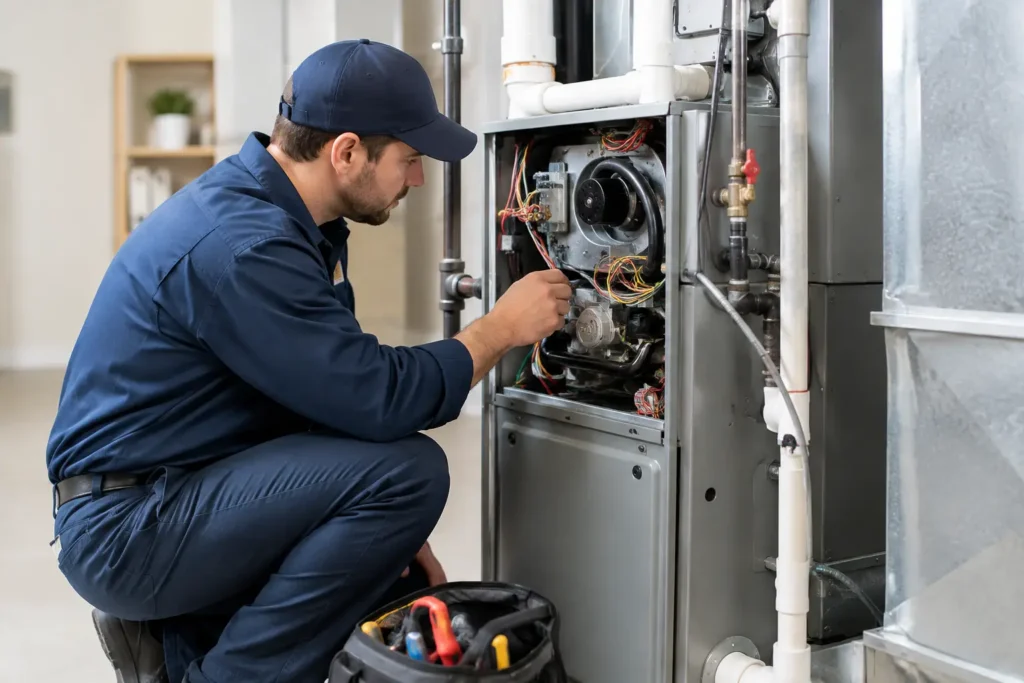
A furnace rarely chooses a convenient time to stop working. It often happens during a cold Northern Virginia night, before a busy workday, or when tenants and customers need a comfortable building. Knowing when furnace repair is needed can help you respond quickly, protect your property, and avoid turning a manageable issue into a no-heat emergency.
Some heating problems have a simple cause, such as a thermostat setting or a tripped breaker. Others involve combustion, electrical components, or a failing safety control that should be handled by a qualified technician. The goal is not to diagnose every part yourself. It is to recognize what is safe to check, what needs prompt service, and when waiting is not worth the risk.
Furnace Repair Warning Signs You Should Not Ignore
A furnace does not need to fail completely before it needs attention. In many cases, it gives clear warnings that performance is slipping. Catching those warnings early can reduce the chance of a midwinter breakdown and may limit damage to major components.
Uneven heating is one common sign. If bedrooms are cold while the main living area feels warm, the issue may involve airflow, equipment sizing, thermostat operation, or the furnace itself. A single cold room does not always mean the furnace is failing, but a system that cannot maintain consistent comfort deserves an inspection.
Strange sounds also matter. A brief sound at startup can be normal, depending on the equipment. Persistent banging, screeching, rattling, booming, or grinding is not something to ignore. Loose panels can rattle, but loud or repeated noises can also point to a worn motor, ignition problem, blower issue, or delayed burner ignition.
Pay attention to how often the system runs. A furnace that cycles on and off every few minutes may be overheating, receiving poor airflow, or responding to a thermostat or control problem. On the other hand, a furnace that runs constantly but does not raise the indoor temperature may be losing efficiency or struggling to produce enough heat.
Other warning signs include weak airflow from vents, a sudden increase in utility costs, frequent thermostat adjustments, and air that feels cooler than expected. These symptoms are not always urgent, but they are good reasons to schedule service before the coldest stretch of the season.
When Furnace Trouble Becomes an Emergency
Certain situations call for immediate action instead of troubleshooting. If you smell gas, leave the building, avoid using electrical switches or open flames, and contact the gas utility or emergency services from a safe location. Do not try to restart the furnace or locate the leak yourself.
A carbon monoxide alarm should also be treated seriously. Get everyone outside, call emergency services or the appropriate utility provider, and do not reenter until authorities say it is safe. Carbon monoxide has no reliable odor or color, which is why working detectors near sleeping areas and heating equipment are essential.
Turn the furnace off and request professional help if you see soot around the unit, notice a burning smell that does not fade quickly, or find water pooling around the equipment. Water may come from a condensation issue on a high-efficiency furnace, a drainage problem, or another component that requires inspection. Soot or ongoing burning odors can indicate a combustion or electrical concern that should not wait.
For commercial properties, the decision should account for occupants and operations. A heating issue in an office, retail location, rental property, or shared workspace can affect comfort, equipment, and business continuity. Fast service is especially valuable when a small problem could become a tenant complaint, a closure risk, or a larger repair after hours.
Safe Checks Before You Schedule Furnace Repair
Before calling for service, there are a few basic checks that homeowners and facility managers can make safely. These steps do not replace a professional diagnosis, but they can rule out simple interruptions.
First, confirm the thermostat is set to Heat and that the temperature setting is above the current room temperature. If the thermostat uses batteries, replace them if the display is dim, blank, or unresponsive. Check that the furnace power switch is on and that the relevant circuit breaker has not tripped. If a breaker trips again after you reset it once, leave it alone and call for service.
Next, inspect the air filter. A heavily clogged filter can restrict airflow, contribute to overheating, and make the system work harder than it should. Replace a disposable filter with the correct size and rating, then note whether heating performance improves. Do not run the furnace without a filter or use a filter that does not fit properly.
If you have a gas furnace, make sure the gas supply has not been intentionally shut off. Do not attempt to relight or manually adjust internal furnace components unless your equipment instructions specifically direct you to do so and conditions are safe. Modern furnaces use ignition and safety systems that need professional testing when they fail.
Avoid repeatedly cycling the power or pressing the reset button. Repeated resets can mask the underlying problem and may place additional stress on the equipment. A technician can read fault codes, test the ignition sequence, check safety controls, and identify whether the issue is a minor repair or part of a larger equipment concern.
What a Professional Furnace Repair Visit Should Include
Good furnace repair is more than getting heat back for the moment. A qualified technician should identify why the failure occurred, explain the recommended repair in understandable terms, and test the system after the work is complete.
Depending on the symptoms, a service visit may include checking the thermostat, electrical connections, blower operation, ignition components, flame sensor, burners, pressure switches, limit switches, condensate drainage, and venting. The technician may also measure temperature rise and assess whether restricted airflow or an overlooked maintenance issue is contributing to the problem.
For gas-fired equipment, safe combustion matters as much as warm air. The technician should inspect for proper burner operation and look for signs that could affect safe performance. This is one reason furnace repairs should not be treated as a general DIY project. The right repair protects both comfort and the people in the building.
Ask for a clear explanation of the findings before authorizing major work. You should understand what failed, whether the repair is expected to restore reliable operation, and whether other parts show significant wear. A dependable service provider should be direct about costs, options, and what can reasonably wait versus what needs attention now.
Repair or Replace: How to Make the Right Call
Not every furnace problem means replacement is necessary. A newer unit with a failed igniter, sensor, capacitor, or control component can often be repaired cost-effectively. Regular maintenance, a good service history, and strong heating performance after repair all support keeping the existing system.
Replacement becomes more reasonable when repairs are frequent, the furnace is near the end of its expected service life, or a major component has failed. Age alone is not the only factor. The condition of the equipment, repair cost, efficiency, availability of parts, and your plans for the property all matter.
For a home you plan to keep for years, a high-efficiency replacement may offer better comfort and lower operating costs over time. For a commercial property, reliability and downtime may carry more weight than the lowest immediate cost. A professional assessment can help compare the near-term repair expense with the long-term value of replacement without pressuring you into a decision that does not fit your situation.
Preventing the Next No-Heat Call
The best furnace repair is often the one that never becomes urgent. Schedule preventive maintenance before heavy heating season when possible. A professional tune-up gives a technician the chance to identify worn parts, verify safe operation, and address small concerns before the furnace is under daily demand.
Between visits, change filters on schedule, keep the area around the furnace clear, and pay attention to new noises or changes in performance. Test carbon monoxide alarms regularly and replace batteries as needed. These simple habits support safer operation and make it easier to spot a problem early.
When your furnace is not keeping up, do not wait for a complete shutdown to get answers. AAA HVAC provides responsive service from certified technicians, helping homeowners and property managers make informed repair decisions and restore dependable heat. A prompt call today can protect tomorrow’s comfort.