Tankless Versus Traditional Water Heaters Compared
November 5, 2026
A new air conditioner is a major comfort decision, especially when a Reston summer is already testing an older system. This Reston AC installation guide explains what should happen before, during, and after installation so you can make a confident choice, avoid costly shortcuts, and get cooling that performs when you need it.
For homeowners, property managers, and business owners, the goal is not simply to replace equipment. It is to install a properly matched system that controls temperature, manages humidity, and operates efficiently in the space it serves.
Start With the Right Reason for Replacement
An AC repair can be the smart choice when the issue is isolated and the equipment still has useful life left. But replacement deserves consideration when repairs are becoming frequent, comfort is uneven, energy bills are climbing without another explanation, or the system is roughly 10 to 15 years old.
A major repair on an older unit is not automatically a reason to replace it. The deciding factors include the repair cost, the condition of the compressor and coil, refrigerant availability, maintenance history, and whether the system has been keeping up during high-demand days. A qualified technician should explain those trade-offs clearly rather than push one answer for every home.
Commercial properties need the same practical review, with an added focus on uptime. If a failing system affects tenants, customers, equipment, or employee comfort, planned replacement can be less disruptive than waiting for an emergency breakdown.
A Reston AC Installation Guide Starts With Sizing
The most common installation mistake is choosing an air conditioner based on the size of the existing unit or a rough square-foot estimate. Neither approach is dependable. A system can be oversized even if the old system had the same capacity, particularly if insulation, windows, occupancy, or additions have changed since the previous installation.
A contractor should perform a load calculation that accounts for the home or building’s square footage, layout, insulation levels, window exposure, ceiling height, air leakage, and local design temperatures. This process identifies how much cooling the space actually needs.
An oversized system may cool quickly but shut off too soon. That short cycling can leave humidity high, create hot and cold areas, and add wear to components. An undersized system may run for long periods and still struggle during peak heat. Correct sizing supports comfort, efficiency, and equipment life.
Consider the Full System, Not Just the Outdoor Unit
Central air conditioning depends on indoor and outdoor components working together. Replacing only the outdoor condenser while keeping an older, incompatible indoor coil can reduce performance and create reliability concerns. The refrigerant type, coil capacity, blower performance, electrical requirements, and controls must be compatible.
The condition and design of the existing air distribution system also matter. If certain rooms are always warmer, airflow may be restricted, return-air capacity may be limited, or ducts may need targeted repairs or modifications. A new high-efficiency condenser cannot solve every comfort issue by itself.
Choose Equipment Based on Your Priorities
There is no single best air conditioner for every Reston property. The right choice depends on your budget, the space, expected length of ownership, comfort preferences, and available electrical capacity.
Standard efficiency systems often make sense for a straightforward replacement with a lower upfront cost. Higher-efficiency options can reduce operating costs and may offer better humidity control, quieter operation, and more consistent temperatures. The payback period depends on how much you use the system, utility rates, and the condition of the equipment being replaced.
Many property owners also compare a traditional central AC system with a heat pump. A heat pump provides cooling in summer and can provide heating in cooler months. It can be a strong option for year-round efficiency, but the best configuration depends on the existing heating setup and the building’s needs.
Ask for an estimate that identifies the equipment model, efficiency rating, warranty terms, scope of work, and any recommended upgrades. A clear proposal makes it easier to compare options on more than the initial price.
What a Professional Installation Should Include
A quality AC installation is a process, not a quick equipment swap. Before work begins, the installation team should confirm the system selection, inspect the location, review access needs, and protect the work area.
Local permitting and code requirements may apply, particularly when electrical connections, equipment location, or system capacity changes are involved. Proper permits and inspections help protect the property owner and verify that the installation meets applicable standards. Your contractor should explain who handles this step.
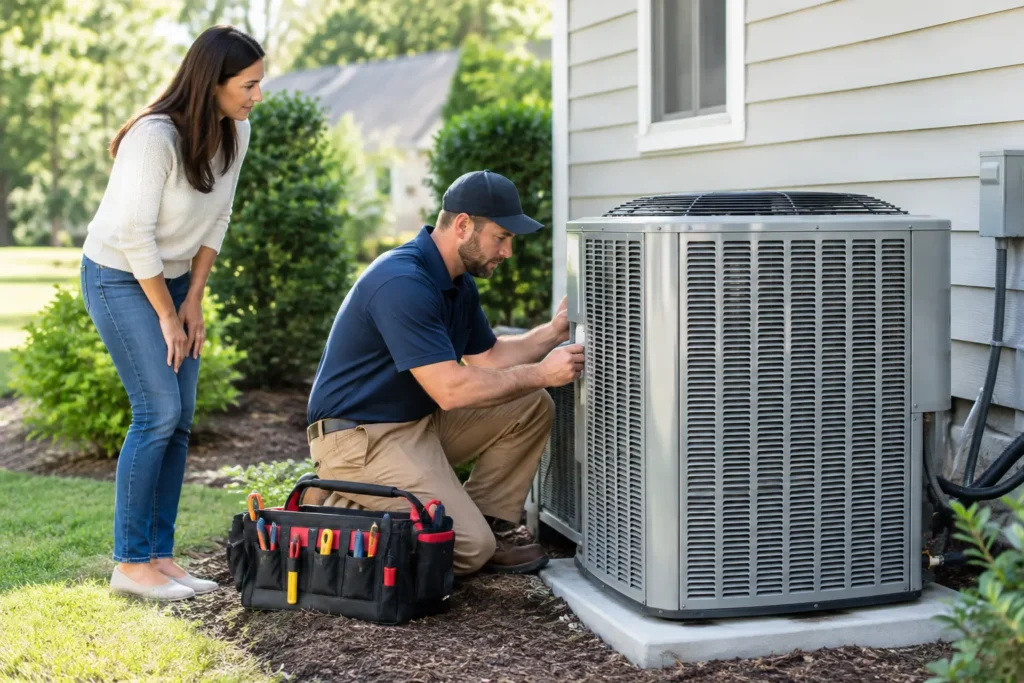
During installation, technicians typically remove the old equipment, place and secure the new outdoor unit, connect refrigerant lines, install or match the indoor coil, complete required electrical connections, and address condensate drainage. The outdoor unit needs adequate clearance for airflow and service access. The condensate drain must be properly routed and tested because drainage problems can lead to water damage or unexpected shutdowns.
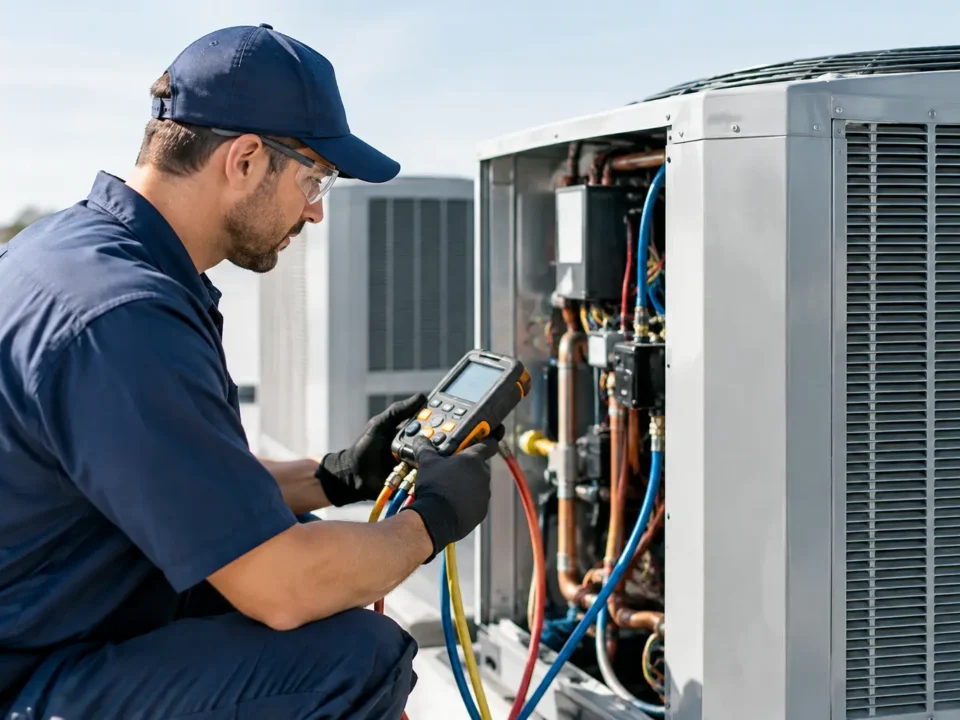
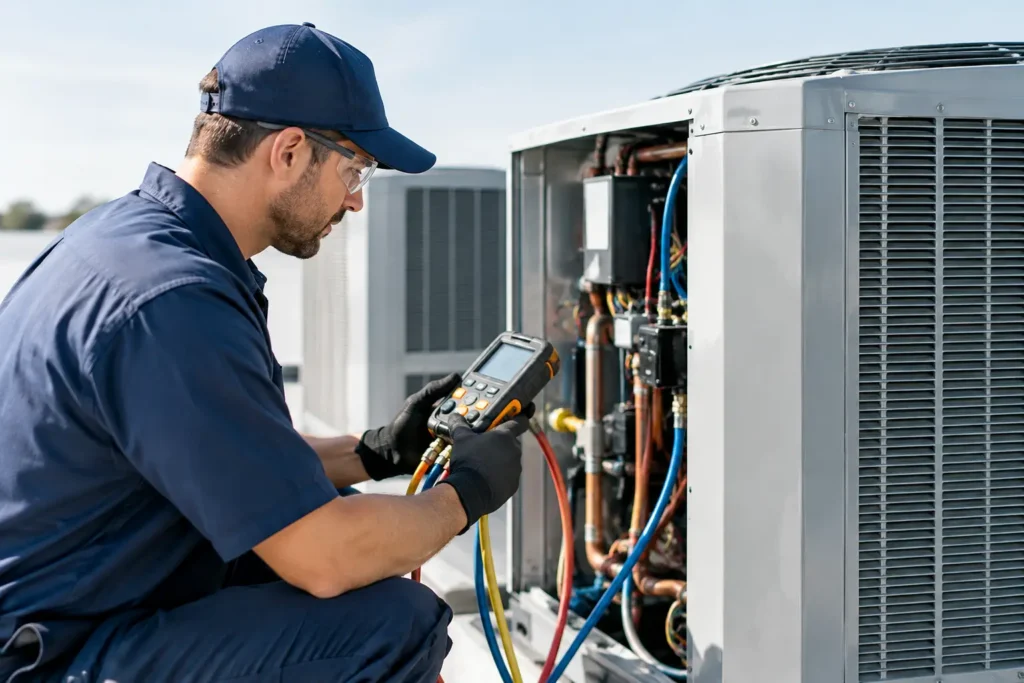
The technical startup work matters just as much as the visible installation. Refrigerant lines should be pressure-tested and evacuated before refrigerant is introduced or adjusted. Airflow should be checked, electrical readings verified, and thermostat operation confirmed. These details directly affect capacity, efficiency, and long-term reliability.
Prepare Your Home or Property Before Installation Day
A little preparation helps the visit move efficiently. Clear a path to the indoor equipment, thermostat, electrical panel, and outdoor unit. Move fragile items from nearby work areas, and make arrangements for pets. For commercial spaces, notify staff or tenants if access to mechanical rooms, ceilings, or work areas will be affected.
Plan for a temporary interruption in cooling. Most residential replacements can often be completed in a day, but timing varies based on access, system complexity, required modifications, weather, and permit coordination. More extensive commercial projects may require a phased plan to limit disruption.
If you have comfort concerns that were never resolved by the old system, mention them before installation begins. Tell the technician about rooms that run warm, humidity issues, unusual noise, or inconsistent airflow. Those details are useful when evaluating whether the new system needs adjustments beyond the basic replacement scope.
Questions to Ask Before You Approve the Work
You do not need to be an HVAC expert to evaluate an installation proposal. Ask how the system was sized, whether the indoor and outdoor equipment are matched, and what work is included beyond setting the equipment in place. Ask whether permits are required, how the drain line will be handled, and what warranty coverage applies to parts and labor.
It is also reasonable to ask who will perform the work. NATE-certified technicians demonstrate tested knowledge of HVAC service and installation practices. For a system expected to serve your property for years, qualified installation is worth prioritizing.
Price matters, but the lowest estimate may exclude necessary work, use mismatched components, or leave important performance checks unfinished. Compare scope, equipment, warranty, and contractor accountability alongside the total cost. Financing may also make a properly designed replacement more manageable than delaying until a complete failure.
Protect the Investment After Installation
Once the system is running, ask the technician to show you how to use the thermostat, where the filter is located, and what routine care is expected. Keep outdoor equipment clear of leaves, grass clippings, and stored items. Check the filter regularly and replace it according to the manufacturer’s recommendation and household conditions.
Schedule preventive maintenance before heavy cooling season. Maintenance gives a technician the opportunity to inspect electrical components, verify refrigerant performance, clean critical areas, and catch small concerns before they become a no-cooling call. For commercial properties, a documented maintenance schedule also supports budgeting and operational planning.
AAA HVAC provides professional AC installation and responsive service throughout Northern Virginia, with trained technicians focused on getting the details right from system selection through startup. If your current system is unreliable or your comfort needs have changed, schedule an evaluation before the next stretch of heat turns a manageable project into an urgent one.
A well-installed air conditioner should fade into the background: steady temperatures, controlled humidity, and dependable operation when the forecast climbs. That is the standard worth expecting from your next installation.