Reston AC Installation Guide for Homeowners
November 7, 2026
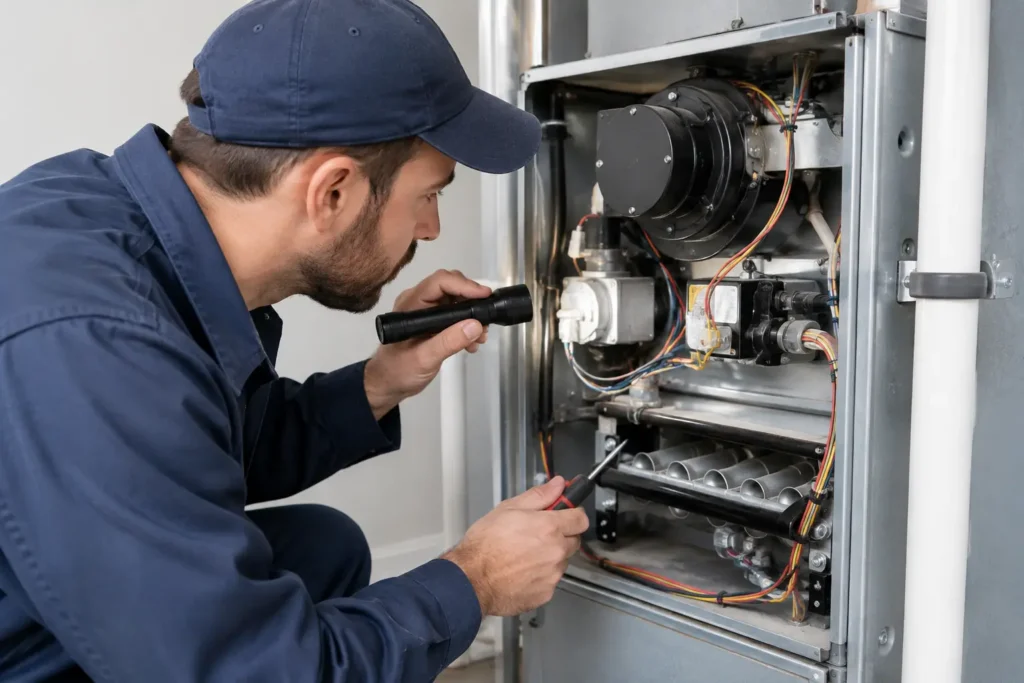
A furnace that starts its blower but never delivers heat can make a Northern Virginia home or business uncomfortable fast. To diagnose furnace ignition failure, pay attention to what happens in the first few minutes of a heating call: whether the thermostat responds, the inducer motor starts, the igniter glows, and the burners light. Those details can help identify the issue, but they also show when it is time to stop troubleshooting and schedule qualified repair.
What Furnace Ignition Failure Looks Like
Modern gas furnaces follow a controlled startup sequence. When the thermostat calls for heat, the furnace checks safety switches, starts the draft inducer, heats an igniter or produces a spark, opens the gas valve, and verifies a stable flame. If any step fails, the control board shuts the system down to prevent unsafe operation.
The most common symptom is a furnace that blows cool air or runs briefly before shutting off. You may also hear repeated clicking, notice that the blower comes on without burner flames, or see the furnace attempt to start two or three times and then lock out. A lockout means the system has stopped trying after unsuccessful ignition attempts. Turning the furnace off and back on may reset it temporarily, but it does not correct the underlying cause.
Do not repeatedly reset a furnace that will not ignite. Repeated attempts can put extra strain on components, and a gas odor or a carbon monoxide alarm requires immediate action, not more testing. Leave the building if you smell gas, avoid switches and open flames, and contact your gas utility or emergency services from a safe location.
Safe Checks Before You Diagnose Furnace Ignition Failure
A few basic checks can rule out simple problems without opening the furnace cabinet or touching gas-line components. Start at the thermostat. Confirm it is set to Heat, the temperature setting is several degrees above the room temperature, and the batteries are fresh if the model uses them. A thermostat that is set to Fan On can make it seem as though the furnace is running when it is only circulating room-temperature air.
Next, check the furnace power switch and the dedicated circuit breaker. Most furnaces have a wall-style service switch nearby that can be turned off accidentally. If the breaker has tripped, reset it once. If it trips again, leave it off and call for service. An electrical fault should be diagnosed by a trained HVAC technician.
Check the air filter as well. A heavily clogged filter can restrict airflow enough to overheat the furnace and trigger a limit switch. Replace a dirty filter with the correct size and type, then allow the furnace to cool before trying one normal heating cycle. Keep supply and return vents open and clear of furniture, rugs, or stored items.
For high-efficiency furnaces, look outside at the intake and exhaust pipes. Snow, leaves, nests, or debris can block the venting and prevent safe ignition. Clear only visible, accessible material around the pipe ends. Do not disassemble venting or force objects into the pipes.
Follow the Startup Sequence From a Safe Distance
After completing those checks, observe one heating cycle from outside the furnace cabinet. The order of events matters more than any single noise.
Nothing Happens When the Thermostat Calls for Heat
If the furnace is completely silent, the issue may involve thermostat settings, power, a control board, or a safety switch. Verify the simple items above, but do not bypass a door switch or safety device to make the furnace run. Furnace panels must be installed correctly for normal operation, and safety interlocks are there for a reason.
The Inducer Runs, but the Igniter Does Not Glow
Many furnaces use a hot surface igniter that glows bright orange before the gas valve opens. If you hear the small inducer fan but do not see the igniter glow, possible causes include a failed igniter, pressure-switch issue, wiring problem, or control-board fault.
A dirty or blocked condensate drain can also affect some high-efficiency systems. Because drain and pressure-switch issues are connected to safe combustion and venting, they are best handled by a technician rather than guessed at.
The Igniter Glows, but the Burners Never Light
When an igniter glows but no flame appears, the furnace may not be receiving gas, the gas valve may not be opening, or the control board may not be sending the proper signal. First, confirm that other gas appliances in the building are working, if applicable. Do not attempt to adjust the furnace gas valve or disconnect gas piping.
This symptom warrants professional diagnosis. A technician can safely test gas pressure, electrical signals, ignition components, and the furnace’s sequence of operation.
The Burners Light, Then Shut Off Within Seconds
A furnace that lights briefly and then loses its flame often has a dirty or failing flame sensor. The flame sensor confirms that burner flame is present. If it cannot verify flame, the furnace shuts off the gas as a safety measure.
Although flame-sensor cleaning is frequently discussed as a do-it-yourself task, it is easy to damage the sensor, reinstall it incorrectly, or miss another cause such as burner contamination, grounding problems, or a failing control board. If your furnace repeatedly lights and shuts down, professional service is the dependable choice.
Read the Furnace Error Code Carefully
Many furnaces have a small viewing window with a blinking LED diagnostic light. The flash pattern may point to a pressure switch, limit switch, ignition, flame-sensing, or control-board issue. Find the error-code chart on the furnace panel or in the owner documentation, then write down the exact pattern before resetting the unit.
An error code is a useful clue, not a final diagnosis. For example, a pressure-switch code may result from a blocked intake, venting restriction, condensate issue, weak inducer motor, damaged tubing, or the switch itself. Replacing a part based only on the code can waste money and leave the real problem unresolved.
When to Call for Furnace Repair Right Away
Some furnace issues should never wait for a convenient time. Schedule same-day professional help if the system repeatedly fails to ignite, trips a breaker, produces burning odors, makes unusual banging or grinding sounds, or leaves a home or commercial space without reliable heat. If you notice soot, yellow burner flames instead of mostly blue flames, a gas smell, or a carbon monoxide alarm, treat the situation as urgent.
A NATE-certified HVAC technician can test the complete ignition sequence, inspect combustion and venting, verify safety controls, and explain the repair before work begins. That approach is especially valuable for property managers and business owners, where heating downtime can affect tenants, employees, customers, and equipment.
Prevent the Next Ignition Problem
Ignition failures are not always avoidable, especially in older furnaces with worn parts. Still, routine maintenance reduces the chance of an unexpected no-heat call. Replacing filters on schedule, keeping vents and exterior furnace terminations clear, and arranging annual heating maintenance helps catch weak igniters, dirty flame sensors, drainage concerns, and airflow restrictions before they cause a shutdown.
Maintenance also helps with replacement planning. If an older furnace needs frequent ignition-related repairs, has rising operating costs, or cannot maintain consistent comfort, repair may not be the best long-term value. The right choice depends on the system’s age, condition, repair cost, efficiency, and how reliably it serves the space.
When your furnace will not light, the safest next step is usually simple: record the symptoms, stop repeated reset attempts, and have a qualified professional identify the actual cause. AAA HVAC provides responsive furnace repair for homeowners and businesses that need dependable heat restored without guesswork.