Air Conditioner Not Cooling House? Start Here
June 21, 2026
How to Pick the Best HVAC Maintenance Plan
June 23, 2026

You notice it fast in a Northern Virginia winter. The thermostat says heat is on, the vents are moving air, but the house still feels chilly. If your furnace blowing cold air is turning a normal evening into a comfort problem, there are a few likely causes – and some are much simpler than they seem.
Sometimes the issue is a thermostat setting. Sometimes it is airflow, ignition, or a safety control doing exactly what it is designed to do. The key is knowing what you can safely check yourself and what needs a trained technician before a small heating issue becomes a no-heat call.
When furnace blowing cold air is normal
Not every blast of cooler air means your furnace is broken. In many systems, the blower starts before the air inside the furnace has fully warmed up. For a minute or two, the air coming from the vents may feel room temperature or slightly cool. That can be especially noticeable if your home was already cold when the heat cycle started.
A heat pump can add another layer of confusion. Many homeowners say the furnace is blowing cold air when the system is actually in defrost mode or delivering air that is warm, but not hot like a gas furnace. If you are not sure whether you have a furnace, heat pump, or dual-fuel setup, that distinction matters.
The real red flag is when the air stays cold, the home temperature keeps dropping, or the system runs much longer than usual without improving comfort.
Start with the thermostat
The thermostat is the fastest place to check because the wrong setting can mimic a furnace failure. Make sure the system is set to Heat, not Cool or Fan. If the fan is switched to On, the blower will keep circulating air even when the furnace is not actively heating. That often feels like cold air coming through the vents.
Set the fan to Auto and raise the temperature a few degrees above the current room temperature. Then wait several minutes. If warm air returns, the problem may have been a fan setting rather than a furnace repair issue.
Battery-powered thermostats can also create trouble when batteries are low. A weak thermostat may cycle the system incorrectly or fail to signal for heat consistently.
Check the air filter before anything else
A dirty filter is one of the most common reasons a furnace stops heating properly. When airflow is restricted, the heat exchanger can overheat. Many furnaces respond by shutting off the burners as a safety measure while the blower keeps running. To the homeowner, that feels like the furnace suddenly started blowing cold air.
If the filter looks clogged with dust, replace it with the correct size and type. Do not guess on size, and do not install a filter that is too restrictive for your system. Higher filtration is not always better if the equipment is not designed for it.
After replacing the filter, give the system time to reset and cycle again. If heat returns and stays steady, you may have caught the issue early. If the problem repeats, there could be another airflow issue behind it, such as blocked returns, closed supply vents, or a blower problem.
Make sure the furnace has power and fuel
It sounds basic, but it matters. A furnace can partially run without producing heat if one part of the system has power and another does not. Check the breaker panel for a tripped breaker. Look for the furnace power switch near the unit – it often looks like a regular light switch and can be turned off by accident.
If you have a gas furnace, confirm the gas supply is on. If other gas appliances are also not working, the issue may be broader than the furnace itself. If you smell gas, do not keep troubleshooting. Leave the area and follow gas safety procedures right away.
For oil or propane systems, low fuel can cause similar symptoms. Commercial property managers should also confirm no recent shutdown, service, or building control change affected the heating equipment.
A dirty flame sensor can shut the heat off
One of the more common repair calls in winter involves a flame sensor. This safety component confirms that burners have ignited properly. If it is dirty or failing, the furnace may light briefly and then shut the gas off within seconds. The blower may continue to run, which makes it seem like the unit is blowing cold air for no reason.
This problem often shows up as short heating attempts followed by cool airflow. You may hear the furnace start, click, ignite, and stop repeatedly.
While some experienced homeowners are comfortable cleaning a flame sensor, many are not. That is reasonable. Working around burner components is not the place for trial and error, especially on an older system or in a commercial setting where downtime can affect multiple occupants.
Ignition and burner problems are common causes
Modern furnaces rely on electronic ignition systems, pressure switches, draft components, and control boards to start a heating cycle safely. If any one of those parts fails, the blower may still operate even though the burners never stay on.
That is why furnace blowing cold air is not one single diagnosis. It can point to a bad igniter, a blocked condensate line on a high-efficiency furnace, a faulty pressure switch, a failed inducer motor, or a burner issue. Some of these are relatively straightforward repairs. Others require testing electrical signals, combustion performance, and safety controls.
This is also where guessing gets expensive. Replacing parts without confirming the root cause can waste time and money, especially when the real issue is a maintenance-related failure somewhere else in the sequence.
Frozen coils and heat pump issues can feel the same
In Northern Virginia, many homes use heat pumps, sometimes with furnace backup or auxiliary heat. When outdoor temperatures drop, performance changes. If the outdoor unit freezes up, enters defrost mode frequently, or loses refrigerant charge, the air from the vents may feel cooler than expected.
Homeowners often describe that as the furnace blowing cold air, even though the issue is really in the heat pump side of the system. That difference matters because the repair approach is completely different.
If your system has an emergency heat or auxiliary heat setting, and switching modes changes the airflow temperature, that is useful information to share with your HVAC technician.
What you can safely do before calling
There is a short list of homeowner checks that make sense. Confirm the thermostat is on Heat and the fan is on Auto. Replace a dirty filter. Make sure vents and returns are open and not blocked by furniture or boxes. Check breakers and verify the furnace switch is on.
After that, the smart move is usually to stop there. If the system is cycling strangely, making new noises, shutting off on safety, or still blowing cold air after the basics are covered, professional diagnosis is the safer path.
Trying to force the system to run can make things worse. Repeated overheating can stress components. Ignition issues can lock the system out. And if a cracked heat exchanger or combustion problem is present, the concern is no longer just comfort.
When to call for furnace repair
Call for service if the air stays cold for more than a couple of minutes during a heat cycle, the burners will not stay lit, the system keeps turning on and off, or your indoor temperature keeps falling. The same applies if you smell something unusual, hear banging or scraping, or see water around a condensing furnace.
For property managers and business owners, early service matters even more. A heating issue that starts in one suite or one rooftop-connected zone can quickly turn into tenant complaints, after-hours calls, and preventable downtime.
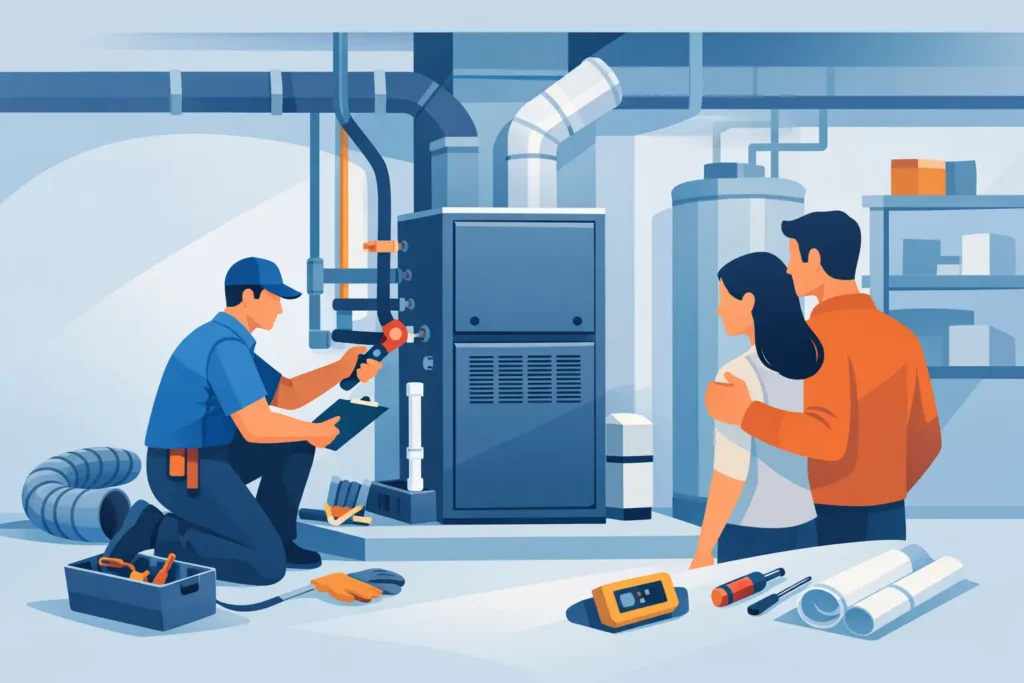
A qualified technician can test airflow, ignition, flame sensing, gas pressure, safeties, and electrical components in the right order. That saves time and helps prevent repeat failures. For homeowners in Reston and the surrounding area, AAA HVAC handles these calls with the urgency winter problems deserve.
The best way to avoid it next time
Most cold-air furnace calls do not start as sudden surprises. They build from missed maintenance, dirty filters, aging parts, and airflow problems that have been developing for months.
Seasonal tune-ups help catch those issues before the first hard freeze. A technician can clean the burners, inspect the flame sensor, test safeties, measure performance, and spot warning signs early. That is not just about avoiding breakdowns. It also helps the system heat more evenly and run more efficiently when you need it most.
If your furnace is older, it also helps to be realistic. Repairs can keep a system going, but there comes a point where reliability matters more than squeezing out one more season. The right answer depends on the unit’s age, repair history, and how confident you need to be when temperatures drop.
When warm air disappears, fast answers matter. A few simple checks can save you an unnecessary service call, but steady cold airflow is your cue that the system needs attention. The sooner you address it, the sooner your home or building feels like itself again.