HVAC Maintenance Scheduling That Prevents Breakdowns
October 1, 2026
Water Heater Replacement Steps That Protect Your Home
October 3, 2026

A puddle around an indoor AC unit is not a normal part of summer cooling. AC drainage issues can start with a slow drip, then lead to stained ceilings, damaged flooring, musty odors, or a system that shuts down when you need it most. Acting early protects your property and can prevent a small maintenance problem from becoming a more expensive repair.
What Causes AC Drainage Issues?
Your air conditioner does more than lower the temperature. As warm, humid indoor air passes over the cold evaporator coil, moisture condenses on the coil. That water collects in a drain pan and flows through a condensate drain line to a safe discharge point outside or near the unit.
In Northern Virginia, long stretches of humid weather can produce a surprising amount of condensation. A properly installed and maintained system handles it without trouble. When water cannot move through the drain path, however, it can back up into the pan, overflow inside the home or business, or trigger a protective safety switch that stops the AC.
The source is not always obvious. The visible water may appear near the indoor unit, but the underlying issue could be a clogged line, a failed condensate pump, a frozen coil, or an installation problem that prevents water from flowing correctly. A qualified technician should identify the cause before treating the symptom.
A clogged condensate drain line
This is one of the most common causes of an indoor AC leak. Algae, mildew, dust, and other debris can build up in the line over time. The blockage slows or stops drainage, allowing water to rise in the pan.
You may notice standing water near the air handler, a drain opening that is not releasing water during a cooling cycle, or a damp, musty smell. In some systems, a float switch turns the equipment off before the pan overflows. That shutdown is inconvenient, but it is doing its job by limiting water damage.
A damaged or rusted drain pan
Older systems may have a primary drain pan beneath the evaporator coil and a secondary pan as backup protection. Either pan can rust, crack, shift out of position, or collect debris. A pan problem can create a leak even when the drain line itself is clear.
A damaged pan is not usually a practical do-it-yourself replacement. Access may require opening equipment panels, and the correct repair depends on whether the pan is integral to the coil assembly or a separate component.
A failed condensate pump
Some systems rely on a small condensate pump because gravity alone cannot carry water to the drain location. If that pump loses power, becomes clogged, or fails mechanically, water can accumulate quickly. You may hear unusual humming, see water around the pump reservoir, or notice that the unit stops cooling.
A frozen evaporator coil
A frozen coil can create an apparent drainage problem when the ice later melts. The drain system may be overwhelmed by the sudden volume of water, causing an overflow. Restricted airflow, a dirty filter, low refrigerant, or a mechanical issue can contribute to coil freezing.
If you see ice on refrigerant lines or the indoor coil area, turn the cooling system off at the thermostat and schedule service. Continuing to run it can damage the compressor and increase repair costs.
Incorrect drain slope or installation concerns
A condensate line needs the right slope to drain by gravity. A sagging, poorly supported, or incorrectly routed line can trap water and debris. On newer equipment, an improperly configured drain connection or vent can also interfere with drainage. These problems often need professional correction rather than repeated cleaning.
Signs of AC Drainage Issues You Should Not Ignore
Water is the clearest warning sign, but it is not the only one. Pay attention to changes that suggest moisture is not leaving the system as it should. Common signs include:
- Water near the indoor air handler, furnace cabinet, or auxiliary drain pan
- Ceiling stains or dripping water below an attic-installed system
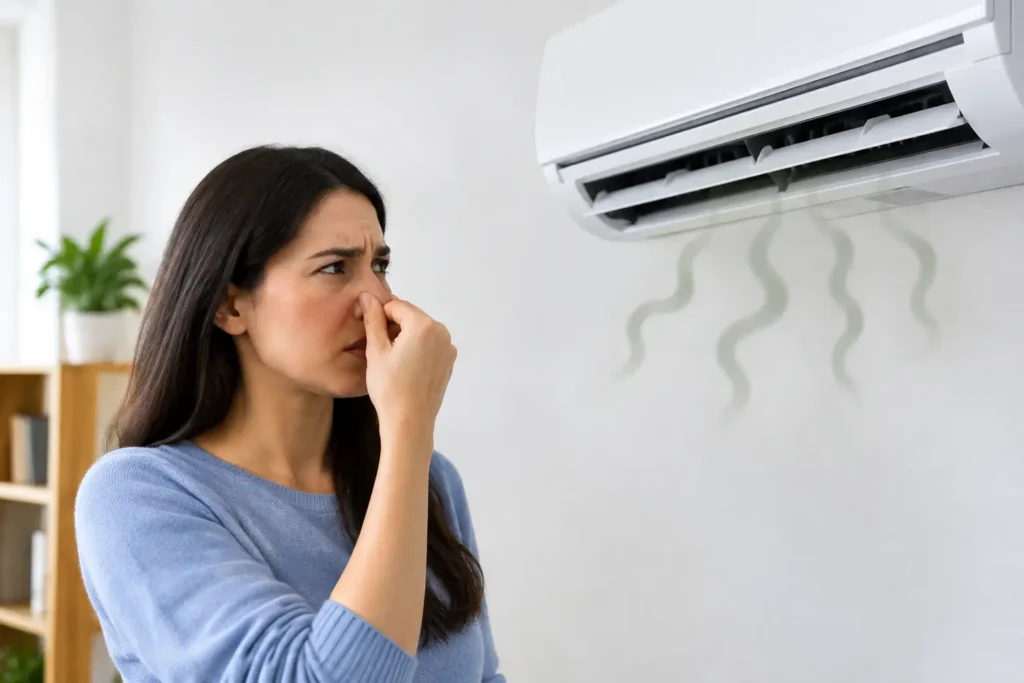
- A musty odor when the AC runs
- An AC system that shuts off unexpectedly during humid weather
- Visible algae or debris at the condensate drain outlet
- Reduced cooling combined with ice on refrigerant lines or the coil area
For a property manager or business owner, even a minor overflow deserves prompt attention. Water can affect tenant spaces, inventory, finishes, and operations. Waiting for a larger leak rarely makes the repair simpler.
What You Can Safely Do Before Service Arrives
If water is actively leaking, turn the thermostat from Cool to Off. This stops additional condensation and gives the system time to drain. If the leak is near finished ceilings, walls, or flooring, move valuables away from the area and place towels or a container beneath the drip if it is safe to do so.
Check the air filter if it is easily accessible. A heavily loaded filter can restrict airflow and contribute to coil freezing. Replace it with the correct size and type if it is overdue. Do not remove access panels, force a drain line open with sharp objects, or use harsh chemical cleaners in the condensate system. Those attempts can damage components, create a stronger blockage, or mask a problem that needs diagnosis.
You can also look at the outdoor drain termination, if you know where it is and can reach it safely. Visible water during a cooling cycle is generally a good sign. No water at all does not automatically mean there is a clog, especially during milder or less humid weather, but it is useful information to share with the technician.
When a Professional Repair Is the Right Call
Call for AC service promptly when water has entered a ceiling or wall, the system repeatedly shuts down, ice is present, or a leak returns after a basic filter replacement. Those situations point to more than ordinary condensation. A technician can clear and test the drain line, inspect pans and safety switches, check the condensate pump, and determine whether a frozen coil or refrigerant concern is part of the issue.
The repair should address why the water backed up, not simply remove the water already on the floor. For example, clearing a line may solve the problem if buildup caused the blockage. But if the line has poor pitch, a broken fitting, or recurring contamination, a more permanent adjustment may be the better investment.
AAA HVAC provides responsive air conditioning diagnostics for homeowners, property managers, and businesses throughout Northern Virginia. NATE-certified technicians can identify the cause of a leak, explain the repair clearly, and help protect your comfort and property from further damage.
Preventing Future Condensate Problems
The most effective prevention is regular AC maintenance before peak cooling season. A thorough visit gives a technician the opportunity to inspect the drain assembly, flush the condensate line as appropriate, test safety controls, examine the coil, and catch small concerns before humid weather puts the system under pressure.
Between visits, replace filters on schedule and keep an eye on the area around the indoor equipment. The right interval depends on the filter type, system use, pets, indoor conditions, and manufacturer recommendations. A one-inch filter often needs more frequent attention than a thicker media filter.
Do not assume every drain issue means the system is old or needs replacement. Many are repairable maintenance concerns. At the same time, repeated overflows, rusted components, frequent coil freezing, or repairs on an aging system may justify a conversation about longer-term options.
A dry drain pan and a reliably cooled space are easy to take for granted. If you notice water, odors, or an unexplained shutdown, schedule service early so a drainage issue stays a manageable repair instead of a disruption to your home or business.