Property Manager HVAC for Fewer Emergency Calls
October 8, 2026
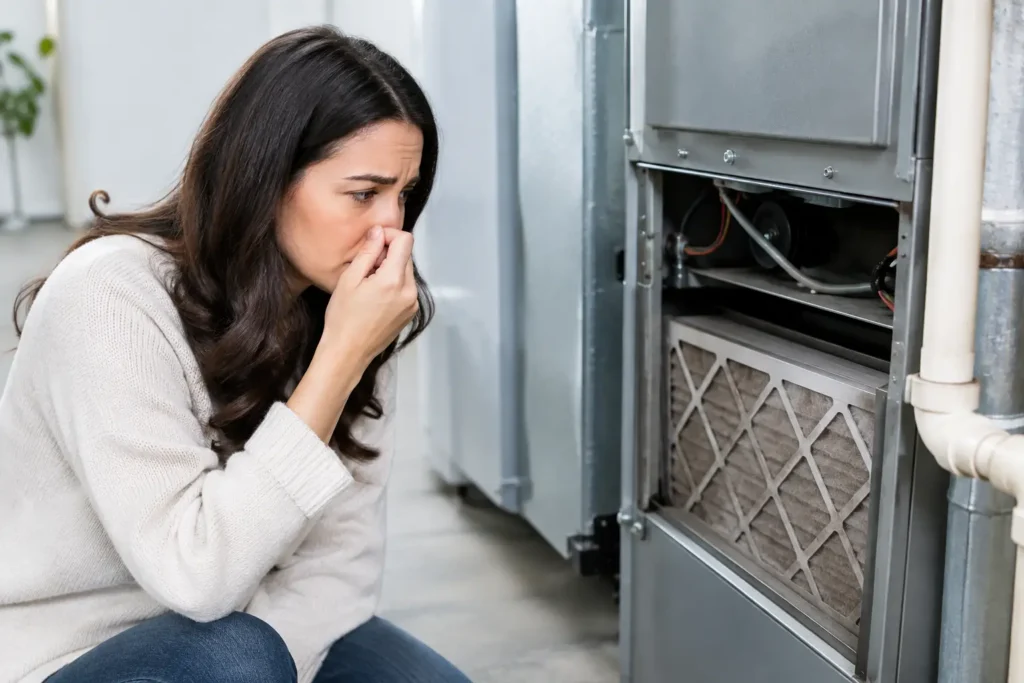
The first time your heat kicks on after a Northern Virginia summer, you may notice a dry, dusty smell moving through the house. So, why does furnace smell dusty at startup? In many cases, it is simply dust that settled on internal heating components while the system was off. The odor should be brief and mild. If it lingers, grows stronger, or smells like burning plastic, fuel, or something electrical, treat it as a reason to stop and have the furnace checked.
Why Does a Furnace Smell Dusty at First?
Your furnace contains components that get very hot during a heating cycle. Dust can collect on those surfaces during the warmer months, particularly around heating elements, burners, and the area near the blower. When the furnace starts again, that dust heats up and burns away, creating a temporary dusty or slightly burning odor.
This is especially common when you turn on the heat for the first time each fall. A home that has been closed up for months, a system that has not run recently, or a furnace located near a storage area may produce a more noticeable odor at first.
A normal dust-burning smell generally fades within one or two heating cycles, often in 15 to 30 minutes. Open a window briefly if weather allows, make sure the air filter is in place, and let the system run. The smell should become less noticeable rather than more intense.
When a Dusty Furnace Smell Is Not Normal
The key difference is duration and character. A mild odor that disappears shortly after startup is usually expected. A strong odor that returns every time the furnace runs, fills multiple rooms, or causes headaches or throat irritation deserves professional attention.
A dirty or overdue air filter is a common culprit. When airflow is restricted, dust and debris can circulate more easily, and the furnace may work harder than it should. Check the filter type and replacement schedule recommended for your system. If the filter looks visibly loaded with dust, replace it with the correct size and rating.
A dusty smell can also persist when debris has accumulated around the furnace cabinet or in the return-air area. Do not remove panels, disturb wiring, or attempt to clean burners and internal components yourself. Furnaces involve electrical connections, moving parts, combustion equipment, and safety controls that should be inspected by a trained technician.
A Burning Plastic or Electrical Smell
A furnace should never produce a strong electrical odor. Burning plastic, hot wiring, or a sharp acrid smell can point to an overheating motor, failing capacitor, damaged wiring, or another electrical issue. Turn the system off at the thermostat. If the smell is severe, smoke is visible, or you hear popping or buzzing, shut off power to the furnace if you can do so safely and call for service right away.
Do not restart the system repeatedly to see whether the smell goes away. Repeated operation can worsen damage and may create a more expensive repair.
A Gas, Sulfur, or Exhaust-Like Odor
Natural gas is treated with an odorant that many people describe as rotten eggs or sulfur. If you smell gas near your furnace, leave the building, avoid switches, flames, and electronic devices, and contact your gas utility or emergency services from a safe location. Do not try to locate the source yourself.
An exhaust-like odor, soot around the furnace, unusual moisture, or a yellow burner flame can also signal a combustion problem. Carbon monoxide itself has no smell, which is why working carbon monoxide alarms are essential in any home with fuel-burning equipment. If a carbon monoxide alarm sounds, get everyone outside and call emergency services.
A Musty Smell That Does Not Go Away
Not every unpleasant heating odor is dust. A stale or musty smell may be related to moisture near the equipment, a dirty filter, or an issue affecting the indoor air system. Because the source can vary, an inspection is the safest way to avoid guessing. A technician can assess the furnace, verify airflow, and identify whether the smell is coming from the equipment or another area of the home.
What You Can Check Safely Before Calling
Homeowners can take a few simple steps without opening the furnace or attempting a repair. Start by checking that your thermostat is set to Heat and that the furnace has a clean, properly fitted filter. A filter installed backward or left out entirely can create airflow problems.
Next, clear boxes, paint cans, paper, and other stored items away from the furnace area. Furnaces need open space around them for safe operation and service access. Never store flammable materials near heating equipment.
Then, run the heat while staying nearby. Pay attention to how the odor changes. A normal dusty smell should fade quickly. Shut the system down and schedule service if the smell intensifies, remains after a full cycle, comes with poor heating performance, or is accompanied by unfamiliar sounds.
It also helps to note when the problem occurs. Does the odor appear only at the first startup of the season? Does it happen every cycle? Is it strongest near the furnace or at certain supply vents? These details help a technician narrow down the cause faster.
Preventing Dusty Odors Next Heating Season
Preventive maintenance is the most reliable way to reduce unpleasant furnace startup odors and catch small problems before cold weather puts the system under stress. During a professional tune-up, a technician can inspect critical components, check safety controls, evaluate airflow, test operation, and look for signs of wear that are not visible from outside the unit.
Changing filters on schedule matters too. The right frequency depends on the filter, household occupancy, pets, allergies, renovation activity, and how often the system runs. Many homes need a check every one to three months, but always follow the filter and equipment manufacturer guidance.
Keep the furnace area clean and accessible throughout the year. If your utility room doubles as storage, leave a clear perimeter around the equipment. This reduces dust buildup, supports safe operation, and allows a technician to work efficiently when service is needed.
When to Schedule Furnace Service
Schedule a furnace inspection if the dusty smell lasts more than a day, returns after you replace the filter, or arrives alongside reduced airflow, short cycling, unusual noises, or uneven heating. Those symptoms do not automatically mean you need a replacement, but they do mean the furnace needs a qualified assessment.
For property managers and commercial building operators, a persistent odor should be addressed promptly rather than waiting for a complete heating failure. Occupant comfort, indoor air concerns, and business uptime all matter, especially as temperatures drop.
AAA HVAC provides responsive furnace service for homeowners and businesses across Northern Virginia, with NATE-certified technicians prepared to diagnose heating concerns clearly and recommend the appropriate repair. A brief dusty smell may be part of seasonal startup. Anything stronger, longer-lasting, or unusual is worth checking before it becomes the problem that leaves your home or building without heat.