Furnace Venting Safety Guide for Safer Homes
October 14, 2026
How to Size Commercial HVAC Systems Correctly
October 18, 2026
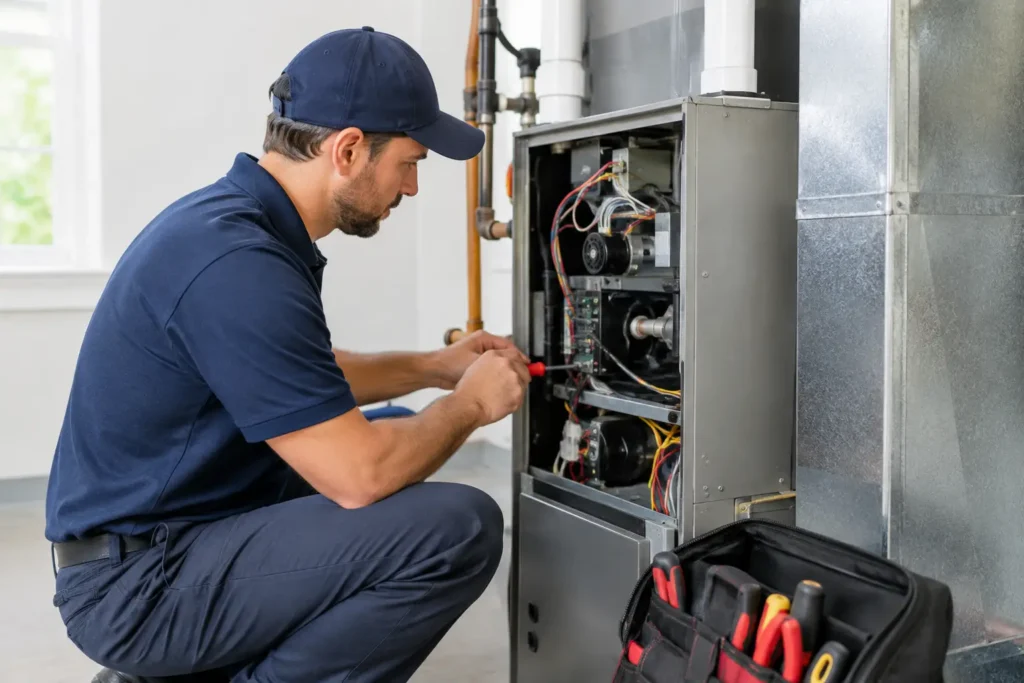
A furnace failure rarely starts with a complete shutdown. More often, a Reston furnace repair guide becomes necessary when a bedroom stays cold, the system starts cycling every few minutes, or a utility bill rises without a clear reason. Paying attention early can protect your comfort, reduce the chance of a larger repair, and help you make a calm decision if the heat stops on a cold Northern Virginia night.
Start With Safety, Not Troubleshooting
If you smell gas, leave the building immediately. Do not operate light switches, use a phone inside the property, light a match, or attempt to restart the furnace. Once you are safely outside, contact the gas utility or emergency services, then arrange for qualified HVAC service.
Turn the furnace off and call for service if you notice burning electrical odors, smoke, a loud bang at startup, repeated breaker trips, or a carbon monoxide alarm. Carbon monoxide has no smell or color, and a working carbon monoxide detector is essential in any property with fuel-burning equipment.
For problems that do not create an immediate safety concern, begin with a few basic checks. They can rule out simple operating issues without risking damage to the equipment.
Reston Furnace Repair Guide: Safe First Checks
Start at the thermostat. Confirm it is set to Heat, the target temperature is several degrees above the current room temperature, and the fan setting is on Auto. If the thermostat display is blank, replace the batteries if it uses them. A blank display can also point to a tripped breaker, a furnace safety switch, or a wiring issue, so do not assume batteries are the only cause.
Next, check the electrical panel. If the furnace breaker has tripped once, reset it once. If it trips again, leave it alone and schedule professional repair. Repeated trips can indicate an electrical fault, a failing blower motor, or another issue that needs diagnosis.
Look at the furnace filter. A heavily loaded filter restricts airflow, forcing the equipment to work harder and sometimes causing it to overheat and shut down. Replace a disposable filter with the correct size and airflow rating. If your system has a reusable filter, clean and dry it fully before reinstalling it.
Make sure supply registers are open and not blocked by furniture, rugs, or storage. Then check that the furnace access panel is seated securely. Many furnaces have a safety switch that prevents operation when the panel is loose.
For a high-efficiency furnace, look outside at the intake and exhaust pipes. Leaves, snow, ice, or nesting material can block these pipes and prevent safe operation. Clear only visible debris from the outside opening. Do not insert tools into the pipes or disassemble venting components.
Warning Signs That Need a Technician
Some furnace symptoms require more than a filter change or thermostat adjustment. The right repair depends on the furnace type, age, maintenance history, and the exact sequence of operation. A trained technician can test components rather than replacing parts based on guesswork.
The Furnace Runs but Blows Cold Air
Cold air may result from a thermostat setting, an interrupted gas supply, a dirty flame sensor, an ignition problem, overheating, or a malfunctioning control board. If changing the filter and checking the thermostat does not restore normal heat, turn the system off and request service. Continuing to restart the furnace can make diagnosis harder and may stress already-failing parts.
Short Cycling or Constant Cycling
Short cycling means the furnace starts and stops before it completes a normal heating cycle. A dirty filter is a common cause, but so are thermostat placement problems, overheating, venting concerns, flame-sensing issues, and equipment that is improperly sized for the building.
Constant operation is different. During very cold weather, a properly functioning furnace may run for extended periods. The concern is when it cannot maintain the thermostat setting, runs constantly in mild conditions, or produces uneven temperatures throughout the property.
Unusual Noises
A brief whoosh at ignition and normal blower noise are expected. Scraping, squealing, rattling, booming, grinding, or repeated clicking are not. A booming sound can occur when delayed ignition allows gas to build before it lights. Grinding may signal a motor or bearing problem. Both warrant prompt professional attention.
Uneven Heat and Weak Airflow
One cold room does not always mean the furnace itself has failed. Closed registers, poor insulation, thermostat location, airflow balance, or a blocked filter can all contribute. In a commercial building, zoning controls and occupancy patterns can make the diagnosis more complex.
Still, weak airflow throughout the building, a furnace that shuts down from overheating, or rooms that have suddenly become much colder than usual should be evaluated. An experienced technician can determine whether the problem is within the furnace, the airflow system, or the controls.
Water Around the Furnace
High-efficiency furnaces produce condensate during normal operation. A blocked drain line, failed condensate pump, or drainage issue can cause water to collect near the unit and trigger a shutdown. Do not ignore standing water, especially near electrical components. Turn the system off if water is substantial and arrange repair.
When a Repair Makes Sense and When Replacement May Be Smarter
A furnace does not need replacement every time it needs service. Many issues, including worn ignition components, blower problems, thermostat failures, and condensate drainage repairs, can be addressed effectively when the system is otherwise in good condition.
Replacement deserves a closer look when repairs are becoming frequent, heating performance is declining, or the furnace is approaching the later part of its expected service life. Age alone is not the only factor. A well-maintained unit may have useful life left, while a neglected one may develop expensive problems sooner.
Consider the repair cost in context. A modest repair that restores reliable performance can be the practical choice. A major repair on an older furnace with a history of breakdowns may be better applied toward new equipment, especially if comfort problems and energy costs have been ongoing. A professional evaluation should include the condition of the heat exchanger, safety controls, blower assembly, venting, and overall system performance, not just the failed part.
For property managers and commercial decision-makers, downtime carries an additional cost. Tenant comfort, employee productivity, customer experience, and frozen-pipe risk can all affect the repair-versus-replace decision. Planning replacement before an emergency gives you more control over scheduling and equipment options.
How to Prepare for a Furnace Repair Visit
A little preparation helps the technician diagnose the issue faster. Note when the problem began, whether it happens continuously or intermittently, and any sounds, odors, error codes, or changes in heating performance. If the thermostat has shown a message or the furnace control board has a blinking diagnostic light, record that information without removing panels.
Clear a path to the furnace and move stored items away from the equipment. The technician needs safe access to inspect components, test operation, and verify airflow. For businesses, provide details about affected zones, operating hours, and any access requirements so the repair can be completed with minimal disruption.
Ask for a clear explanation of the diagnosis, recommended repair, and expected outcome before authorizing work. A trustworthy service provider should help you understand what failed, why it matters, and whether there are reasonable options based on the condition of your system.
Preventing the Next No-Heat Call
Preventive maintenance is not a guarantee against every breakdown, but it can catch developing concerns before they become an after-hours emergency. Seasonal service typically includes checking safety controls, inspecting ignition and combustion components, testing system operation, evaluating airflow, and identifying worn parts.
Between visits, replace filters on schedule, keep the area around the furnace clear, and respond promptly to new noises or cycling changes. Avoid shutting registers throughout the property in an attempt to force more heat into one room. That approach can restrict airflow and create problems for the equipment.
When your furnace is not keeping up, do not wait for a minor symptom to become a no-heat emergency. AAA HVAC provides qualified heating support for Reston homes and businesses, including same-day availability when scheduling allows and 24/7 service access for urgent comfort concerns. A timely inspection can give you a clear answer and a practical path back to reliable heat.